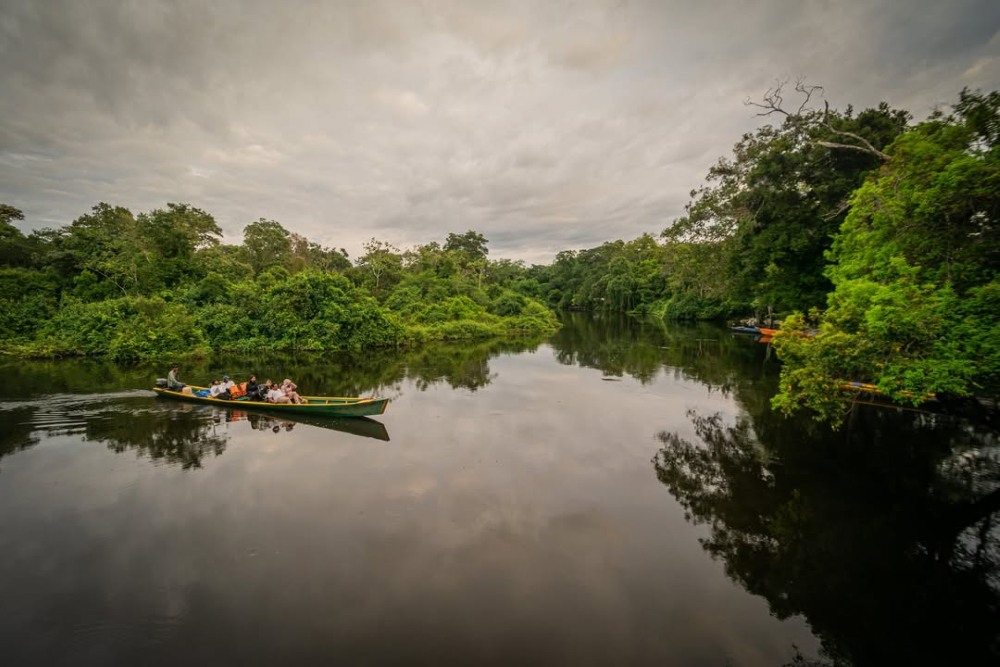
In Bolivia, nearly 75% of the territory belongs to the Amazon Basin, a vast area of forests, savannas, rivers, and wetlands that create one of the country’s most diverse landscapes. Among these, the Pampas del Yacuma in the Beni department stand out for their open horizons and particularly abundant wildlife. Here, water is not just a backdrop: it guides movement, structures the day, and reflects the life unfolding around it.
Rurrenabaque, the Gateway to the Pampas
The adventure usually begins in Rurrenabaque, reachable by a short flight from La Paz. From there, the road to Santa Rosa del Yacuma takes over three hours. In the dry season, the journey is relatively easy; when the rains arrive, conditions change and progress slows. This travel time is part of the experience: in this region, nature sets the pace, and local drivers adapt with calm precision.
Along the way, pastures, solitary palm trees, and scattered villages signal the approach to the river docks. At the edge of the Yacuma River, the road ends, giving way to the territory of water.
You may also like: La Paz in 10 Experiences: Culture, Altitude, and Magic in Bolivia
The River as a Guiding Thread
Once aboard, the river becomes both a path and a viewpoint. At every bend, scenes of wildlife life appear: pink dolphins gliding among reeds, caimans motionless on the surface, monkeys leaping from tree to tree, and countless birds displaying unexpected colors. No trail is needed: nature can be observed directly from the water, with rare proximity.
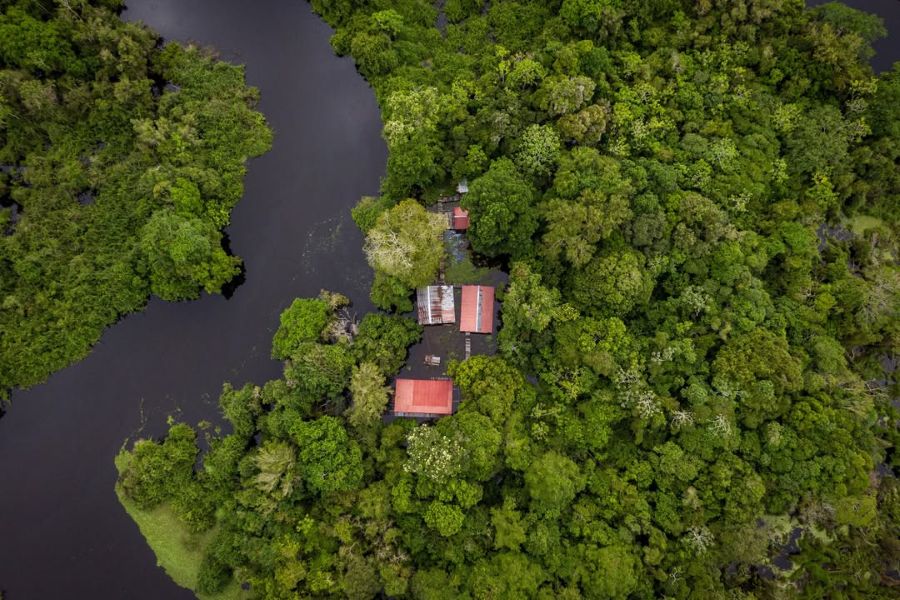
Along the route, several lodges and ecolodges welcome travelers. Built from wood and thatched with palms, most are managed by local communities. Their design minimizes environmental impact and offers simple accommodations—rooms with mosquito nets, shared bathrooms, full board—to experience life close to the river. Two- or three-day stays allow exploration of the canals and wildlife observation, especially between May and October during the dry season.
A Human-Scale Territory
The Pampas del Yacuma offer biodiversity comparable to Brazil’s Pantanal, but in more intimate spaces, away from the busiest tourist routes. Infrastructure remains basic, but local operators have long experience in nature expeditions, ensuring safe and environmentally respectful itineraries.
When the journey ends, the images stay vivid. In the wetlands of Yacuma, memories are created less with a camera than with the feeling of having discovered a place where the Amazon can be experienced at its own pace, without artifice.
Photos: Mauricio Aguilar