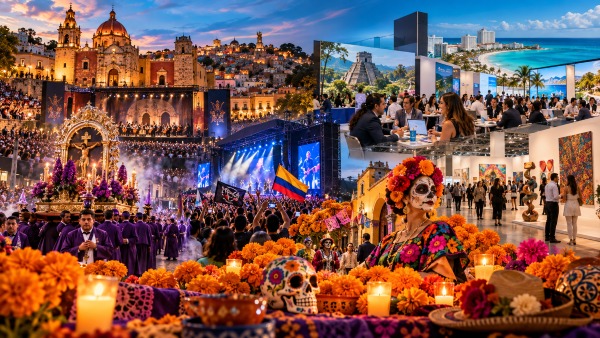
As Central America establishes itself as one of the most dynamic tourism regions on the continent, Guatemala has presented its Sustainable Tourism Master Plan 2026–2036, a national strategic framework designed to structure the development of the sector over the next decade. Conceived as a long-term roadmap, the document aims to strengthen destinations with high potential, organise tourism growth, and position the country along a path aligned with regional and international trends.
A nationally grounded framework shaped through broad consultation
Presented under the leadership of President Bernardo Arévalo, the Plan reaffirms the role of tourism as an economic and social driver. It was developed by the Guatemalan Tourism Institute (INGUAT) following an unprecedented nationwide consultation process. More than 2,000 participants from the country’s 22 departments took part in workshops involving local communities, indigenous authorities, entrepreneurs, guides, students and academics, with technical support from UN Tourism.
This participatory approach gives the Plan strong territorial legitimacy and reflects a clear intention to anchor tourism development in local realities.
Four pillars to structure growth
The Plan is built around four main pillars: strengthening tourism governance, diversifying the offer based on sustainability criteria, mainstreaming sustainability principles across all actions, and positioning Guatemala in international markets.
It combines initiatives related to infrastructure, training, territorial management, and the protection of natural and cultural heritage, along with a promotional component aimed at consolidating existing source markets and increasing the visibility of emerging destinations.
Quantified targets towards 2036
The projections outlined in the Plan reflect its level of ambition. International arrivals are expected to increase from approximately 2.4 million visitors in 2024 to between 4.6 and 4.7 million by 2036. Tourism revenues are projected to grow by around 290%, exceeding USD 4.7 billion over the period.
Domestic tourism is also identified as a priority, with anticipated impacts in terms of job creation and the expansion of tourism offerings into new protected areas and lesser-visited territories. These prospects position Guatemala as a destination with strong potential for agencies and operators seeking to diversify their Central American programmes.
A favourable regional dynamic

Le lancement de ce Plan intervient dans un contexte régional porteur. Selon ONU Tourisme, l’Amérique centrale constitue actuellement le sous-ensemble à la croissance la plus rapide du continent, portée notamment par le Guatemala, le Salvador et le Panama. Au Guatemala, les recettes touristiques ont augmenté de 35 % en 2024 par rapport à 2019 et de 22 % entre 2023 et 2024, faisant du tourisme la deuxième source de devises du pays.
Gustavo Santos, UN Tourism Regional Director for the Americas, notes that the region is gaining visibility in international markets thanks to the diversity of its natural and cultural heritage—factors that are increasingly influential in travellers’ decision-making.
You may also like: Tourism in Latin America: growth confirmed, maturity taking hold
Guatemala thus closes the year with a strategic framework that does not seek an immediate transformation of the sector, but rather the organisation of a trajectory already underway. The success of the Plan will now depend on its effective implementation and on the ability of destinations to translate this vision into concrete, coherent and sustainable experiences.
The signal is nonetheless clear: Guatemala intends to secure a lasting position within an expanding regional market, with a more structured tourism proposition, greater coherence, and improved readiness to meet international expectations.
Fotos : INGUAT