The Central American Tourism Promotion Agency (CATA) organised a virtual seminar bringing together regional organisations and community representatives to examine the development of Indigenous tourism in the region. Conducted in partnership with Destination Original Indigenous Tourism (DO-IT) and the Indigenous Tourism Network of Panama (REDTURI), the initiative focused on a key challenge for the sector: preserving the authenticity of community-led experiences while facilitating their gradual integration into international markets.
A regional framework to structure a growing segment
Moderated by Boris Iraheta, Secretary General of CATA, the webinar provided an overview of the current state of Indigenous tourism in Central America. Discussions highlighted recurring challenges, including increased training needs, limited access to marketing channels, still-restricted visibility within the regional tourism offer, and uneven integration into international circuits.
In response, participants stressed the importance of stronger coordination between countries, public institutions, community organisations and private stakeholders. Regional cooperation was identified as an essential lever to consolidate governance models in which communities play a central role, both in tourism planning and in the design of experiences aligned with market expectations.
Experience-sharing and credibility criteria
Representatives from REDTURI Panama and the DO-IT development team shared the processes implemented to strengthen community participation in the creation and management of tourism products. Their approach is based on a shared principle: authenticity is sustainable when communities themselves define how their heritage is presented and how tourism-related benefits are distributed.
Discussions also highlighted the need for clear and recognisable criteria enabling both professionals and visitors to identify experiences genuinely supported by legitimate community structures, rather than by opportunistic initiatives.
A strategic lever for regional sustainability
Central America is home to nearly seventy Indigenous peoples. Their territories cover approximately 40% of the isthmus’s land and marine area and contain more than 60% of its biodiversity. This combination of natural and cultural heritage represents a strategic pillar for sustainable tourism, particularly for travellers seeking meaningful, place-based experiences.
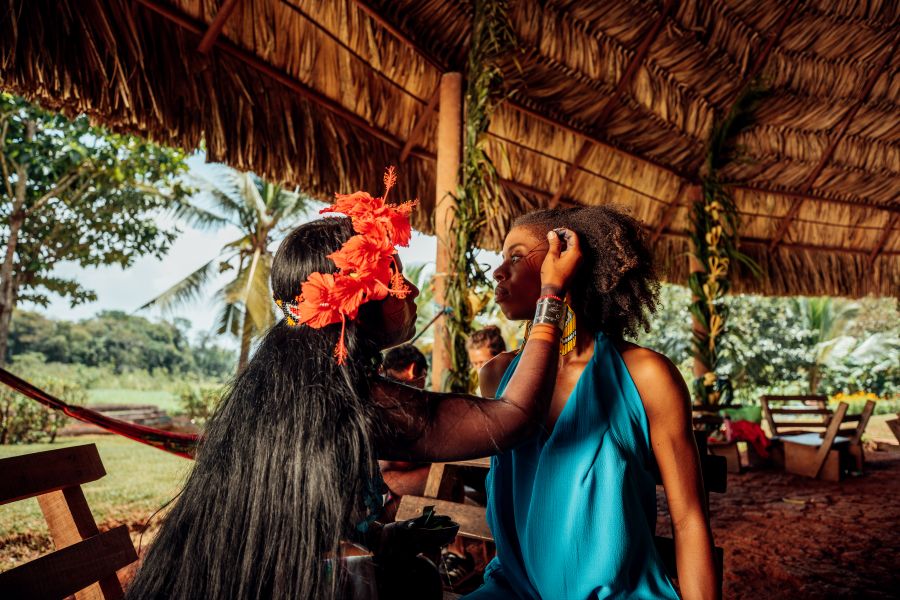
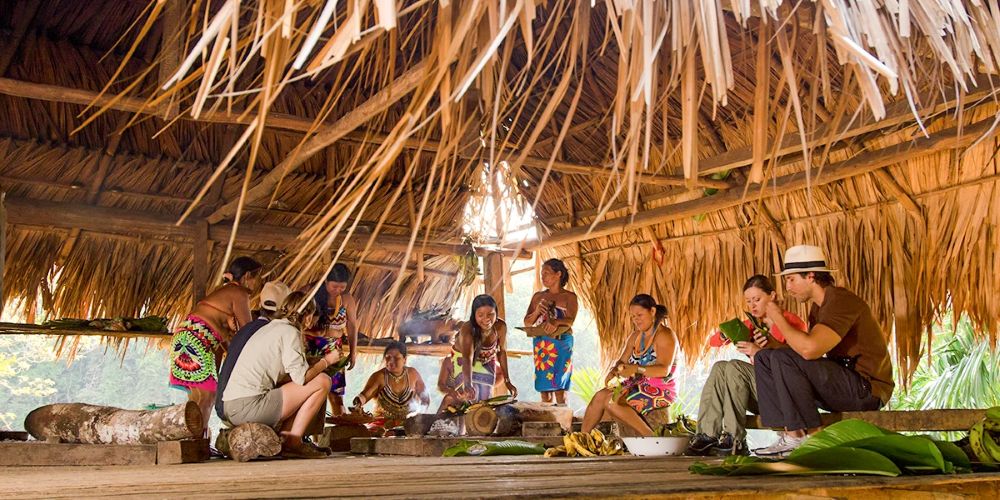
The knowledge, languages and practices preserved by these communities are now translating into concrete offerings within the regional tourism landscape. The example of the Emberá communities in Chagres National Park, Panama, illustrates this dynamic. Integrated into the Indigenous
A segment to be strengthened on international markets
Overall, the seminar helped position Indigenous tourism as one of the most structured expressions of Central America’s tourism diversity. Experiences are already operational, and certain territories are beginning to organise themselves according to their own criteria, with a long-term vision.
You may also like: A Rooted Journey: Meeting Indigenous Peoples in Latin America
For the region, this segment strengthens an offer capable of combining differentiation, territorial anchoring and scalability potential. At a time when Latin America is seeking to consolidate its position in international markets, Indigenous tourism emerges as a strategic axis—provided its development continues to be guided by the communities themselves.
Photos: Visit Centroamerica