There are musical styles that don’t need introductions: they make themselves known from the very first notes. In Cuba, this power has a precise name: son. Just a few chords are enough to recognise a way of inhabiting the island’s everyday life. Much more than a memory from another time, this genre remains a living language, present in neighbourhoods, studios, and on stage. An expression where tradition and modernity coexist without apparent effort. It is precisely this balance—between memory and the present—that explains why son has become one of the musical pillars of the region.
A crossroads of traditions
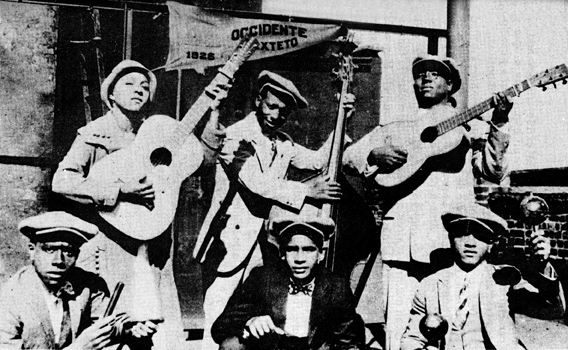
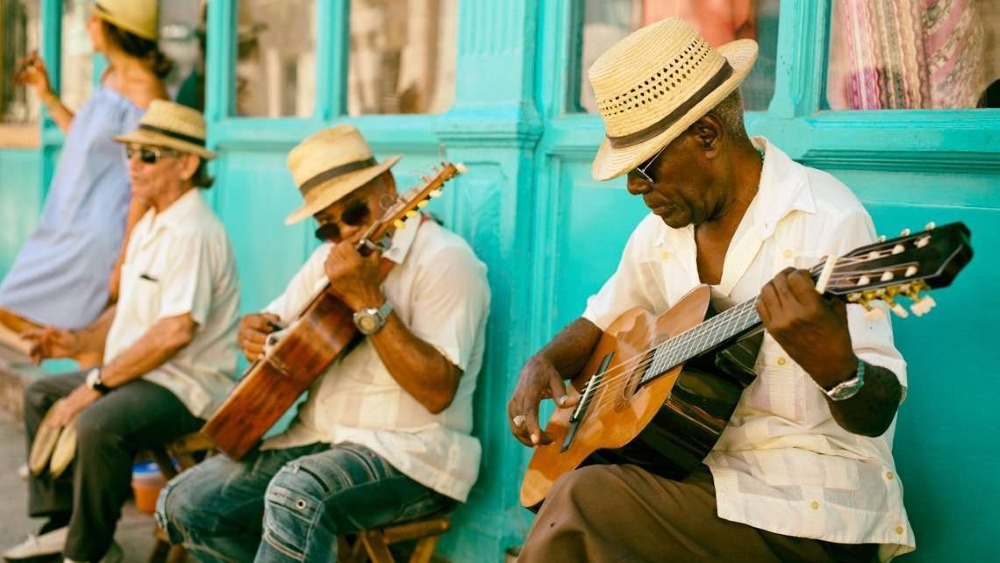
The term son cubano can be translated literally as “Cuban sound.” It refers to a musical and dance genre that emerged at the end of the 19th century, born from the encounter between European and African traditions. Spanish influences brought the guitar and the tres—a small three-course guitar—along with melodic and vocal structures. The African contributions are expressed above all in the percussion, particularly through the clave, bongos, and maracas, which give son its characteristic heartbeat.
This fusion did not remain confined to the countryside. When it reached Havana in the 1920s, son incorporated the trumpet and the double bass, giving rise to larger ensembles. It then became an emblematic style of Latin music, spreading internationally over the decades—to the point of being inscribed, since December 2025, on UNESCO’s Representative List of the Intangible Cultural Heritage of Humanity.
The foundational rhythm of Latin music
Son is built on constant dialogue between a lead singer, a responding chorus, and a montuno base—repetitive patterns, often carried by piano or guitar—that support improvisation. This structure, combined with lyrics functioning as social chronicles full of humour, double meanings, and everyday scenes, has made it a language in its own right.
From this matrix arose—or developed—major genres such as mambo, cha-cha-cha, and later salsa, which reorganised the elements of son to adapt them to new urban contexts.
The figures who shaped the genre
Throughout the 20th century, artists and ensembles shaped Cuban son and helped spread it worldwide. Figures such as Compay Segundo, Benny Moré, and Ibrahim Ferrer allowed new generations to rediscover the genre—particularly thanks to the global push inspired by Buena Vista Social Club.
Released in 1997, this project brought together veteran musicians under the guidance of Ry Cooder and Juan de Marcos González. It went far beyond the scope of a simple album: a documentary, international tours, and later a Broadway stage adaptation would prolong this rediscovery of traditional son on a global scale.
Although its origins run deep into history, Cuban son is far from fixed in time. It continues to be played, transmitted, and reinterpreted in Cuba and elsewhere, in clubs, festivals, and on contemporary stages. Its strength lies in its capacity to combine continuity and reinvention.
For travellers in Cuba—or for anyone exploring Latin American music—attending a son concert means encountering one of the foundations of the Caribbean soundscape: a music that is at once language, movement, and memory.
Photos: Embajada de Cuba | D.R