At first glance, Puerto Plata may seem like nothing more than a transit point on the north coast of the Dominican Republic—a city reached by air or sea before continuing onward. But as soon as one takes the time to walk its streets, to look up, to step away from the waterfront, the reading changes. Here, the city reveals itself in layers: a lived-in urban center, a mountain rising in the background, beaches with no single narrative, and an inland territory that extends the experience far beyond the shoreline.
Puerto Plata does not reveal itself at a glance. It is understood over time, as its neighborhoods, landscapes and everyday uses come together.
Historic center, fortress and bay
Entering the city is naturally done on foot. Around Plaza Independencia, the streets of the old town reveal a remarkable concentration of Victorian houses, particularly along Beller Street and José del Carmen Ariza Street. Some are still inhabited, while others have found new life as cafés, shops or workshops. High wooden ceilings, galleries and colorful façades reflect a heritage that is not frozen in time, but integrated into daily life.
Just a few steps away, the Amber Museum, housed in a restored residence, offers a singular pause. The pieces on display—some several million years old, including the famous blue amber—remind visitors that Puerto Plata’s history is not limited to its colonial past: it is also geological and commercial, linked to the amber routes that once crossed the region.
Our article: Latin America, cradle of a handmade and inimitable luxury
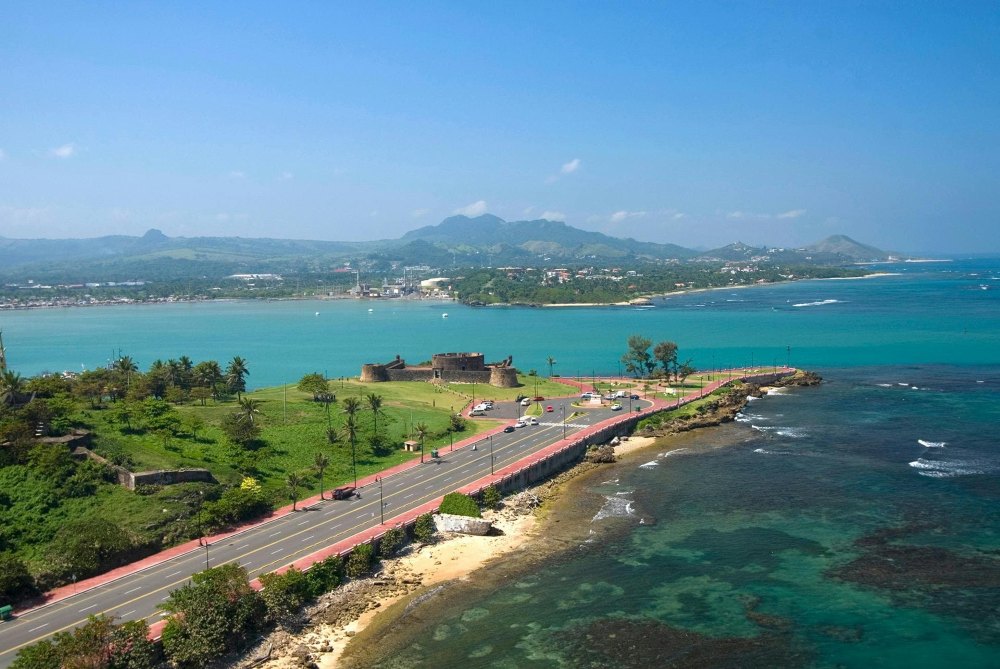
Further west, Fort San Felipe marks another chapter in the city’s timeline. Built to defend the bay, it preserves cannons, cells and exhibition rooms that trace its successive roles as a bastion and later as a prison. From the esplanade, the view opens onto the curve of the coastline, the Malecón and, on clear days, the line of the cable car climbing toward the heights.
The cable car to the mountain
Few Caribbean cities allow such a direct transition from sea to mountain. In Puerto Plata, the cable car connects the urban center to the summit of Loma Isabel de Torres, 800 meters above sea level, in less than ten minutes. The ascent offers a gradual reading of the territory: the city recedes, vegetation becomes denser and the air cools.
At the summit, the national park offers short trails through tropical gardens, ferns and bromeliads. A small interpretation center recalls the history of the site and the cable car, while artisan workshops highlight amber and larimar. From the viewpoints around the Christ statue, the panorama opens onto the bay, the coastline toward Sosúa and Cabarete, and the mountainous hinterland.
Beaches with no single storyline
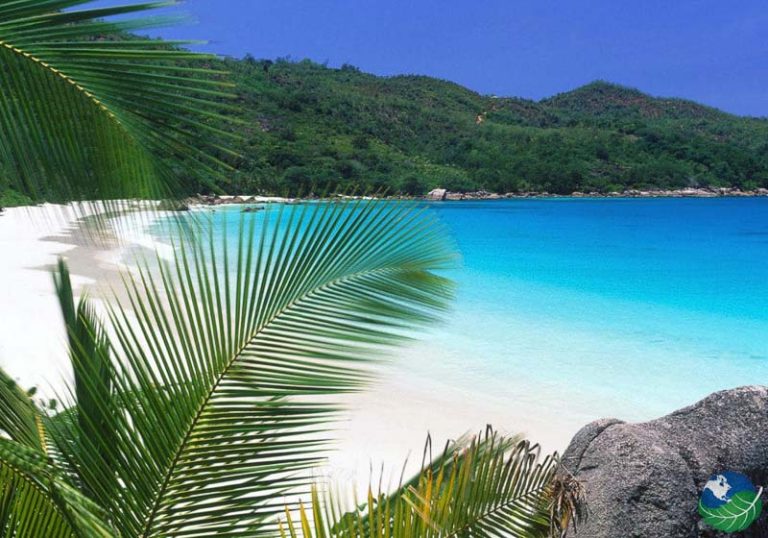
In Puerto Plata, the coastline cannot be reduced to a single postcard. The Malecón runs along a succession of urban beaches and rocky areas where the Atlantic crashes more forcefully. Playa Long Beach, located close to the city center, allows visitors to enjoy the sea without leaving the city—ideal for a stroll or a quick swim.
Further east, Playa Dorada combines tourist infrastructure, restaurants and water sports. Its reef protects the waters, making the beach suitable for snorkeling, kayaking and diving. The site also features an 18-hole golf course facing the ocean, adding a sporting dimension to the seaside experience.
Nature and adventure beyond the coast
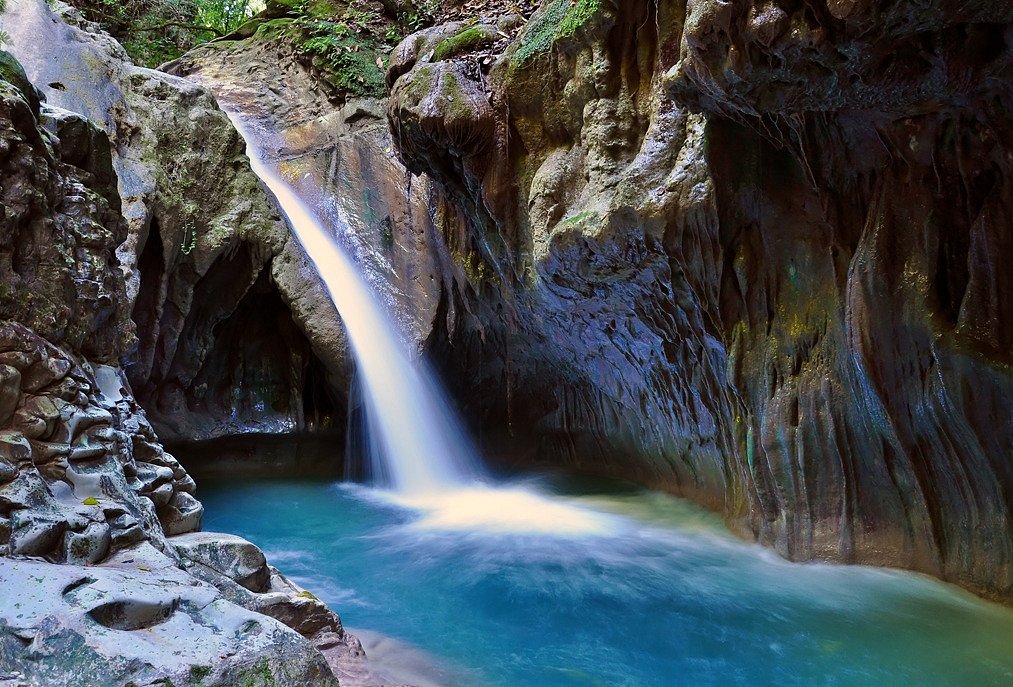
The hinterland naturally completes the discovery. About thirty minutes south, the 27 Charcos de Damajagua offer a route of waterfalls and natural pools, accessible only with local guides. Progress is made on foot, by swimming or sliding over rock, in a dense forest environment.
Closer to the coast, the lagoon and the Sanador Yásica River form a calmer setting, ideal for kayaking or boat outings amid freshwater and tropical vegetation. In the Cabarete and Sosúa area, guided experiences combine zip lines, suspension bridges and forest trails, extending the nature dimension of the stay.
Cacao, a discreet common thread
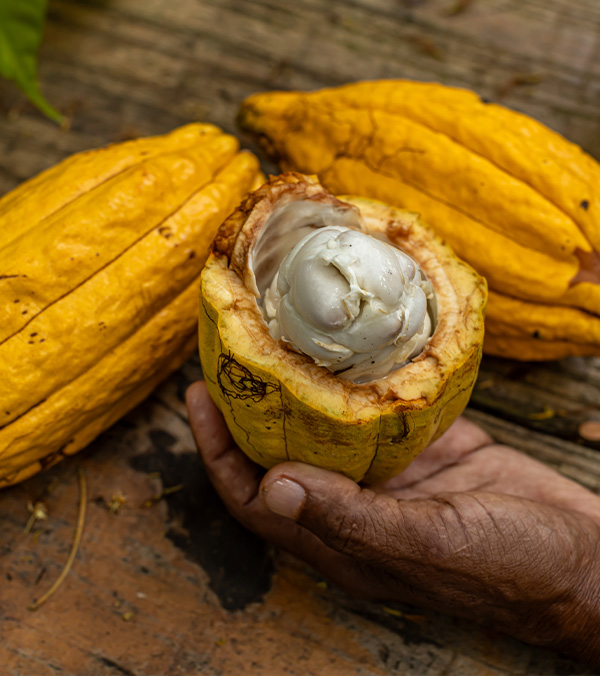
Less visible but equally structuring, cacao is part of the province’s identity. Some farms open their doors to visitors, offering tours through plantations, explanations of the transformation process and exchanges with producers. These visits highlight ancestral know-how and agricultural practices that continue to play a major economic and cultural role, far removed from the region’s strictly beach-oriented image.
Although its name naturally associates it with the port and the sea, Puerto Plata reveals a far broader identity. From amber frozen in time to cascading natural pools, the city unfolds as a territory in motion, where every turn offers a different way to connect with its history, its people and its landscapes.