
From the early hours of the morning, markets across Latin America awaken in a blend of voices, colors, and scents. Freshly cut herbs, fruits piled high on wooden stalls, canvas bags filling up through daily exchanges: here, trade unfolds to the rhythm of conversation and local customs. More than simple places to shop, these markets are spaces where memory, craftsmanship, and everyday life intersect. Walking through them means entering the intimacy of each territory and observing how every region tells its story through what it grows, transforms, and shares.
Paloquemao Market – Colombia
In Bogotá, Paloquemao sets the pace at dawn. Trucks and small vans arrive from the surrounding countryside, unloading crates and baskets still marked with soil. The market reveals a mosaic of products from across the country: lulo, passion fruit, guavas, Andean tubers, aromatic herbs, as well as meats and fish carefully arranged.
A little further on, the flower pavilion highlights Colombia’s central role in the global market, with entire aisles dedicated to roses, carnations, and orchids destined both for florists and for large-scale exports.
Paloquemao moves to the rhythm of its regulars: restaurant owners selecting their ingredients, families preparing the day’s meals, vendors who know their customers by name. A few simple tables offer traditional dishes, served without pretense, like a natural pause in the heart of the bustle.
Chichicastenango Market – Guatemala
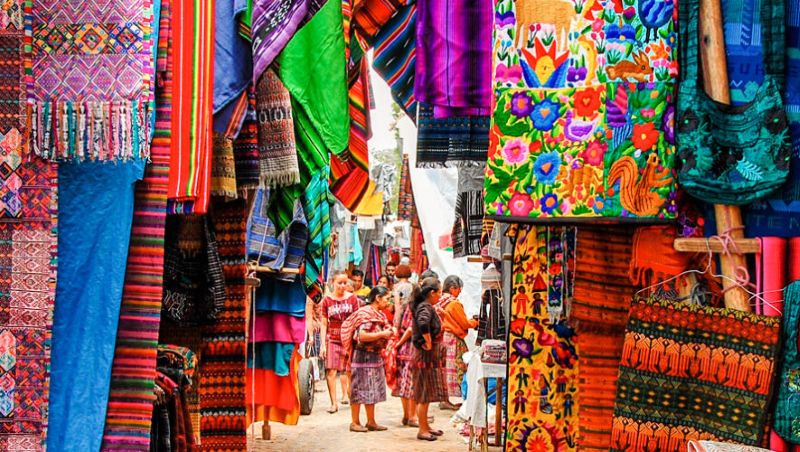
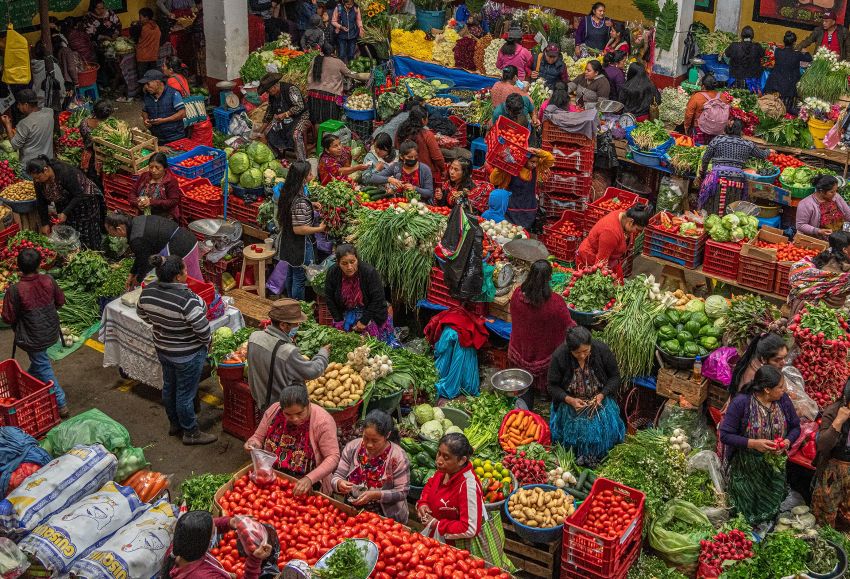
West of Guatemala City, the Chichicastenango market—known locally as “Chichi”—takes place only two days a week, yet it concentrates a rare intensity. On Thursdays and Sundays, the central square fills with embroidered textiles, pottery, carved masks, and silver jewelry brought by Indigenous communities from the Quiché region.
Facing the Church of Santo Tomás, Catholic rites and ancestral practices coexist without a clear boundary. Between stalls, one can observe gestures repeated for generations, patterns that tell the story of village origins, and a way of occupying space that turns the market into a true social center. People come here as much to sell and buy as to meet, exchange news, or maintain a living connection with local traditions.
Mercado de las Brujas (Witches’ Market) – Bolivia
In the historic center of La Paz, the Witches’ Market stretches along several narrow streets. Here, stalls offer medicinal plants, amulets, ointments, and ritual objects linked to Andean beliefs. Sullus—dried llama fetuses—used in offerings to Pachamama, are part of a spiritual universe still deeply rooted in everyday life.
Yatiris, traditional healers, welcome visitors and locals alike for discreet consultations. Far from a frozen setting, the market reflects a living syncretism, where pre-Hispanic heritage and colonial influences continue to coexist, without rupture, in daily practices.
Otavalo Handicraft Market – Ecuador
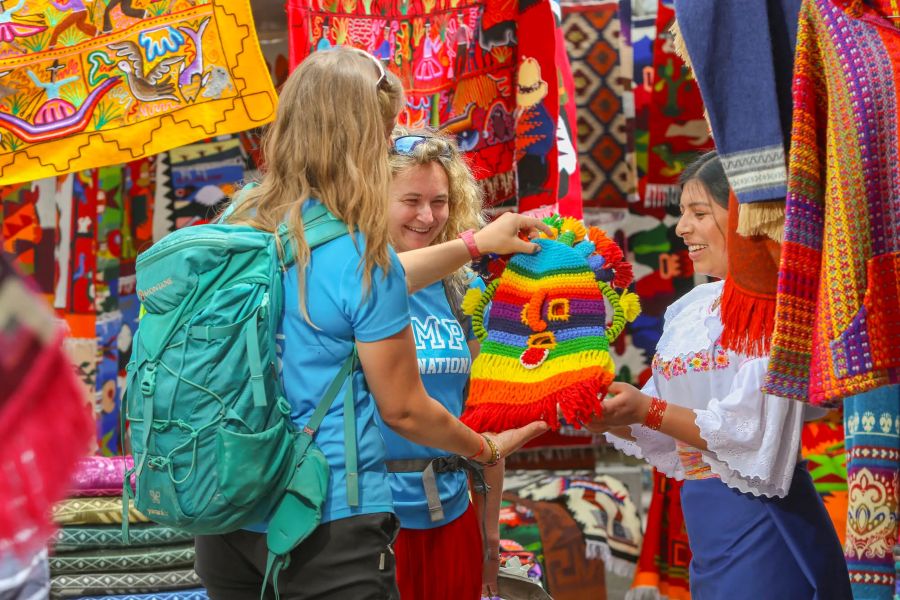
At the foot of the Imbabura volcano, the Otavalo handicraft market occupies the Plaza de los Ponchos. Open throughout the week, it reaches its peak on Saturdays, when the square fills with weavers and artisans from neighboring communities. Ponchos, scarves, tapestries, and blankets made of alpaca or sheep wool sit alongside musical instruments, wooden objects, and jewelry crafted from seeds or tagua.
Visitors move between stalls, discuss patterns, feel the materials, and sometimes negotiate. Around the market, stands serving local cuisine extend the experience, while the proximity of Lake San Pablo and Cotacachi opens the door to further discoveries, combining Andean landscapes with artisanal know-how.
These markets are not merely places of passage. They concentrate stories, skills, and practices passed down from generation to generation. Walking through them reveals how each territory shapes its identity through what it produces and how it shares it. Between the textiles of Chichicastenango, the rituals of La Paz, or the stalls of Paloquemao, the market becomes a key to understanding the local world and a space where travel begins with observation, listening, and encounter.
Photos: D.R | Guatemala.com| Ecuador Travel