Long associated with the Northeast as just another seaside destination, Alagoas is now seeking to clarify its place in international catalogues. The state is part of the Plan Brasis 2025–2027, the overseas promotion strategy led by Embratur in partnership with the Ministry of Tourism and Sebrae, but with a clear ambition: to move beyond a generic image and assert an identifiable proposition.
Rather than a uniform message, the plan operates state by state. The idea is not to sell “Brazil” as a single block, but to make each territory more legible according to its own strengths.
Targeting long-haul markets
For Alagoas, the target is clear: the United States and Europe. These are high-spending markets receptive to nature and coastal destinations, segments in which the Northeast already enjoys credibility. The challenge now is to convert this diffuse awareness into concrete visitor flows.
Connectivity plays a key role. Zumbi dos Palmares International Airport in Maceió relies on major domestic hubs — São Paulo, Recife and Salvador — to capture international arrivals. This network allows the destination to be integrated into broader itineraries without requiring heavy new infrastructure.
Between established hubs and quieter territories
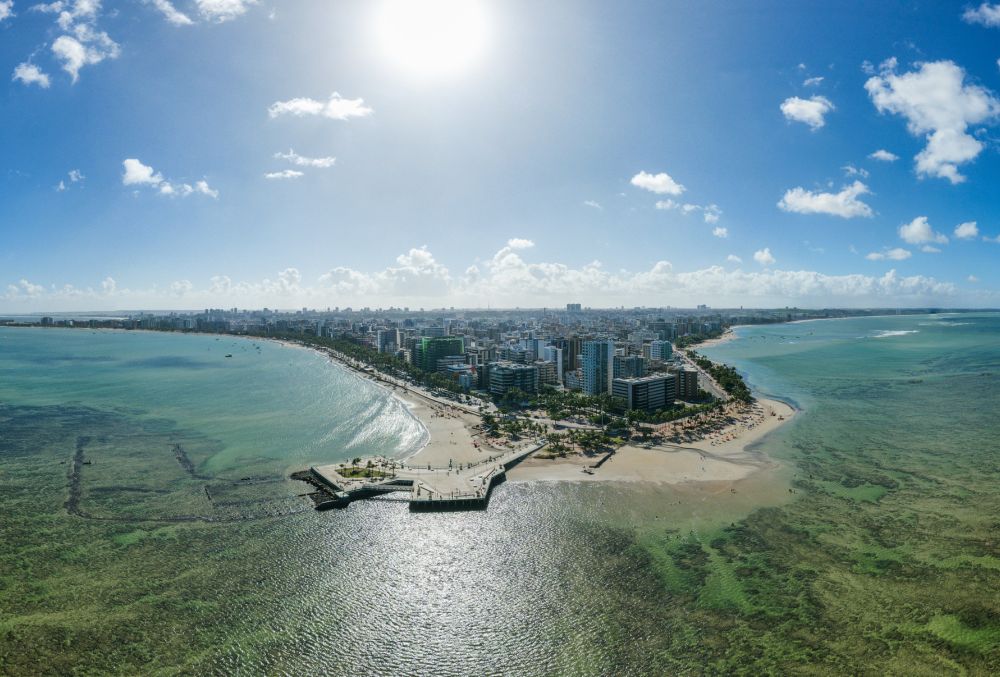
The strategy does not attempt to reinvent what already works. Maceió and Barra de São Miguel remain anchor points. But attention is also shifting northward, toward the Costa dos Corais and the Rota Ecológica.
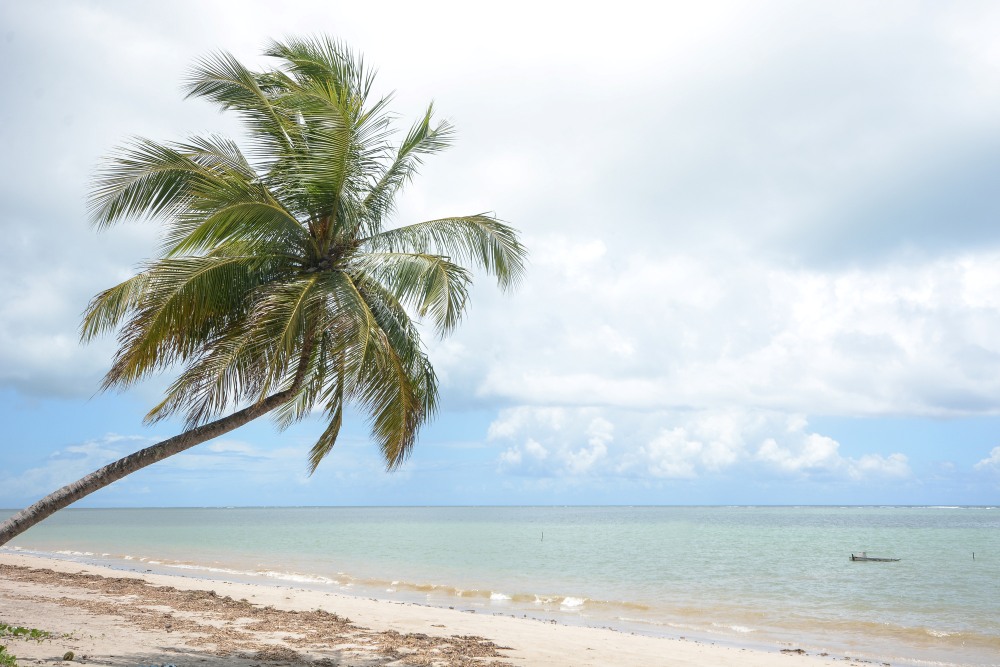
In Porto de Pedras, Praia do Patacho holds Blue Flag certification and lies within the country’s largest federal coastal conservation area. Manatee preservation programs coordinated by ICMBio add another layer to the seaside experience: here, environmental protection is not a marketing claim, but an operational reality.
Within this logic, the offer extends beyond beaches. Ecotourism, Afro-tourism and community-based experiences are gaining prominence. Guided visits through mangroves and natural pools, conservation projects, and culinary initiatives led by local actors reflect a model built on a controlled scale, where small businesses and their immediate environment remain closely connected.
Acting collectively under the Nordeste banner
Alagoas also advances within a broader regional framework. As a member of the Consórcio Nordeste, which brings together the nine northeastern states, it participates in a shared effort to strengthen international positioning. This coordination facilitates combined itineraries and enhances the visibility of the region as a whole.
For Alagoas, the equation is delicate: integrating into a regional dynamic without becoming diluted. The response lies in clarity of positioning. Where other states emphasize volume or urban density, Alagoas appears to favor a more serene reading of the coastline, where conservation and proximity to communities become differentiating elements.
Beyond the strategic framework, this movement reflects a broader evolution. Destinations can no longer be content with being “known”: they must be understandable, identifiable, and easily integrated into international itineraries. By structuring its narrative without abandoning its human scale, Alagoas seeks to cross this threshold — not by changing its nature, but by making more legible what has long defined its singularity.
Photos: Visit Brasil | Marco Ankosqui