
Long considered a secondary crossing in the Andes between Chile and Argentina, Paso Pehuenche is gradually establishing itself as a tourist route. Between the Maule region and Malargüe, both countries are now working to develop shared itineraries, building on complementary experiences on either side of the mountain range.
The agreement signed between Sernatur Maule and the municipality of Malargüe, during the 62nd Binational Meeting of Paso Pehuenche, formalizes efforts that have been underway for several years. The goal is to transform this corridor—still largely used as a seasonal crossing point—into a true tourism route.
Growing traffic
Between January and October 2025, nearly 190,000 people and 47,500 vehicles crossed Paso Pehuenche. This increase confirms the evolving role of the crossing, now recognized as an increasingly important entry point for overland tourism in the region.
To support this trend, authorities have begun joint efforts to market the destination. The three-year agreement includes the creation of jointly designed itineraries, coordinated participation in trade fairs, and information sharing to refine commercial strategies.
Crossings such as the Planchón-Vergara pass complement this network, with the aim of offering routes that combine landscapes, mountains, and activities on both sides of the border.
Experiences on both sides of the Andes
The corridor operates on a clear complementarity between the two territories.
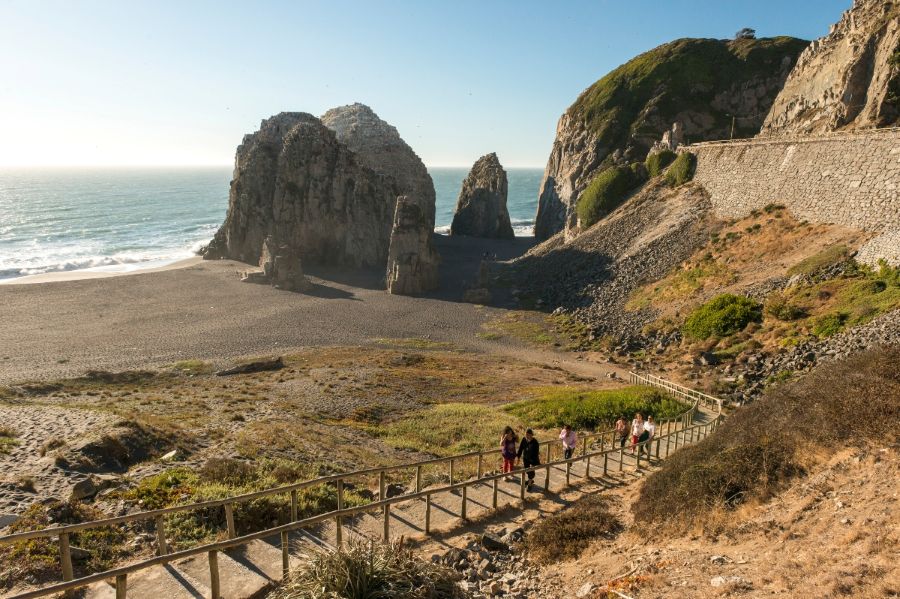
In Maule (Chile), Talca serves as a hub, offering 3- to 5-star hotels as well as rural accommodations in Curicó and Linares. Connectivity via Route 5 to Santiago, supported by a secondary road network, provides easy access to wine valleys and pre-Andean areas. Visitors can enjoy vineyard tours and tastings, relax in the thermal baths of Panimávida and Quinamávida, or engage in water activities on the lakes Colbún and Vichuquén.
On the Argentine side, Malargüe focuses more on nature and adventure experiences. The resorts of Las Leñas and Real del Pehuenche offer infrastructure for winter sports, including ski schools and equipment rentals. Visitors can go trekking on the Malacara volcano,horseback riding, orsport fishing in the Llancanelo lagoon.
The Pierre Auger Observatory offers guided tours accessible to all ages, while local gastronomy—centered on goat, trout, and artisanal cheeses—is integrated into the itineraries.
A smoother border, a practical lever
Border crossing remains a key factor in the overall experience. The integration of solutions such as biometrics, pre-authorization systems, and secure data exchange is already helping reduce waiting times and simplify procedures. These developments enable smoother and more predictable travel, both for visitors and operators.
A model set to expand
Beyond traffic volumes, the Maule–Malargüe case shows how a little-used route can gradually become part of tourism itineraries.
This type of initiative could be replicated at other borders across Latin America, where complementarities already exist but remain underutilized.
The objective is simple: transform a crossing point into a travel experience, and encourage visitors to extend their journey on both sides of the border.
Photo: Sernatur