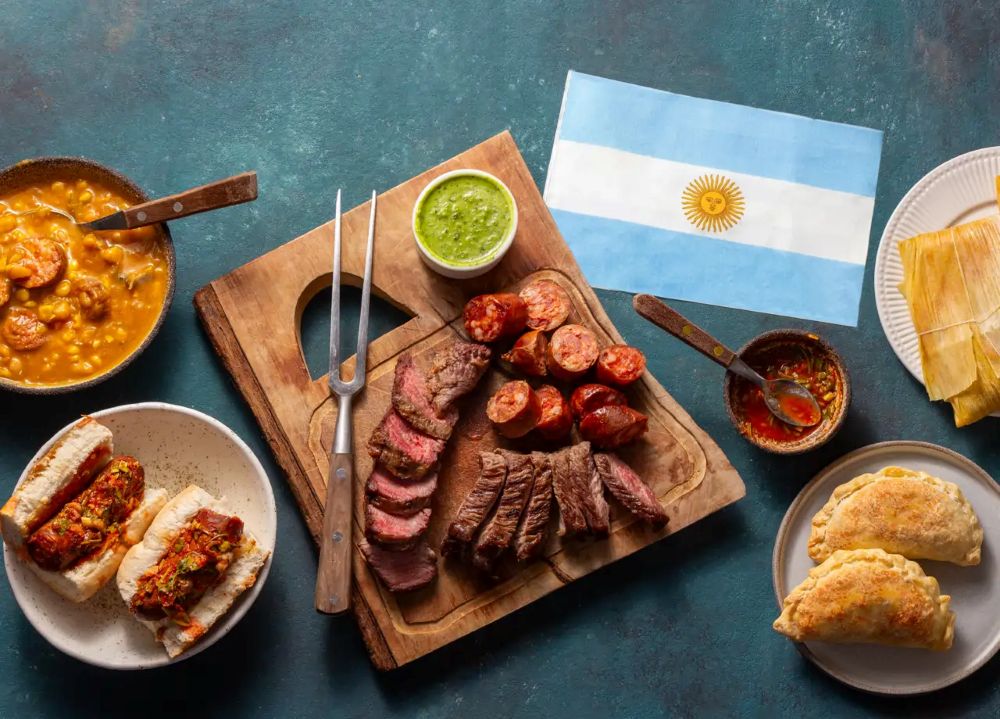

In Argentina, people often talk about meat. However, stopping at asado alone would miss the essence. Eating in the country is mostly about moments: a quick snack, a mid-morning break, a shared meal that stretches on. What you eat matters, of course — but the time and place matter just as much.
From street stalls to family tables, from dishes simmered for hours to a sweet touch at the end of the day, these five specialties offer a window into everyday Argentine life.
Empanadas
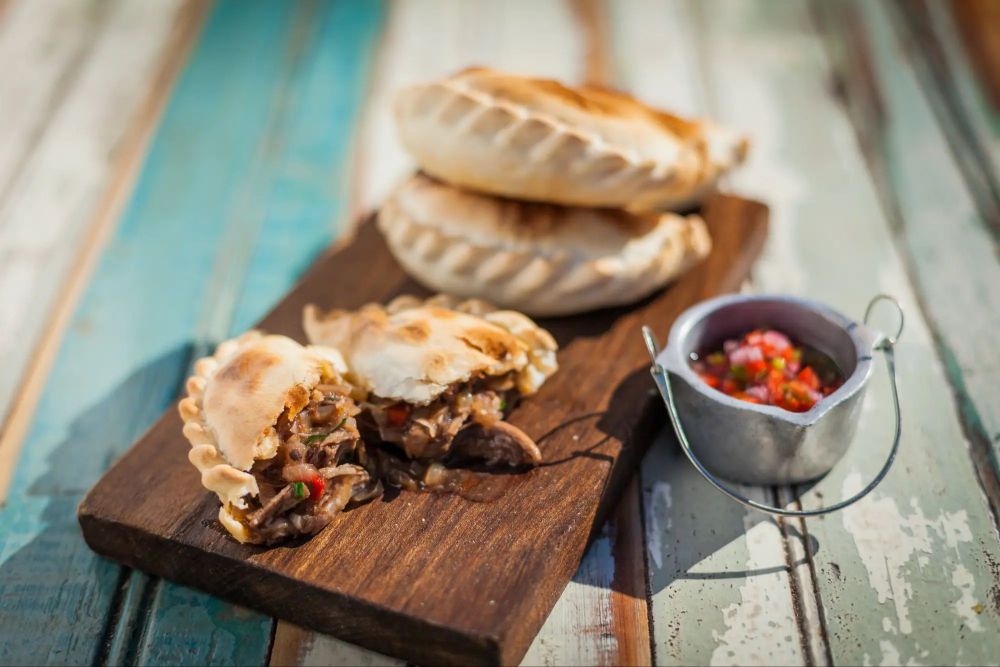
Empanadas are both an appetizer and a full meal. Of Spanish origin — with Arab roots — they have developed their own identity in Argentina. Their easy-to-carry format explains their ubiquity: found in bakeries, restaurants, and street stalls, fried or baked. Rather than a single recipe, there are many variants, each province defending its own.
In the northwest, especially Tucumán and Salta, they are prepared with knife-cut beef, onion, hard-boiled egg, and spices such as cumin and paprika. In Tucumán, they are generally baked, while in Salta, they include potato and a juicier filling, often cooked in fat. In Jujuy, they may contain olives or even llama meat, served with spicy sauces.
Further south, other profiles emerge, like Córdoba’s, slightly sweet due to sugar sprinkled on the dough, or coastal versions featuring river fish. Fillings like ham and cheese, chicken, vegetables, or humita (corn paste) are also common.
Choripán
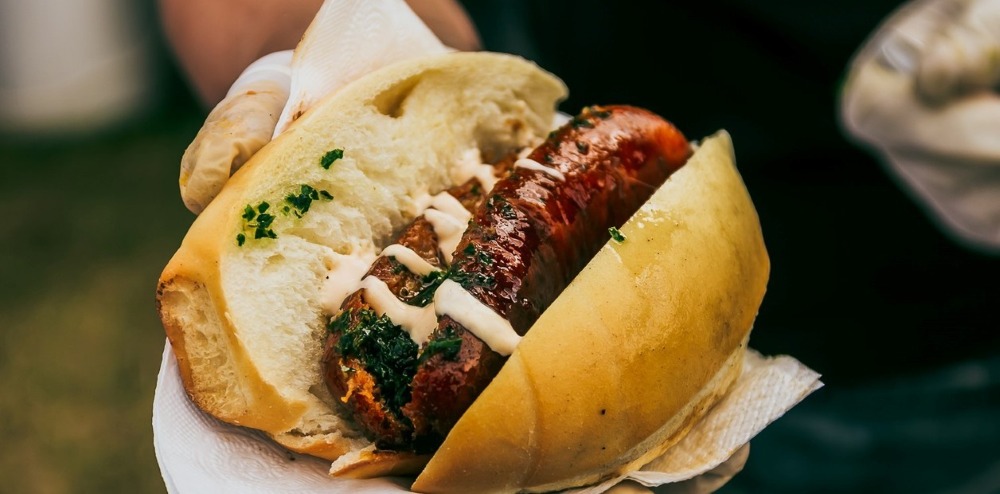
Hard to get simpler… and more iconic. Choripán, a grilled chorizo sandwich served in bread, is part of the Argentine urban landscape. Found outside stadiums, at fairs, on street corners, or near a grill.
While it often accompanies asado, it has its own identity. It all depends on the cooking: the sausage, usually made of beef and pork, is grilled over embers, then served with chimichurri — parsley, garlic, oil, vinegar, and spices — and often with a salsa criolla of tomato, onion, and peppers.
Locro
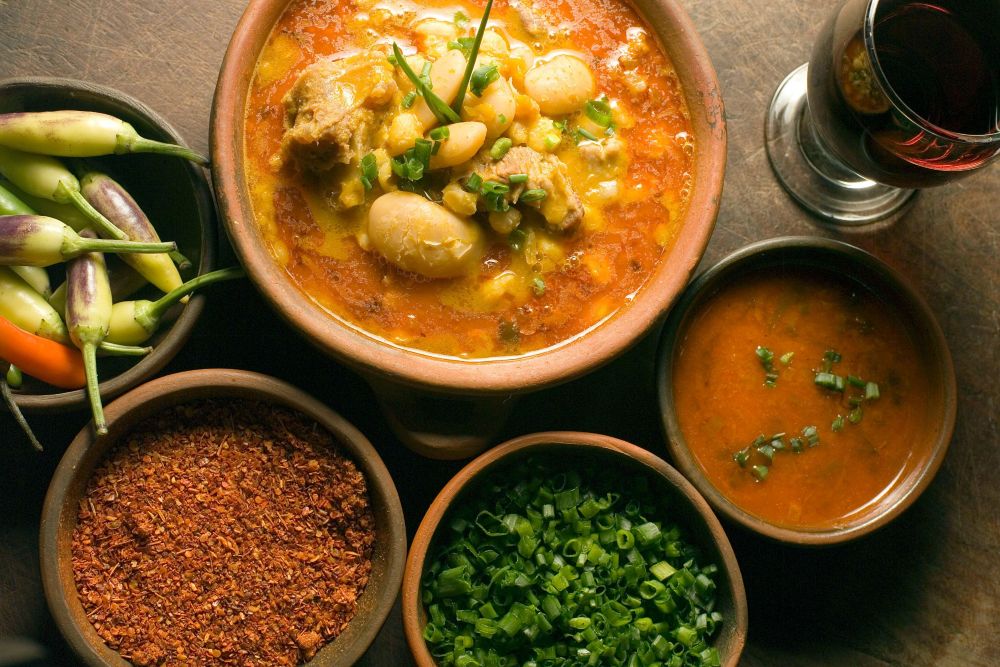
Locro is inseparable from major Argentine national dates, such as May 25 (national holiday) or July 9 (Independence Day). This thick stew, from pre-Hispanic Andean traditions, evolved by incorporating ingredients introduced during colonization, like beef and pork.
Its base combines corn, beans, squash, and various cuts of meat, simmered for hours to achieve a dense texture. Often enhanced with a paprika and chili sauce.
Served hot and in generous portions, locro symbolizes sharing, almost ceremonially, unlike street food.
Asado
Impossible to talk about Argentine cuisine without mentioning asado (argentine barbecue). More than a dish, it’s a way to gather. Inherited from the gaucho traditions of the pampas, this slow-cooked meat — usually beef — is prepared over wood or charcoal.
What matters here is time. The fire is carefully managed, and the meal is built in stages: first sausages and offal, then the main cuts. Regional variations exist, like asado a la cruz, where meat is cooked vertically for several hours.
Alfajor

With alfajor, we change gears. This sweet consists of two soft cookies filled with dulce de leche (a kind of caramel-like milk spread), sometimes coated in chocolate or sprinkled with sugar.
More than a dessert, it’s a pause. Enjoyed with coffee, mate, or simply as a snack. Variations are numerous, from cornstarch-based versions to regional adaptations playing with textures and fillings.
Widely available in shops and markets, it is also one of the most common souvenirs from the country. Some even talk about an “alfajor route”: a way to travel across Argentina tasting its different versions.
Beyond flavors, these dishes have one thing in common: they take on another dimension at the right moment. A choripán doesn’t taste the same by the roadside as it does outside a stadium; locro is inconceivable outside national holidays; asado loses meaning without the time it demands. It is in this encounter between dish, place, and moment that the journey is experienced differently.
Photos: Larisa Blinova | Visit Argentina | D.R