Footprints frozen in rock, steep walls crossed by ancient traces, sedimentary layers that tell a story of movement rather than immobility: in Latin America, major dinosaur-related sites are not confined to museum display cases. They are embedded in open landscapes, where palaeontology is experienced at a territorial scale. These are places where specialised tourism can rely on solid scientific foundations to offer high value-added experiences.
Bolivia: footprints of global significance
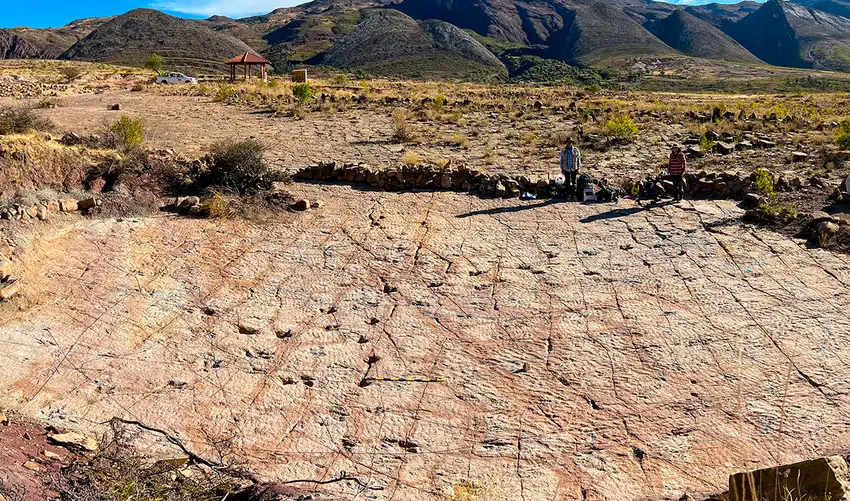
Bolivia is home to one of the most remarkable ichnological heritages in the world. In Toro Toro National Park, the Carreras Pampa site brings together more than 16,600 theropod dinosaur footprints dating from the Late Cretaceous: a unique ensemble in terms of scale. These traces make it possible to reconstruct movements, estimate animal size and, in some cases, outline behaviours observed shortly before their disappearance.
In Sucre, Parque Cretácico complements this heritage with the spectacular site of Cal Orck’o. Thousands of footprints appear on an almost vertical wall, uplifted by subsequent tectonic movements. Together, these sites have gradually established Bolivia as an international reference in the study of dinosaur footprints, a field long considered marginal in the country and now fully recognised.
You may also like: Sucre: A Journey into the Cradle of Bolivia
Argentina: Patagonia, museums at the heart of scientific structuring
In Argentine Patagonia, palaeontological heritage is primarily organised around specialised museums, true pillars of research and scientific outreach. In Villa El Chocón, the Ernesto Bachmann Municipal Palaeontological Museum displays fossils from the Neuquén Basin, including those of Giganotosaurus carolinii, often presented as the largest carnivorous dinosaur known to date, surpassing Tyrannosaurus rex. Its geographical location facilitates integration into overland routes and regional itineraries.
More to the north, in Plaza Huincul, the Carmen Funes Museum houses one of the most important collections in the country. The imposing sauropods exhibited there have made a major contribution to scientific research and to the international recognition of Patagonia as a key territory for the study of the Cretaceous.
You may also like: Authentic Patagonia: Focus on Villa La Angostura
Mexico: Coahuila and institutional consolidation

The state of Coahuila concentrates some of Mexico’s most significant palaeontological remains, with discoveries of skeletons, eggs and nests dating from the Late Cretaceous. The Rincón Colorado palaeontological zone, in the municipality of General Cepeda, stands out as the first palaeontological site open to the public in the country and as one of the most studied sites in northern Mexico.
Protected by a specific legal framework, the site offers interpretive trails crossing former marine and continental environments, now transformed into desert landscapes. Its proximity to Saltillo and the region’s cultural offer make it easy to integrate into broader educational and tourism circuits.
Colombia: Villa de Leyva and the memory of an ancient sea
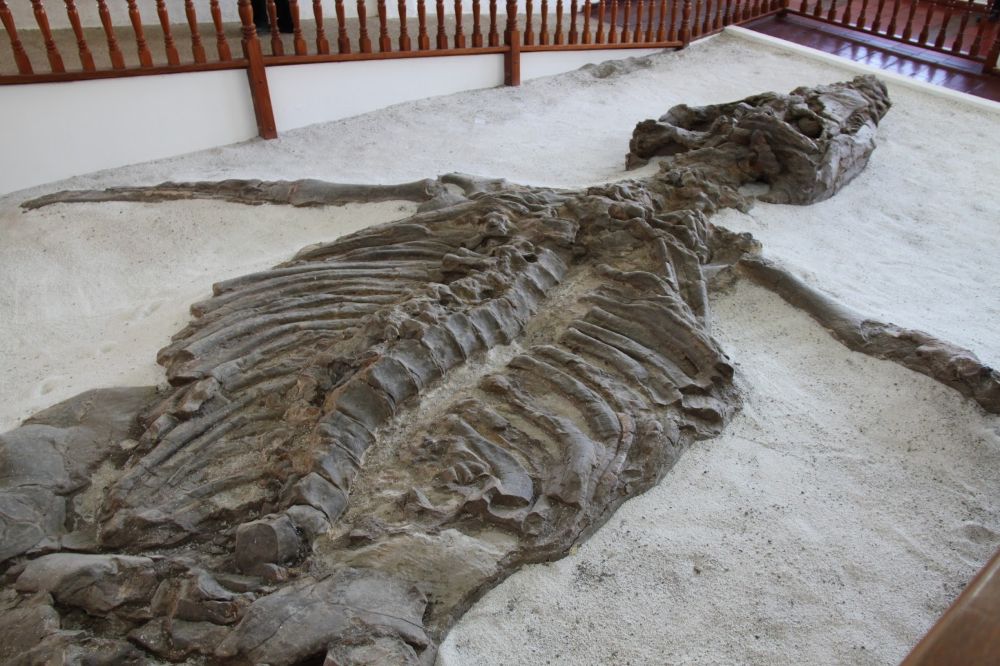
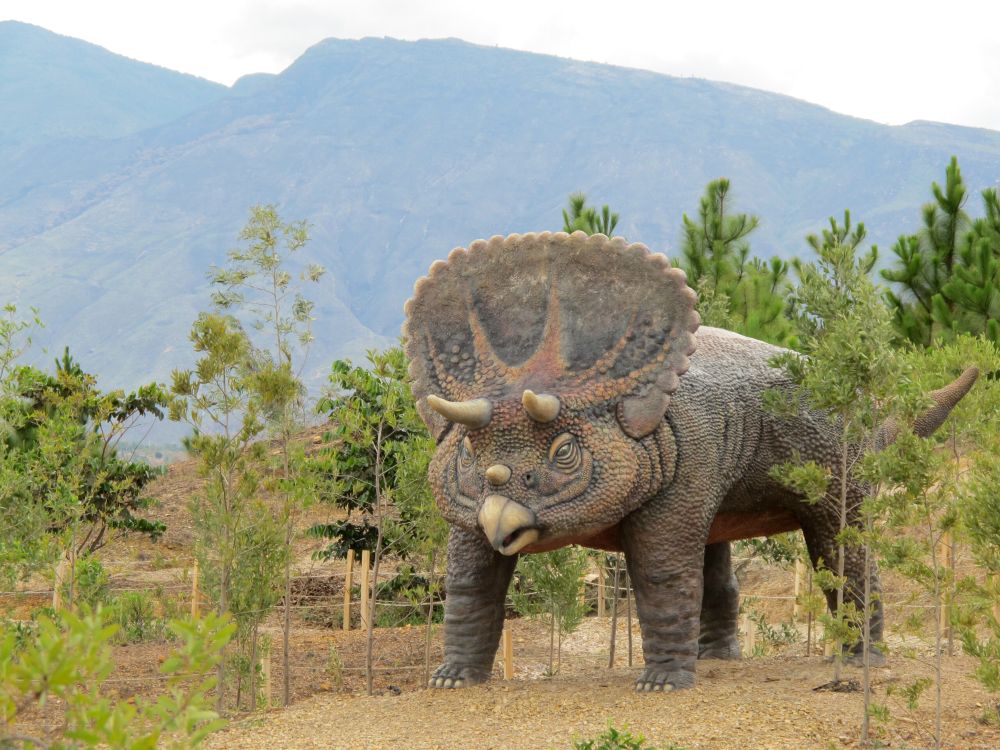
In Colombia, palaeontological research is mainly concentrated on the Cundiboyacense high plateau, a region covered by an inland sea during the Cretaceous. In Villa de Leyva lies one of the country’s most emblematic discoveries: the almost complete fossil of Kronosaurus boyacensis, a large predatory marine reptile — reaching up to 11 metres in length — displayed at the National University’s Palaeontological Museum, known as El Fósil. This discovery strengthened the region’s role in the study of prehistoric marine fauna.
The Villa de Leyva Palaeontological Museum complements this reading of the territory by bringing together ammonites, marine reptiles and other fossils from surrounding geological formations, offering a coherent view of the local geological past.
You may also like: Discovering Villa de Leyva, Between History and Nature
Through these different sites, palaeontology asserts itself in Latin America as a genuine tool for reading territories. Footprints, fossils and specialised institutions make it possible to introduce the concept of deep time into travel itineraries, while highlighting the scientific interest of regions still little known to the general public. This approach enriches the tourism offer, strengthens local narratives and affirms Latin America’s place as a major area for research and the transmission of the history of life on Earth.
Photos: Visit Mexico | R. Esperante | Paleontología en Colombia | El Gran Valle de los Dinosaurios