Peru is changing the way it presents itself on the international stage. Rather than assembling a fixed narrative built around iconic sites, tourism promotion is now structured around targeted experiences, lesser-known territories and products designed for clearly identified traveler profiles. This shift reflects less a change in direction than a new way of telling the country’s story, aligned with current market expectations.
Segmentation as a starting point
The strategy led by PromPerú is based on a simple principle: starting from traveler motivations rather than from a list of places. Peru is therefore focusing on several priority segments, including adventure and nature tourism, gastronomy, cultural experiences and religious tourism, notably through products such as the Route of Pope Leo XIV, directly linked to the history and landscapes of different regions.
This approach makes it possible to adapt messaging, tools and offerings to the specific expectations of each audience, moving beyond a uniform reading of the destination.
The adventure traveler as a common thread
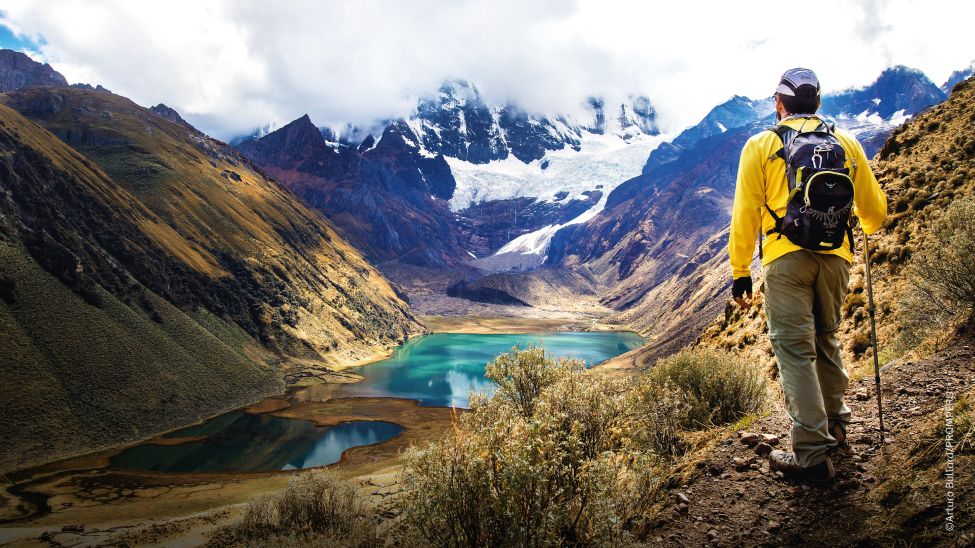
Among these segments, the adventure traveler occupies a central position. According to a PromPerú study, these international visitors stay an average of thirteen nights in the country and spend nearly USD 1,813 per trip, a level above the international average. Mostly aged between 25 and 34, they come from markets such as the United States, Brazil and Spain, plan their trips in advance and concentrate their entire stay within Peru.
This profile supports the emphasis on experiences linked to trekking, high-altitude environments and natural landscapes, particularly in regions such as Áncash or the Amazon, often perceived as secondary within traditional itineraries.
Our article: Cordillera Blanca: Peru off the beaten track
Connectivity and tools supporting travel planning
To support this shift in narrative, accessibility remains a key issue. Air connectivity is presented as a lever to facilitate the arrival of long-haul travelers and encourage longer stays. In this context, airline LEVEL has recently launched a direct flight between Barcelona and Lima, while a new air services agreement between Peru and Australia paves the way for future routes.
Our article: Focus on Aviation News in Latin America – January 2026
At the same time, the strategy incorporates digital tools aimed at travel preparation. The development of an AI-based trip planner, scheduled for launch in April 2026, is designed to allow travelers to build personalized itineraries based on their interests, reinforcing the logic of tailor-made experiences.
Diversifying without diluting
Expanding the offer is another pillar of this repositioning. Regions such as Lambayeque stand out for increased visitor numbers and campaigns highlighting cultural and gastronomic routes. The objective is not to shift attention from one site to another, but to propose credible alternatives capable of extending stays and improving the distribution of visitor flows.
Through this strategy, Peru is not only seeking to diversify its offer, but also to change the way travel is conceived and told. By starting from motivations, uses and profiles, the country is building a clearer narrative for international markets, where experience comes before the list of places.
Rather than an accumulation of iconic sites, a personalized reading of the territory is proposed from the planning stage. An approach that repositions Peru as a country to be explored at one’s own pace, according to more engaged and more sustainable travel logics.
Photo: Peru travel