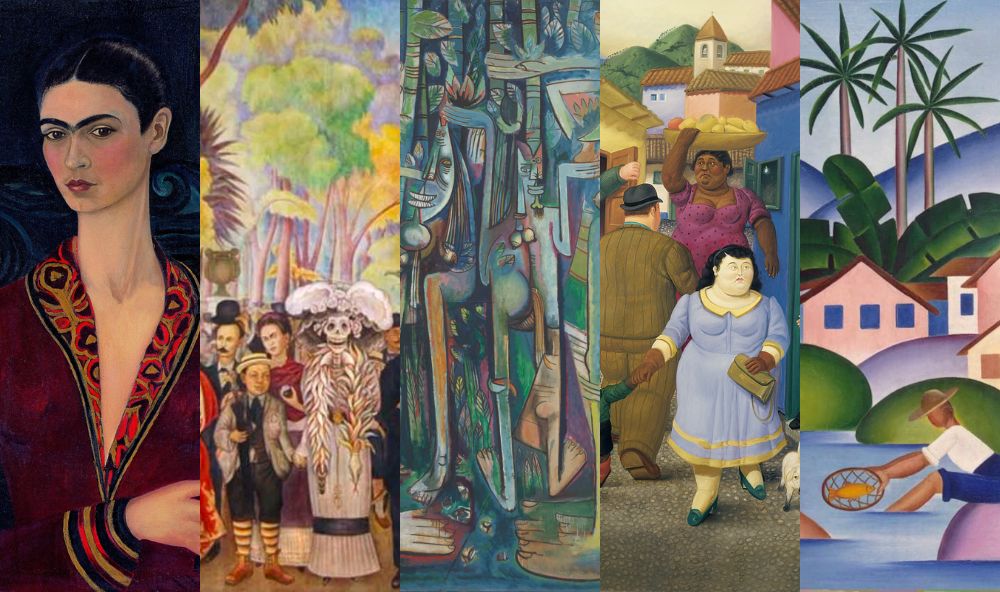

Throughout history, societies have sought to tell their world through images. In Latin America, painting and sculpture have often served to express a reality shaped by powerful landscapes, complex histories, and diverse cultures. Over the course of the 20th century, several artists transformed this perspective into a visual language capable of telling the story of the continent itself.
Across their paintings and sculptures, they also offer another way to travel across Latin America: by following the cities, landscapes, and cultures that nourished their inspiration.
Tarsila do Amaral: Inventing a Brazilian Modernity
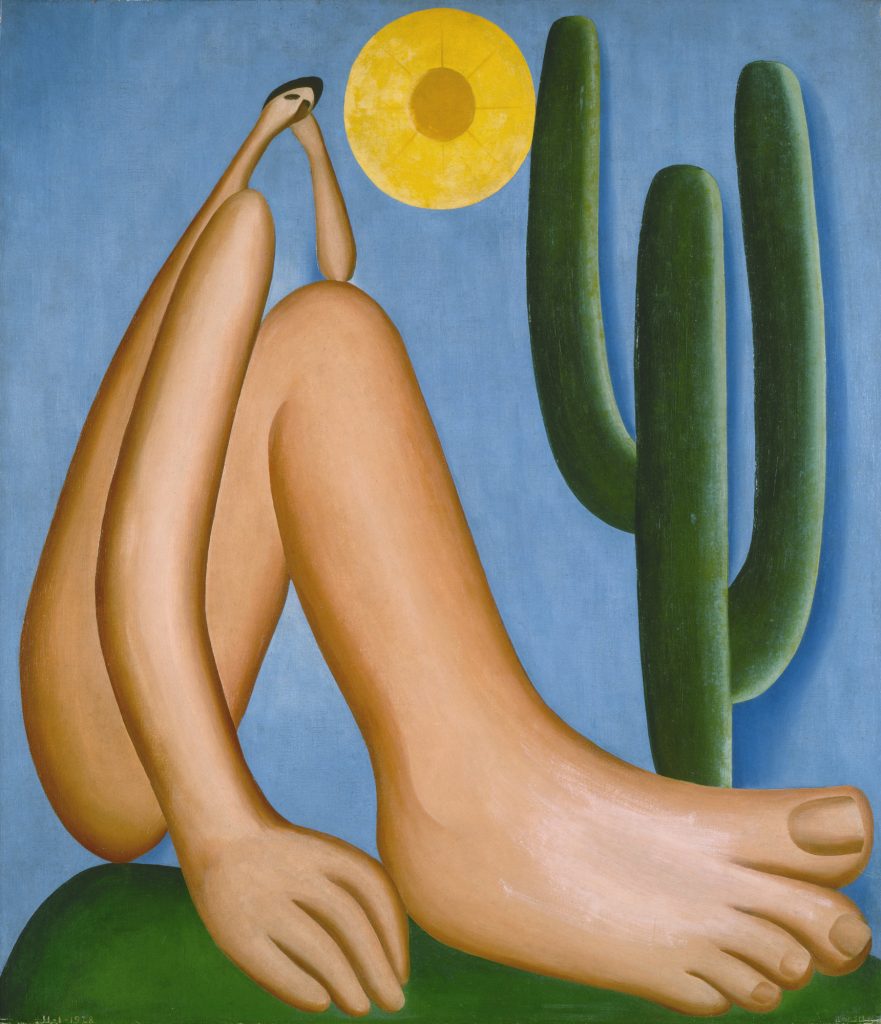
A major figure of Brazilian modernism, Tarsila do Amaral (1886–1973) helped redefine painting in Brazil in the 20th century. Partly trained in Paris, where she encountered the European avant-gardes, she nevertheless chose to return to the colors, landscapes, and imaginaries of her own country to develop a distinctive artistic language.
Her most famous painting, Abaporu, became the emblem of the Anthropophagic movement, which proposed to “devour” foreign cultural influences in order to transform them into a deeply Brazilian artistic expression. The word abaporu, derived from Tupi-Guarani, literally means “man who eats man,” a metaphor that captures the essence of the movement.
Today, a large part of her work can be discovered at the Museu de Arte de São Paulo and the Pinacoteca de São Paulo, two major institutions for understanding the evolution of modern art in Brazil.
Our article: São Paulo: Metropolis of Contrasts and Cultural Capital of Brazil
Wifredo Lam: At the Crossroads of the Caribbean and the Avant-Gardes
Cuban painter Wifredo Lam (1902–1982) occupies a unique place in the history of 20th-century art. After training in Europe and interacting with artists such as Pablo Picasso, he returned to Cuba in the early 1940s. This return marked a turning point: his works began to incorporate symbols, mythologies, and imagery linked to Afro-Cuban cultures.
His most famous painting, The Jungle, blends human silhouettes, vegetal forms, and hybrid figures in a dense composition that evokes both tropical vegetation and Caribbean spiritual traditions.
The work is now part of the collection of the Museum of Modern Art (MoMA) in New York. In Havana, the Museo Nacional de Bellas Artes also holds an important collection of his works, offering an in-depth look at his artistic trajectory.
Diego Rivera: Painting History on Walls
With Diego Rivera (1886–1957), painting moved beyond galleries into public space. A central figure of Mexican muralism, he transformed the walls of public buildings into vast visual narratives where popular figures, historical episodes, and political references intersect.
His murals recount Mexico’s social history while asserting a vision of art meant to engage with society.
One of the most famous episodes of his career occurred in 1933, when he created a mural for Rockefeller Center in New York. The work was ultimately destroyed following a political dispute, becoming one of the most famous cases of censorship in the history of public art.
In Mexico City, the Museo Mural Diego Rivera now allows visitors to discover one of his best-known works: Dream of a Sunday Afternoon in the Alameda Central, a richly detailed fresco where several centuries of Mexican history converge.
Frida Kahlo: An Intimate Work That Became Universal
Few artists transformed their own lives into artistic material as intensely as Frida Kahlo (1907–1954). Marked by serious health problems and an accident that changed the course of her life, she developed a deeply introspective body of work combining self-portraits, personal symbols, and references to Mexican culture.
Her paintings explore identity, the body, and the female experience with a force that explains her enduring influence in art history.
Frida Kahlo also asserted Mexican cultural identity through her public appearance, notably by wearing traditional Tehuana clothing, which became one of the emblematic elements of her image.
In Mexico City, the Museo Frida Kahlo, located in the Casa Azul where she lived with Diego Rivera, preserves her personal objects, sketches, and several of her paintings, offering a unique insight into her creative universe.
Fernando Botero: The Art of Volume
It is impossible to mistake a work by Fernando Botero (1932–2023) for that of any other artist. The Colombian painter and sculptor developed an immediately recognizable style characterized by figures with exaggerated volumes and rounded forms.
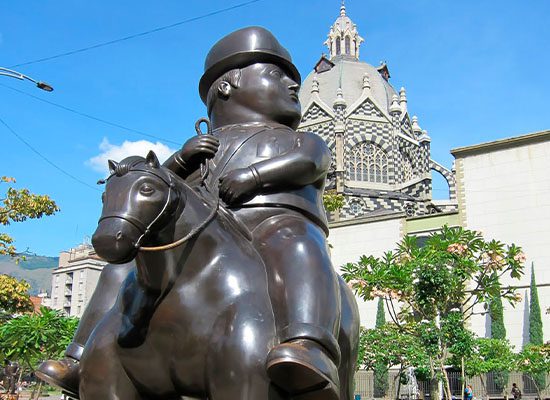
This play with proportions, often referred to as Boterismo, allowed him to explore scenes of everyday life, portraits, and historical references with a tone that is both ironic and critical in its view of society.
In Medellín, his hometown, Plaza Botero displays several of his monumental sculptures in the city center, while the Museo de Antioquia houses an important collection donated by the artist.
In Bogotá, the Museo Botero, managed by the Bank of the Republic, also brings together several of his works along with pieces by international artists from his personal collection.
From São Paulo to Havana, from Mexico City to Medellín, these artists show how Latin American art extends far beyond the borders of its places of origin. And for curious travelers, their works often offer an unexpected starting point: exploring the cities, landscapes, and cultures that shaped their vision.
Photos: MoMa | Medellin Travel