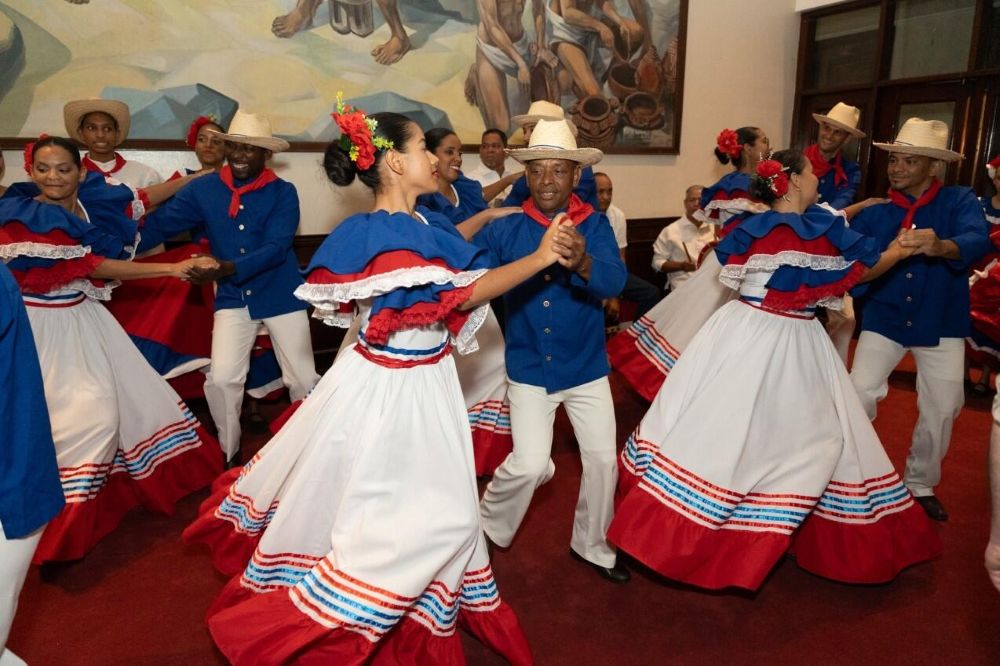
On the high plateaus of south-western Colombia, San Juan de Pasto enters each new year in a singular state. For a few days, the city changes its rhythm, its appearance and almost its language. The Carnaval de Negros y Blancos is not simply an event listed on the calendar: it is a deeply rooted tradition, a moment when urban space becomes a field of collective, artistic and social expression, marking the arrival of the new year with rare intensity.
A tradition shaped over time
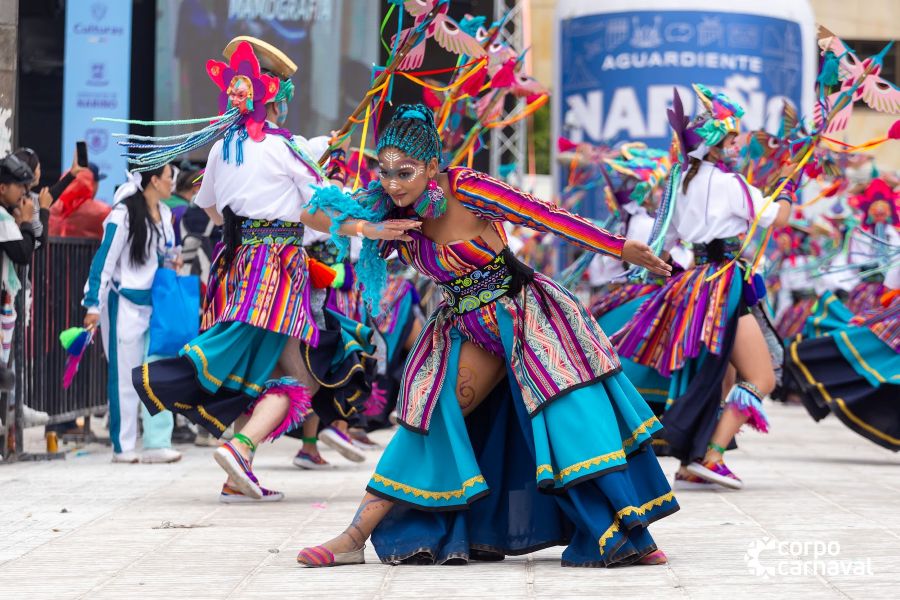
The carnival draws its origins from the agricultural rituals of the Pastos and Quillacingas peoples, who used masks, dances and celebrations to give thanks to the land after the harvests. With colonisation, these practices blended with Christian festivities and gradually took shape around the dates of Epiphany, between 2 and 6 January. At the end of the 19th century, the Juego de Negritos emerged, linked to the day of rest granted to enslaved people. In 1912, the Juego de Blancos complemented this dynamic, before students from Pasto introduced, from 1926 onwards, large urban parades and masquerades.
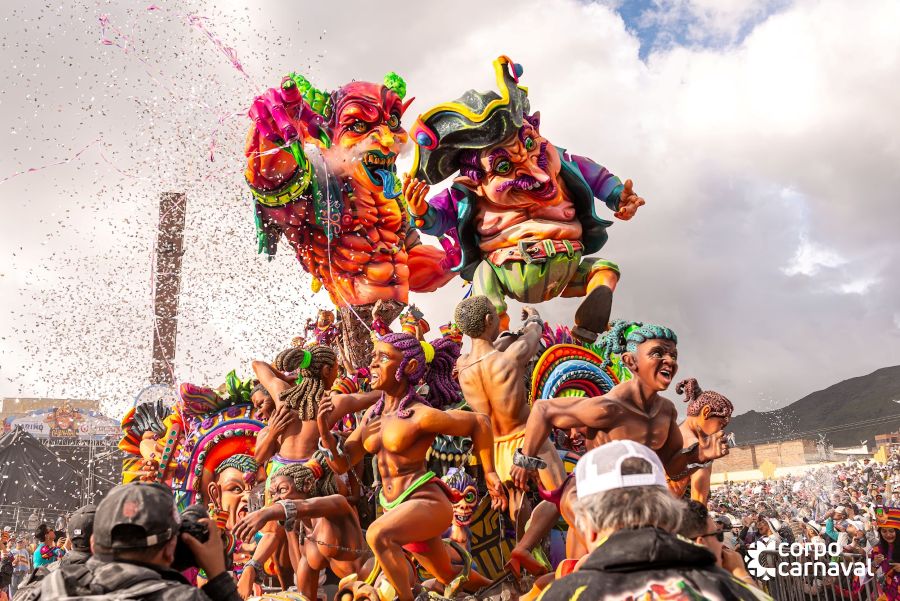
Over the decades, the carnival strengthened its artistic identity through the creation of monumental floats, crafted from clay and papier-mâché. These mobile works, both technical and narrative, became one of the defining symbols of the celebration. This singular trajectory, nourished by indigenous, colonial and contemporary layers, was recognised in 2009 with the inscription of the carnival on UNESCO’s Representative List of the Intangible Cultural Heritage of Humanity.
The unfolding of the festivities, from ritual to collective play
Although the heart of the carnival takes place in January, the festive atmosphere begins as early as 28 December with the Carnaval del Agua. On the 31st, the Desfile de Años Viejos symbolically marks the transition into the new year. 2 January signals the official opening with a tribute to the Virgen de Las Mercedes, followed by key moments such as the Familia Castañeda parade and the choreographic collectives.
The two central days give the carnival its full expression. Día de los Negros brings together residents and visitors around black face paint, a symbolic gesture of equality and sharing. The following day, Día de los Blancos closes the festivities under a shower of white talc covering streets and squares. Water, foam and paint then become an integral part of the urban game. It is best to be prepared: protecting electronic devices, wearing suitable clothing and planning movements in advance are all part of the experience.
Art as a guiding thread
What sets the Carnaval de Negros y Blancos apart is the groundwork that makes it possible. Throughout the year, the city lives to the rhythm of workshops and homes transformed into creative spaces. Costumes, masks and, above all, floats take shape there, sometimes over several months. These mobile sculptures, often several metres high, reflect transmitted know-how as well as great creative freedom, blending traditional references, satire and nods to current events.
Beyond the parades
For those who extend their stay, Pasto also reveals itself beyond the carnival. Just a few kilometres away, the Santuario de Las Lajas impresses with its spectacular setting above a canyon, while Lake La Cocha offers a calmer high-altitude interlude. Local gastronomy accompanies this exploration, with specialities such as hornado, pork slowly roasted with Andean spices, or helado de paila, an artisanal sorbet prepared by hand in a copper bowl.
When the music fades, the city catches its breath again. But nothing truly disappears. Workshops remain active, families already begin imagining the floats for the following year, and the streets seem to retain the echo of past dances. Attending the Carnaval de Negros y Blancos also means observing this suspended moment when the celebration ends and a new year begins, carried by the collective memory of Pasto.
Photos: Carnaval de Negros y Blancos