
Along the Caribbean coast of Central America, where the sea meets the jungle and the mangroves, a culture has managed to endure despite centuries of deportation and colonization: the Garifuna people.
Its history began to take shape in the 17th century in the Caribbean, on the island of Saint Vincent, where an Afro-Indigenous society gradually emerged from the encounter between African populations and Carib and Arawak peoples. A society that continues today to assert itself through its language, music, cuisine, and strong community life.
A journey marked by exile and resistance
The name Garifuna comes from Karifuna (“cassava eaters”), a term used by the inhabitants of the island of Saint Vincent, in the Lesser Antilles, between Saint Lucia and Grenada. In the 17th century, following a shipwreck, a group of maroon Africans settled there and integrated with Arawak and Carib populations, giving rise to a new society with its own language and ways of life, outside the dominant slave system.
For more than a century, they resisted colonial pressure until their deportation by the British in 1797 to the island of Roatán, off the coast of Honduras. From there, they spread along the continental Caribbean coast, across territories extending as far as Belize.
An identity passed on
A key part of Garifuna identity lies in language and music. The language, rooted in African, Arawak, and Carib origins, has been enriched by French and English influences. It remains alive, especially through songs, oral storytelling, and rituals, where it transmits both history and ways of life.
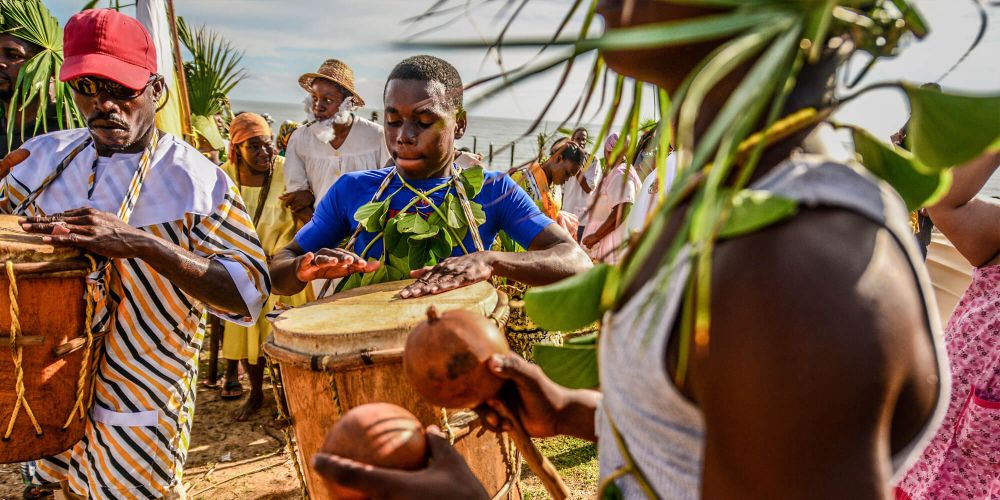
In community villages, music is not a separate element. It structures moments of collective life. The drum, known as garaon, sets the framework. A first rhythm establishes itself, steady, while a second engages in dialogue—improvising and responding.
Around it, songs rise, often performed in groups. They tell stories, transmit knowledge, and create connections. Maracas (sísiras) and conch shells complete the ensemble, but it is above all the interaction between the percussion instruments that defines Garifuna music.
Dance is part of the same movement. Punta, the most visible form, stands out for its energy and presence in both celebrations and everyday life. In contrast, other forms such as yancunú retain a more symbolic dimension, linked to history and memory.
Flavors that tell a story
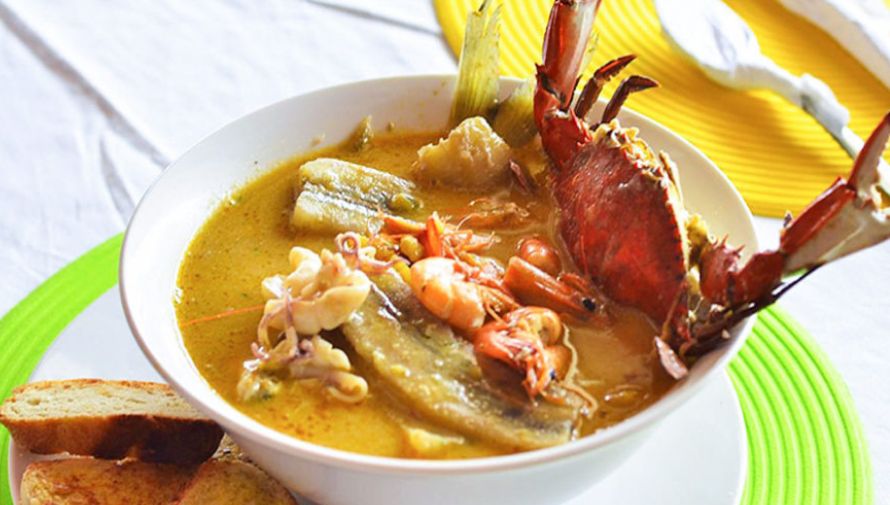
Cuisine is another expression of this culture. It is based on a direct relationship with the territory, using ingredients such as coconut, cassava, plantain, and seafood.
Tapado, a seafood soup with coconut milk, is prepared slowly, often to be shared. Machuca, made from mashed plantain, accompanies a rich broth. Casabe, cassava bread, requires precise know-how and a preparation time that goes far beyond that of a simple recipe.
In these dishes, there is a sense of continuity. They are not presented as specialties, but as everyday essentials.
Celebrations and rituals: a shared memory
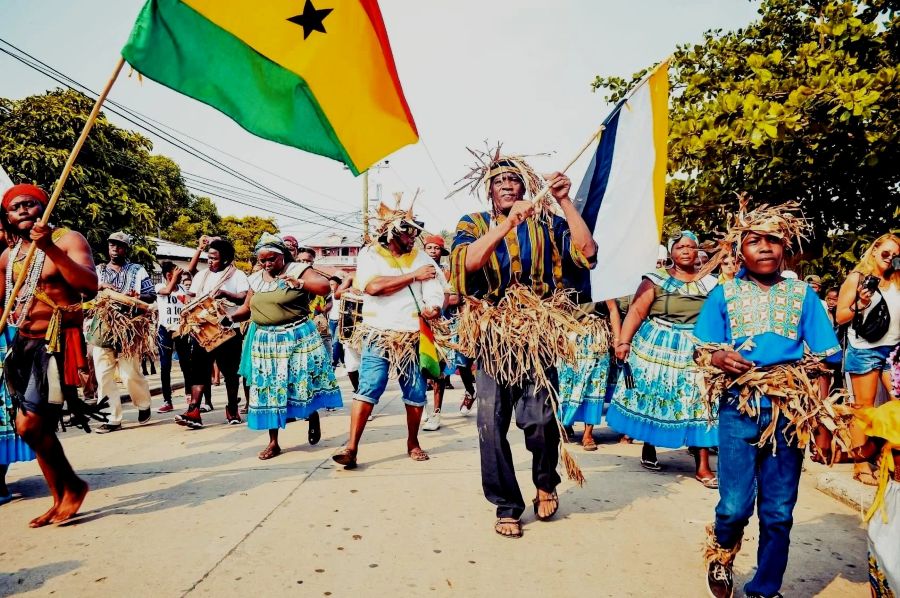
Garifuna celebrations are moments of collective recognition. Dugú, one of the most important rituals, is a space where music, singing, and dance are used to communicate with ancestors. Led by a buyei (shaman), this ceremony can last several days and involves the entire family, including those living far away.
At the same time, certain dates make this identity visible on a larger scale. In November, several communities commemorate their arrival on the coasts of Central America: on the 19th in Belize and on the 26th in Guatemala. These days include reenactments of the landing, communal meals, and intergenerational gatherings.
Territory and experiences
Today, these traditions are not isolated. They are rooted in clearly defined territories. In Dangriga or Hopkins in Belize, music shapes much of local life.
In Honduras, villages such as Triunfo de la Cruz offer insight into everyday practices, from fishing to cooking and community encounters.
In Guatemala, Livingston provides a unique gateway. Accessible only by boat, the town immediately sets the tone with its lively dock and open-air markets: the culture is not presented—it is observed and experienced.
Discovering Garifuna culture goes far beyond observing dances or landscapes. It means entering a history, listening to rhythms, tasting dishes that carry memory, and sharing moments with a community. Each expression—music, cuisine, ritual—contributes to the continuity of a culture that, despite the ruptures in its history, remains fully alive.
Photos: Belize Travel | Guatemala.com | Roatan Tourism Bureau