
For Brazil, the Atlantic Ocean is not only a geographical boundary. It shapes coastal territories, supports local economies and structures the life of many communities. It is also around this maritime heritage that the country is now seeking to strengthen its international image.
In Lisbon, during the event Galeria Visit Brasil Oceano, the Brazilian Agency for International Tourism Promotion (Embratur) and the Instituto Ambientes em Rede (IAR) signed an agreement aimed at promoting abroad their destinations that hold the international Blue Flag certification.
The agreement, signed for two years, plans to coordinate market analysis, strategic promotion and commercial support so that these destinations can be better integrated into international promotion campaigns, particularly among travelers who consider environmental criteria when choosing where to travel.
From Lisbon to international markets
The presentation of this agreement in Lisbon is not coincidental. It illustrates how Brazil structures its tourism promotion toward certain key outbound markets.
The flow of Portuguese visitors to the country has grown significantly in recent years. In 2025, 273,483 Portuguese tourists visited Brazil — the highest level since 2007 — representing an increase of more than 25% compared to 2024. Portugal has thus established itself as one of the main European markets for the destination.
For representatives of the tourism sector and the Brazilian diplomatic corps present at the signing, this alliance should make it possible to better connect the coastal tourism offer with criteria that have become essential for many travelers: safety, transparent site management and respect for the environment.
A label reflecting years of commitment
The Blue Flag certification distinguishes beaches and marinas that meet strict standards regarding water quality, environmental management, safety and environmental education. More than a simple label, it reflects long-term work between public authorities, local communities and tourism stakeholders to preserve coastal spaces while allowing their use.
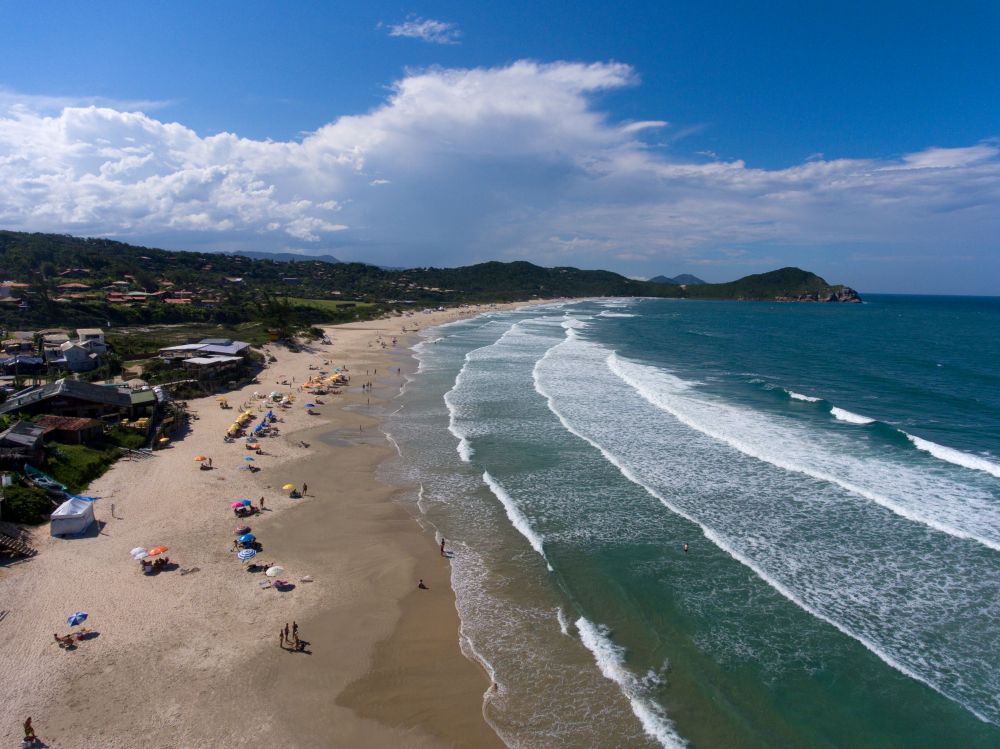
For the 2025–2026 season, Brazil reached a record of 60 certified destinations, including 50 beaches and 10 marinas. The certification is based on 34 measurable international criteria, including water quality, safety, infrastructure and environmental education.
The recognized sites are mainly concentrated in the state of Santa Catarina, which accounts for more than half of the awarded locations, as well as in Rio de Janeiro, but they also include destinations in Bahia, São Paulo and Alagoas, illustrating the diversity of the Brazilian coastline.
Our article: Alagoas, another reading of Brazil’s Northeast
For tourism professionals, these beaches and marinas can thus be presented with concrete data on environmental quality and site management—an aspect that is particularly appreciated in European and North American markets.
Beyond certifications: human stories connected to the sea
Brazil’s international promotion is not based solely on environmental indicators. Audiovisual projects such as the series Tourism Transforms also show how the sea influences daily life in coastal communities.
From Salvador to Florianópolis, these stories highlight artisanal fishing, local craftsmanship and cultural traditions linked to the coast. They illustrate how preserving marine ecosystems also provides essential support to local economies and can enrich the visitor experience.
In this perspective, travel also becomes a way to understand the links between territory, culture and environment — an approach that attracts more travelers every year who are looking for genuinely responsible and sustainable experiences.
At a time when sustainability has become a frequent argument in tourism promotion strategies, the question often concerns the credibility of the commitments being announced. In this context, international labels such as the Blue Flag provide concrete reference points based on measurable criteria. For a country like Brazil, whose coastline and biodiversity have long been among its main assets, these initiatives also demonstrate a willingness to place tourism development within a long-term vision. By promoting its certified coastline internationally, the country seeks to transform the richness of its natural heritage into a sustainable lever for its tourism attractiveness.
Photo: Renato Soares