Golden sand dunes plunging into the Caribbean Sea, fjords reminiscent of Scandinavia, glaciers in the tropics and even penguins on the equator in Ecuador. Latin America is home to landscapes and natural curiosities more commonly associated with other parts of the world. Six discoveries, from the Caribbean coast to the far south of the continent.
1. Sand dunes at the edge of the Caribbean Sea, Colombia
In the far north of Colombia, the department of La Guajira has landscapes that evoke the Sahara more than the usual image of the Caribbean. Here, the desert meets the sea, between expanses of sand, cacti, lagoons and isolated beaches.
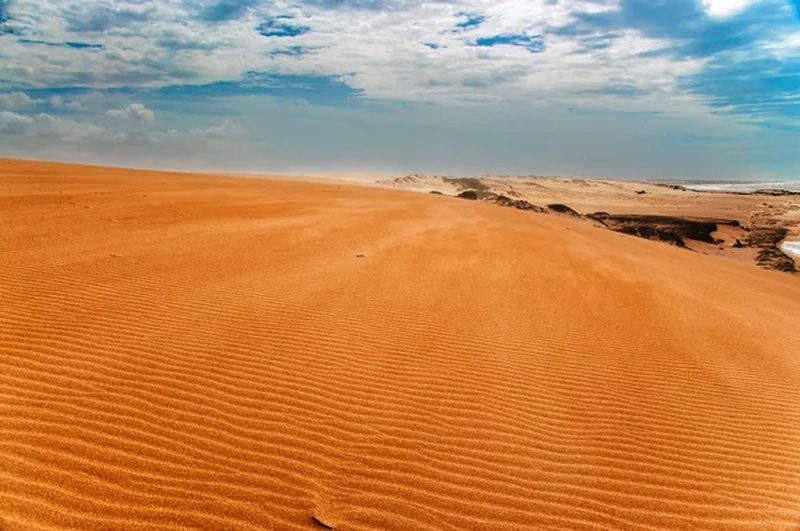
The scenery is particularly striking at the Taroa dunes, near Punta Gallinas, the northernmost point of mainland South America. Immense slopes of ochre sand descend towards the turquoise waters of the Caribbean Sea.
This territory is also home to the Wayúu, Colombia’s largest Indigenous people, who are also present in northwestern Venezuela. The communities continue to preserve their language, Wayuunaiki, as well as their traditions and artisanal skills.
Reaching Punta Gallinas generally requires a multi-day excursion by 4×4 from Riohacha or Santa Marta, accompanied by a local guide. From December to April, the tracks are usually more accessible. Between September and November, rainfall can make travel more difficult.
2. Fjords worthy of Scandinavia, Chile
There is no need to travel to Norway to sail between steep mountains and narrow inlets. In southern Chile, Patagonia has an immense network of fjords, channels and islands, with landscapes shaped by successive glaciations.
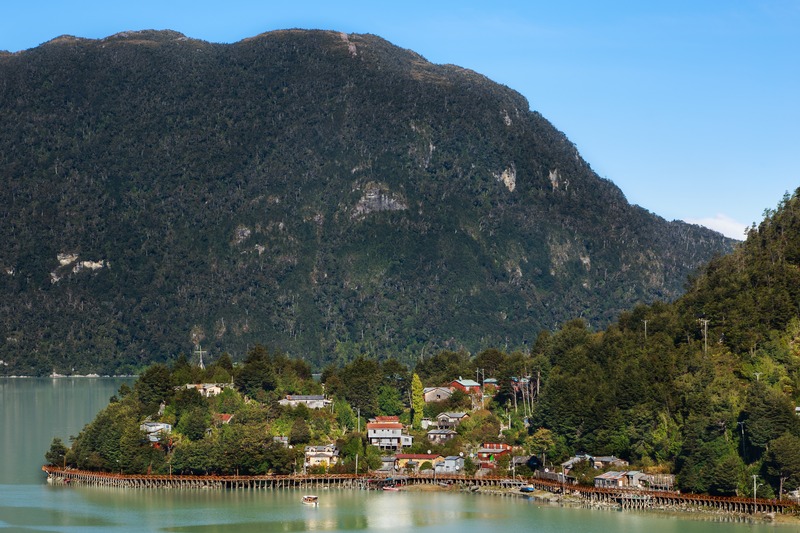
In the Aysén and Magallanes regions, forest-covered mountains plunge into deep waters. Boat trips pass through narrow channels, approach certain glaciers and, with a little luck, offer sightings of dolphins, sea lions or seabirds.
From Puerto Natales, one of the most accessible excursions follows Seno de Última Esperanza to reach the Balmaceda and Serrano glaciers in Bernardo O’Higgins National Park.
From October to March, longer days and more frequent departures make it easier to explore the region. Even at the height of the southern summer, warm and waterproof clothing is advisable for boat trips.
3. Coral atolls like those of the Pacific, Belize
When people think of atolls, the Maldives or Polynesia usually come to mind. Yet in Central America, Belize has three off its Caribbean coast: Turneffe, Lighthouse Reef and Glover’s Reef.
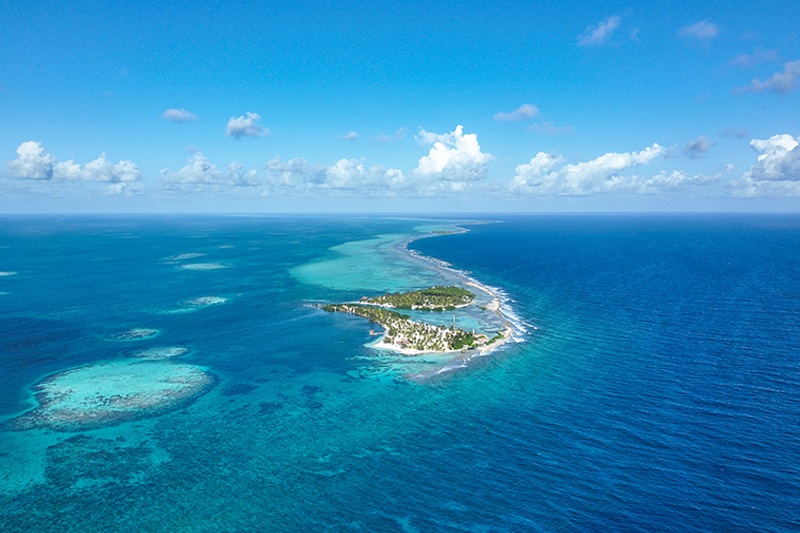
These coral formations surround turquoise lagoons that are home to a great diversity of fish and marine species. They form part of the Belize Barrier Reef system, considered the second largest in the world, several areas of which are listed as UNESCO World Heritage Sites.
The best known is probably Lighthouse Reef, home to the Great Blue Hole, an immense circular underwater sinkhole that has become one of Belize’s most recognisable landscapes. Glover’s Reef and Turneffe are also renowned for scuba diving and snorkelling.
Excursions require a boat crossing, which can be fairly long depending on the atoll chosen. From February to May, the drier season generally offers favourable conditions for activities at sea.
4. Glaciers in the tropics, Peru
In northern Peru, the Cordillera Blanca has landscapes more commonly associated with major mountain ranges in colder regions. Yet this is very much the tropics, in a section of the Andes where several peaks rise above 6,000 metres.
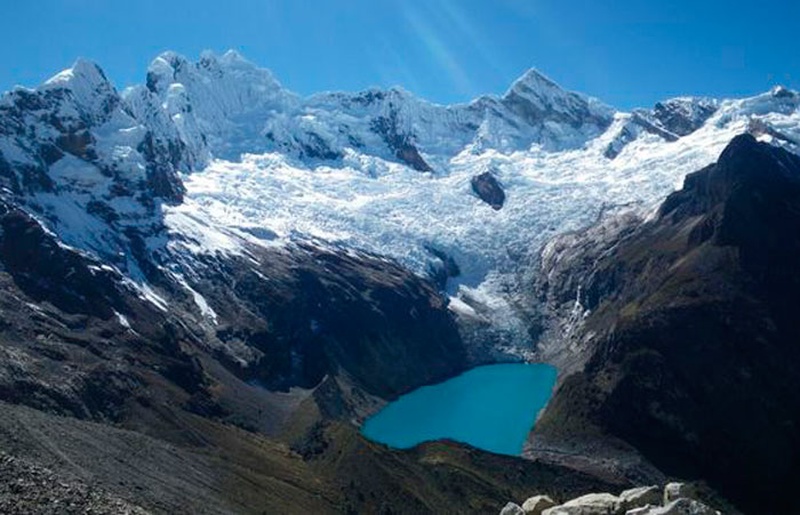
In the Áncash region, Mount Huascarán, which reaches 6,768 metres, and the national park of the same name dominate one of the largest concentrations of tropical glaciers on the planet. Glacial valleys, snow-covered peaks and turquoise lagoons can be explored around the Llanganuco lakes and the famous Laguna 69.
The city of Huaraz is the main starting point for exploring the region, which is particularly popular for hiking and trekking. From May to September, the dry season generally offers the best conditions. As some excursions exceed 4,000 metres in altitude, a few days of acclimatisation are recommended.
These landscapes are, however, changing as the glaciers retreat, a process that is particularly pronounced in the tropical Andes.
Find out more: Cordillera Blanca: Peru off the beaten track
5. Penguins on the equator, in the Galápagos
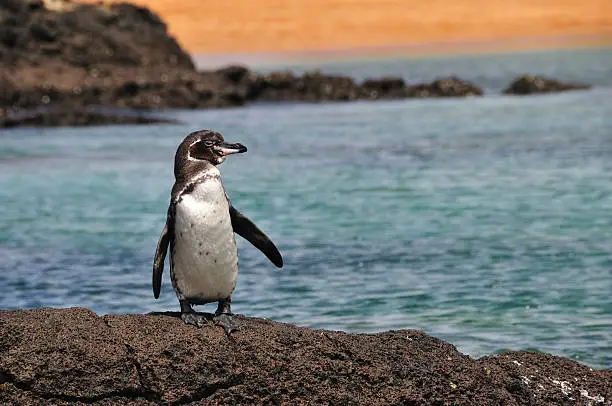
When we think of penguins, we are more likely to picture Antarctic ice or the cold coasts of the Southern Hemisphere. Yet one species lives very close to the equator: the Galápagos penguin, found naturally only in this Ecuadorian archipelago.
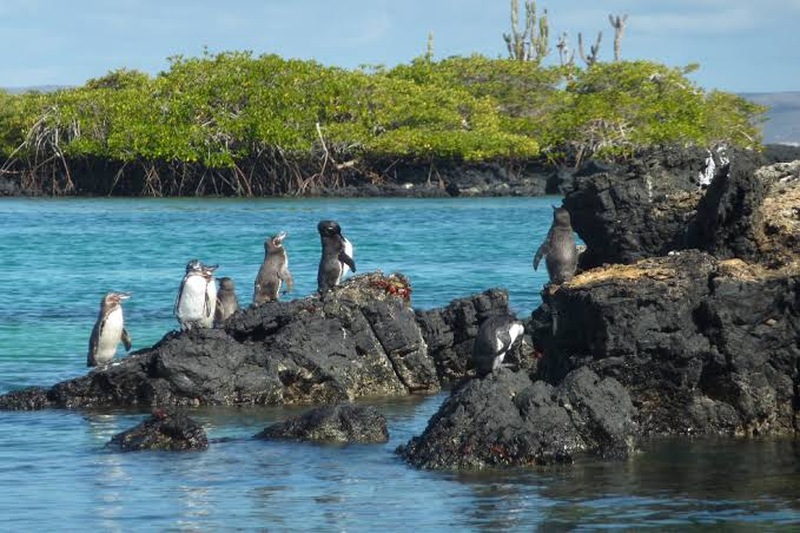
It is the only penguin in the world that lives at the equator and even slightly north of it. Its presence is explained in part by the cold ocean currents that reach the archipelago and support an abundance of the small fish on which it feeds.
The penguins are found mainly around Isabela and Fernandina islands. They can sometimes be seen resting on volcanic rocks or swimming along the coast, particularly during boat excursions.
They are present throughout the year, but sightings are never guaranteed. To increase the chances of seeing them, it is best to choose an itinerary that includes the western islands of the archipelago.
Our article: 10 must-see sites in the Galápagos Islands
6. Southern Lights in southern Chile and Argentina
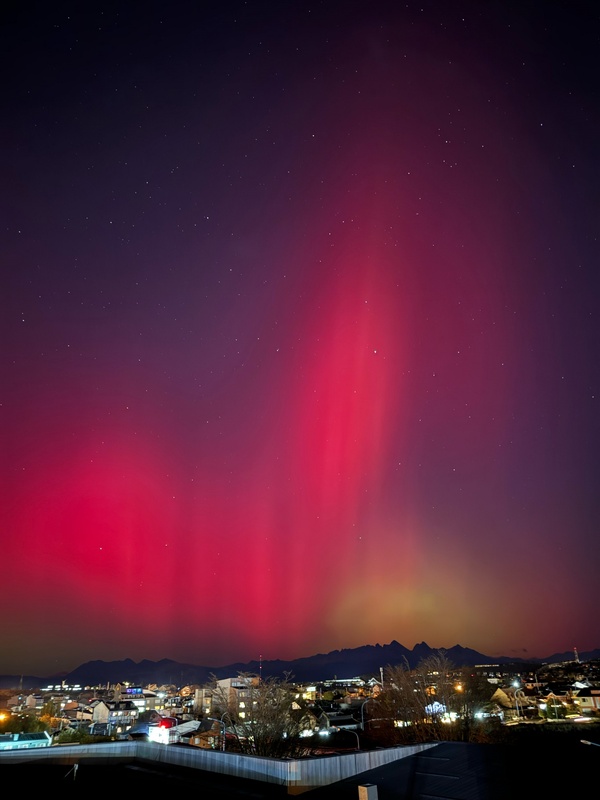
Polar auroras are almost always associated with Norway, Sweden or Iceland, where the Northern Lights attract many visitors every winter. Yet the same phenomenon also occurs in the Southern Hemisphere, in the form of the Southern Lights, or aurora australis.
In South America, they can occasionally be observed in the southernmost regions of Chile and Argentina. During the night of 10 to 11 May 2024, a powerful geomagnetic storm made auroras visible as far north as Punta Arenas and Ushuaia. Images of skies coloured red and pink circulated widely at the time.
The phenomenon remains extremely rare at these latitudes. Unlike regions close to the Arctic Circle, southern Patagonia does not have a season during which aurora viewing can be reliably planned.
The long nights of the southern winter provide more hours of darkness, but sufficiently intense solar activity and clear skies are also required. Seeing the Southern Lights in Patagonia therefore depends far more on luck than on a trip that can be organised specifically around the phenomenon.
Photos: ProColombia | SERNATUR | Belize Tourism Board | PromPeru | Ministerio de Turismo de Ecuador | SERNAMP | La Nación