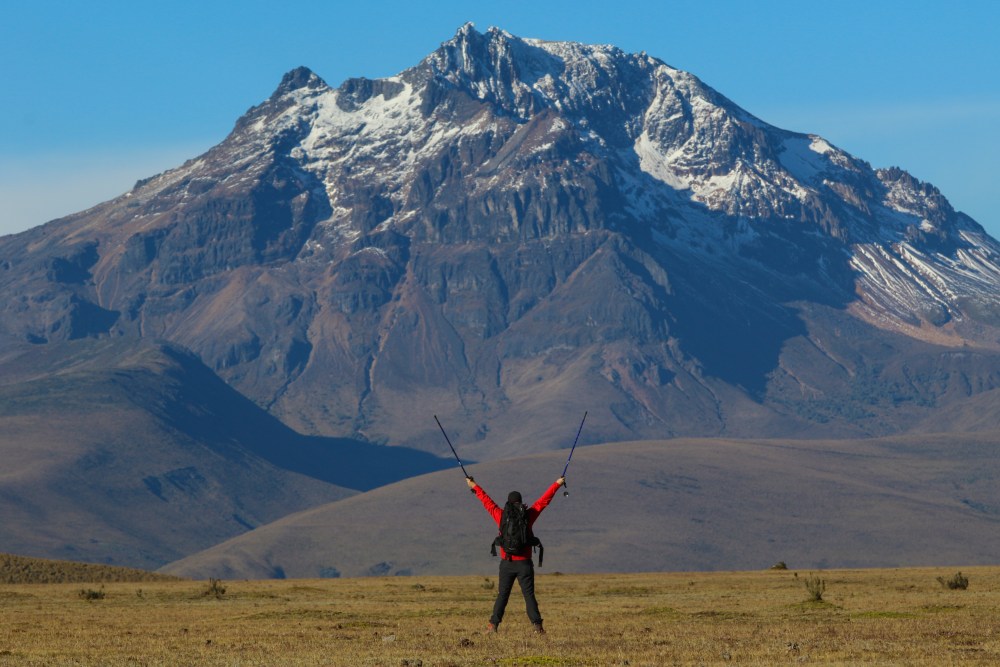
Just two hours from Quito, Cotopaxi rises like a giant at 5,897 meters, topped by an equatorial glacier that makes it one of the highest active volcanoes in the world. Facing it, you don’t just observe a mountain: you feel the air lighten, the light change over the páramo, and every step seems to bring you closer to a landscape that borders on the unreal.
Mornings That Begin Above the Clouds
At the heart of Cotopaxi National Park, the volcano dominates over 33,000 hectares of highland plains, lagoons, and pine forests. This territory is home to Andean condors, wild horses, and foxes, as well as a network of trails, camping areas, and interpretation centers that make the site accessible while preserving the fragility of its ecosystem.
From Trails to Refuges at the Edge of the Sky
It’s best to arrive early. In nearby villages like
Most visitors begin their exploration at Limpiopungo Lagoon: an easy walk, ideal for acclimatizing while observing local flora and fauna. From there, a trail leads to José Ribas refuge, at nearly 4,900 meters. It is possible to continue toward the glacier, accompanied by a guide and suitable equipment. On clear days, the north face offers the best views of the ice and surrounding páramo.
Adventures Between Earth and Sky
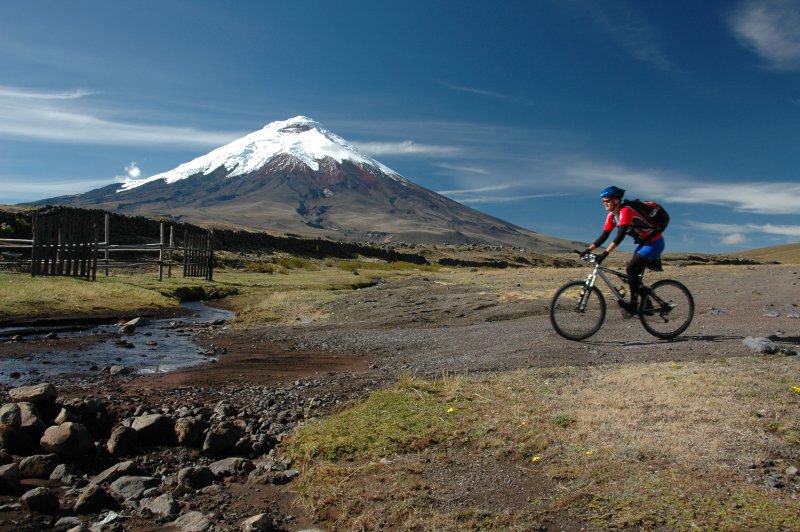
Cotopaxi can also be experienced differently. From the parking lot at over 4,600 meters, thrill-seekers can ride mountain bike trails, navigating dirt turns, loose rocks, and spectacular views of the glacier.
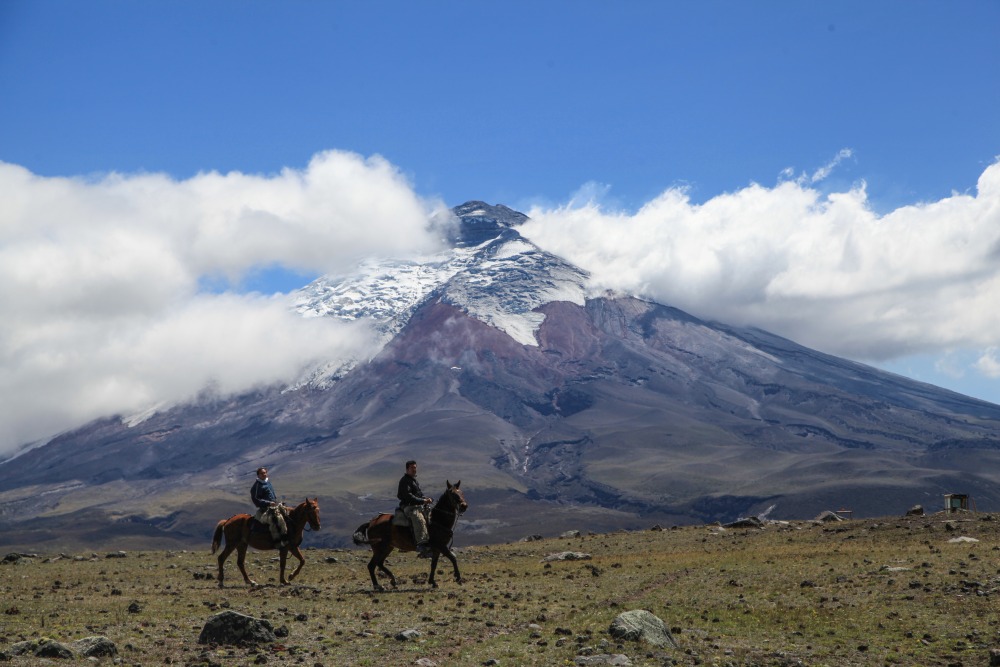
For a calmer approach, a horseback ride led by a chagra — an Andean rider wearing a wool poncho — allows visitors to explore the mountain at the rhythm of the páramo’s inhabitants, through their stories and traditions.
For those dreaming of heights, paragliding offers a unique perspective: a flight above the Andean vastness, facing Cotopaxi’s snowy cone.
Other Ways to Explore the Andes
Cotopaxi is also the starting point for nearby summits like Rumiñahui or Sincholagua, perfect for those seeking quieter routes. Travelers looking for relaxation can camp at La Rinconada, visit the interpretation center, or explore the Inca ruins of Salitre Pucará.
The park is open year-round, but from June to September skies are generally clearer, while between December and January, the snow enhances the landscape. It is recommended to move slowly, stay well hydrated, and dress warmly: here, cold and altitude are felt from the very first steps.
What remains of Cotopaxi is not just the perfect image of its snowy cone, but the feeling of having shared a suspended moment in the heart of Ecuador. Whether it’s a bike descent, a horse’s step across the plains, or the sunrise painting the summit pink, Cotopaxi goes beyond simple geography. It reflects the quiet strength of the Andes and the serenity of their heights — a place you always leave with the certainty of returning.
Photos: Ministerio de Turismo Ecuador