In Costa Rica, “Pura Vida” is not just a phrase used in promotional campaigns. It sums up a way of travelling where the pace slows down, where forests, volcanoes, beaches and hot springs become an essential part of the experience.
The country is now seeking to give clearer shape to this promise by positioning nature as the foundation of its wellness tourism offer. Through the notion of “biophilic connection”, Costa Rica wants to make its landscapes something more than a backdrop: a setting capable of encouraging rest, physical recovery, mental calm and a connection with the environment.
Nature as a starting point
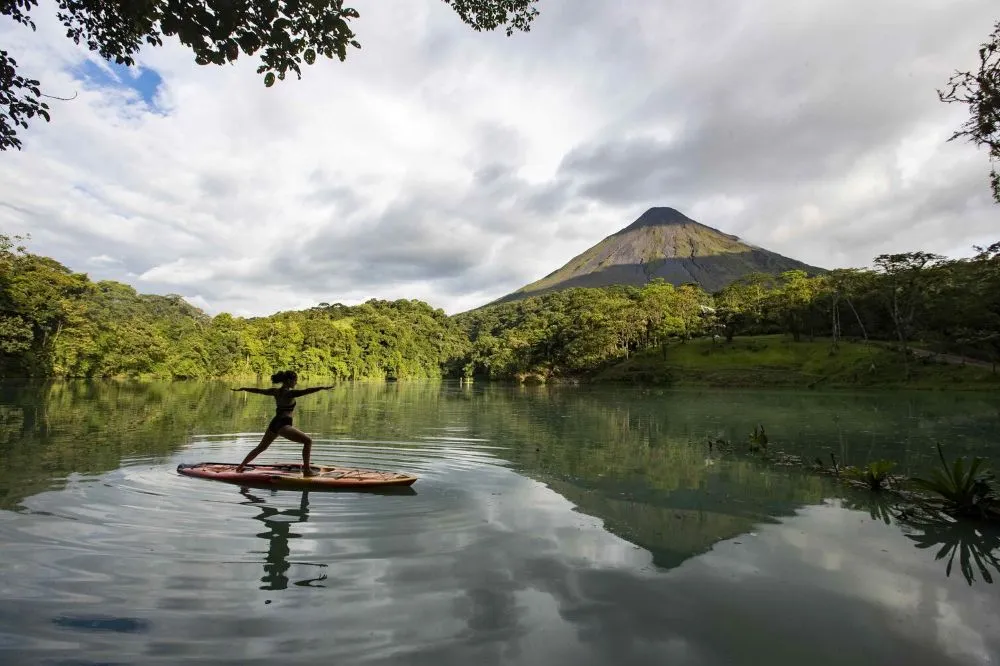
Biophilia refers to the natural affinity of human beings with the living world. Applied to tourism, the idea is quite simple: designing experiences in which nature directly contributes to the traveller’s well-being, whether through walking, breathing, bathing, observing or simply taking time.
In Costa Rica, this approach finds particularly favourable ground. In La Fortuna, in the centre of the country, the hot springs heated by Arenal Volcano combine relaxation with volcanic landscapes. In Monteverde, the cloud forest trails and hanging bridges invite a slower immersion in one of the country’s most distinctive ecosystems.
The Nicoya Peninsula, recognised as one of the planet’s Blue Zones, adds a dimension linked to longevity and healthy lifestyles. On the Pacific coast, Guanacaste completes this offer with its yoga retreats, seaside accommodation and stays designed around rest, movement and disconnection.
Structuring an existing trend
The initiative is led by the Costa Rican Tourism Institute, the Wellness Costa Rica Association and the Arenal Chamber of Tourism and Commerce. These stakeholders share the same observation: wellness is no longer an added service during a trip, but a criterion that increasingly influences the choice of a destination.
“The true luxury of the future will not be infrastructure, but the ability to generate authentic well-being in people. Costa Rica has the advantage of being able to do this through its biodiversity, our most important resource,” said Laura Barrantes Requeno, wellness specialist within the association.
To give greater coherence to this offer, the public and private sectors have begun promoting training programmes aimed at hotels, tour operators, guides and stakeholders in the wellness sector. The goal is to help professionals design experiences that are more identifiable, better structured and better adapted to travellers’ expectations.
A fast-growing market
This direction is part of an expanding global market. According to Grand View Research, wellness tourism was worth 990.4 billion dollars in 2025 and could reach 2.4 trillion dollars by 2035, with an average annual growth rate of 9.3%.
This growth can be explained by rising demand for trips centred on physical and mental health, the development of specialised spas and resorts, as well as interest in programmes combining rest, nutrition, relaxation and outdoor activities.
For destinations, this segment is of particular interest. Travellers who place wellness at the heart of their stay, or include it as a secondary motivation, tend to choose higher-end accommodation and devote a significant share of their budget to treatments, healthy dining and personalised experiences.
Our article: Wellness tourism in Latin America: thermal waters, rituals and new sensory journeys
Costa Rica does not need to invent a new narrative to exist in this market. Its strength lies precisely in the coherence between its international image, its biodiversity and the experiences already offered on the ground. The challenge now is to better structure this privileged relationship with nature, in order to turn it into an offer that is clear, distinctive and fully integrated into the travel experience.
Photos: Jeffrey Arguedas