From June to August, Ecuador dedicates part of its tourism promotion to the Mountain Season (Temporada de Montañas), a season designed to showcase the country’s Andean peaks. The subject comes at a time when mountain tourism is attracting more and more travelers in Latin America, between the search for altitude, outdoor activities and itineraries less centered on classic urban circuits.
In Ecuador, this proposal takes on a very specific form. Across a relatively compact territory, the country concentrates several volcanoes and mountains accessible from Quito, Latacunga, Riobamba, Otavalo or the Andean Arenal region. The Avenida de los Volcanes, the name given to this area by explorer Alexander von Humboldt, crosses the country for more than 600 kilometers, from the Chiles volcano in the north to Sangay in the south.
Peaks for different traveler profiles
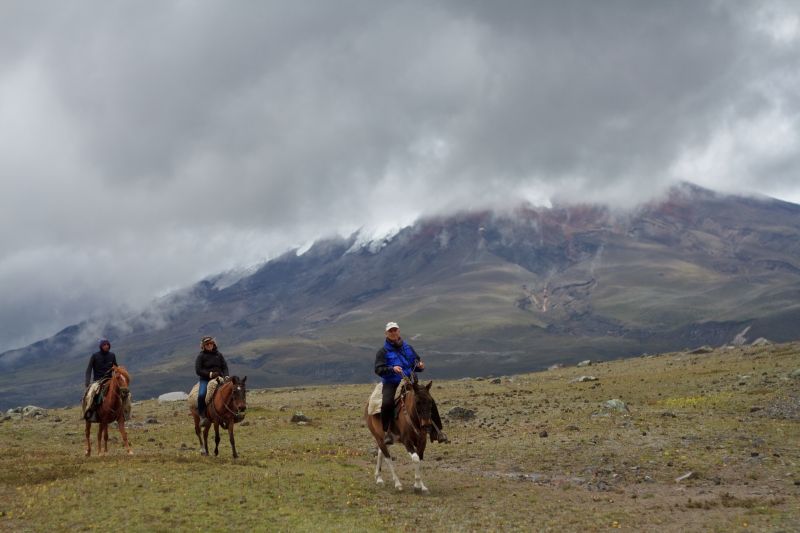
The campaign highlights a broad offer, which is not limited to technical ascents. Hiking, mountaineering, climbing, mountain biking, camping and astrophotography make it possible to approach the mountains at several levels.
Rucu Pichincha, accessible from Quito’s cable car, remains one of the simplest options for a first approach to altitude. Its summit reaches 4,696 meters and the route can serve as acclimatization before more demanding trails.
Our article: The Rucu Pichincha: A challenge accessible from the Quito cable car
Further south, Cotopaxi occupies a place of its own. At 5,897 meters, it is the second-highest mountain in the country and one of the highest active volcanoes on the planet. The national park also allows more accessible visits around the Limpiopungo lagoon or along the path to the José Rivas refuge.
Our article: Cotopaxi: Volcanoes, Trails, and Andean Adventures
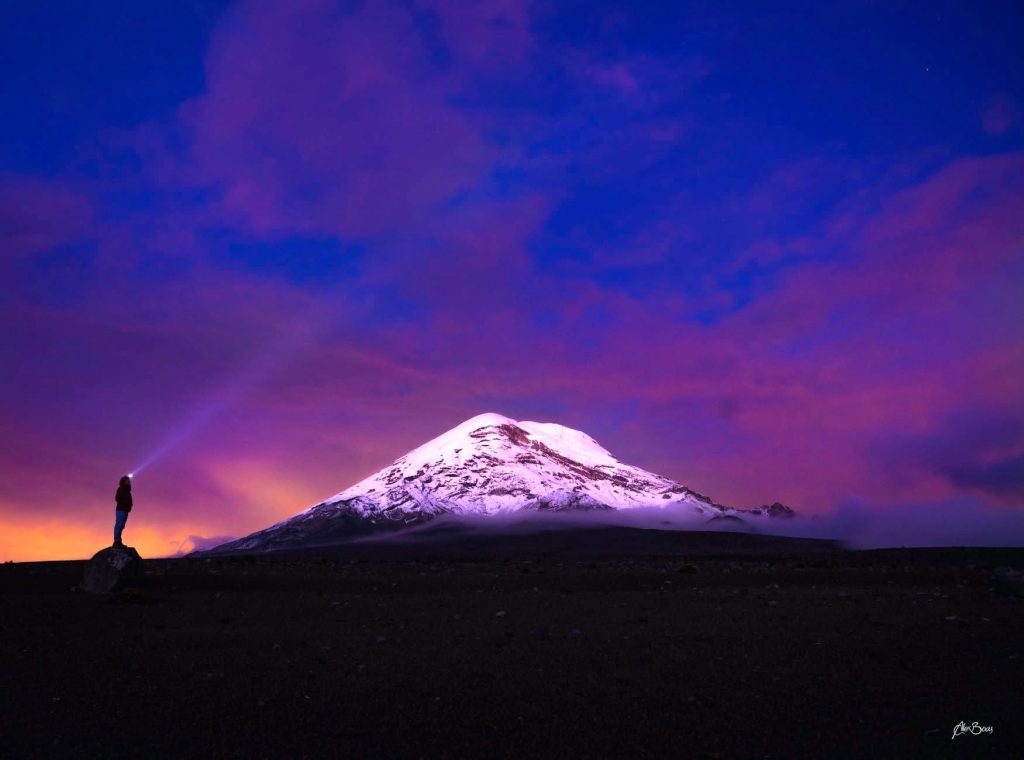
Chimborazo, Ecuador’s highest point at 6,268 meters, carries a strong symbolic dimension: measured from the center of the Earth, its summit is considered the farthest point from the center of the planet. The reserve that surrounds it allows visitors to observe vicuñas, páramo landscapes and high-altitude refuges.
Cayambe, which reaches 5,790 meters, adds a rare geographical feature: it is one of the volcanoes crossed by the equinoctial line. Its ascent requires good preparation, with glacier sections, sandy areas and rocks.
A season to approach at the right pace
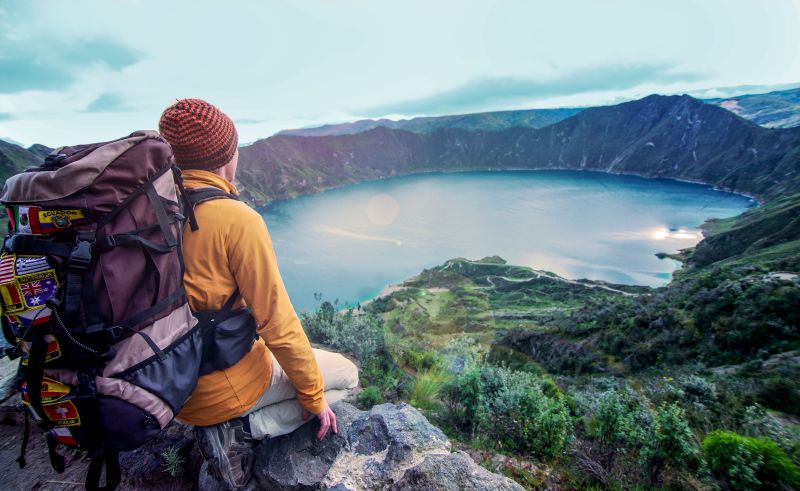
The Ecuadorian mountains are not reserved for experienced climbers. The Temporada de Montañas also makes it possible to choose more accessible experiences, particularly on mid-mountain routes such as Rucu Pichincha, Fuya Fuya, Imbabura, Rumiñahui or certain hikes around Quilotoa and Cuicocha.
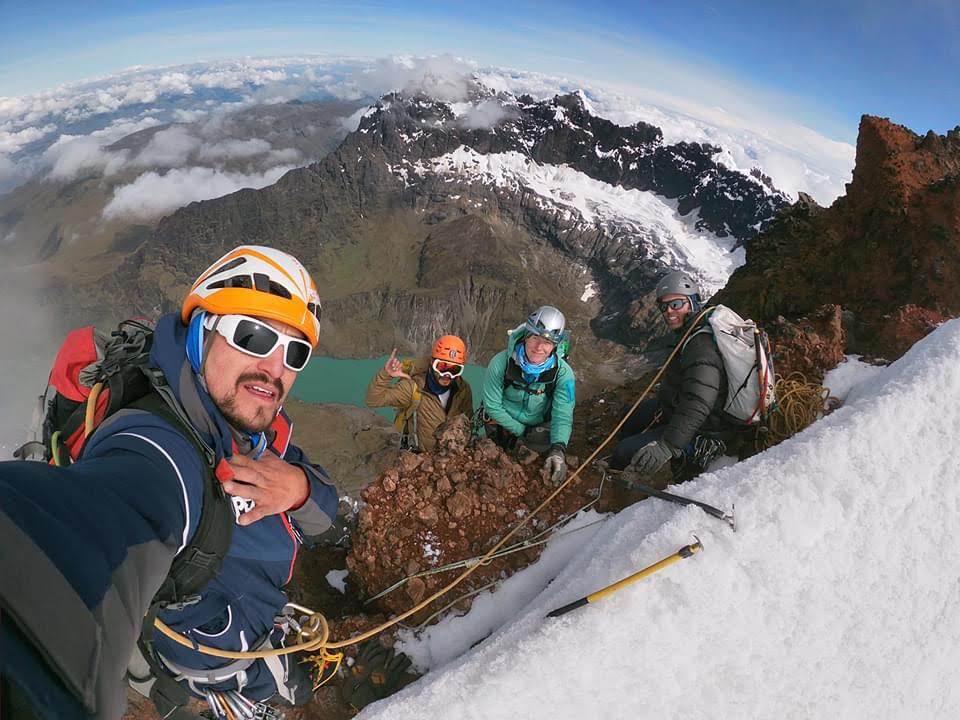
The official guide (in Spanish), however, insists on one essential point: altitude must be prepared for. Before considering summits above 5,000 meters such as Chimborazo, Cotopaxi or Cayambe, it is recommended to allow for progressive acclimatization, with intermediate routes and an adapted pace. Soroche, or altitude sickness, can appear above 2,500 meters, even among travelers in good physical condition.
For the most demanding ascents, specialized guides, appropriate equipment and good organization are essential. This preparation makes it possible to choose the right level of commitment and fully enjoy landscapes that change very quickly with altitude.
Excursions that are easy to include in a trip to Ecuador
One of Ecuador’s great strengths lies in the proximity between Andean cities and mountain landscapes. From Quito, Latacunga, Riobamba or Otavalo, several outings can be planned in one day or over two days, depending on the desired level. A hike to Rucu Pichincha, a visit to Cotopaxi National Park, an excursion to Chimborazo or a stop around Quilotoa can therefore be included in a broader itinerary through the country.
You may also like: Mountains of Latin America: when altitude reshapes travel
The mountains can also become the guiding thread of a trip in their own right. In this case, the Avenida de los Volcanes allows for a natural progression, between acclimatization, hikes, refuges, panoramas and more technical ascents. For travelers crossing the Ecuadorian Andes, these experiences offer a direct way to approach the country: through its reliefs, its páramos, its high-altitude villages and its great volcanoes visible from the road.
Consult the Official Guide: Temporada de Montañas (in Spanish)
Photos: Ecuador Travel | Ministry of Tourism of Ecuador | Turismo Riobamba