


When people talk about Brazil’s great celebrations, the first image that often comes to mind is carnival. But when June arrives, another popular tradition takes place across the country: the Festas Juninas.
Less known internationally, they nevertheless occupy a major place in Brazil’s cultural calendar. For several weeks, cities, neighbourhoods, schools, churches and public squares fill with music, dancing, food stalls and celebrations that bring together millions of visitors.
Although they are celebrated across much of Brazil, it is in the Nordeste that they reach their greatest scale. In Campina Grande and Caruaru, São João becomes much more than a festive event: an entire season dedicated to music, popular traditions and a rural memory that remains very present.
Between Catholic saints and corn harvests
The origin of these celebrations goes back to European traditions linked to the summer solstice and the agricultural festivities of June. With Portuguese colonisation, they arrived in Brazil and gradually became part of the Catholic calendar around three dates: Saint Anthony’s Day (June 13), Saint John’s Day (June 24) and Saint Peter’s Day (June 29).
Over time, these events took on their own meaning in the Southern Hemisphere, blending with African and Indigenous influences. In Brazil, June marks the beginning of winter and, in many communities in the Northeast, the end of the rainy season and the harvest period. Corn therefore becomes a central element, not only in the fields, but also in the kitchen.
Bonfires, garlands and forró
Bonfires and colourful paper garlands are among the images immediately associated with São João. But the celebration is not defined by its decorations alone. Forró is one of its strongest markers. Popularised nationwide by Luiz Gonzaga, this musical style born in the Northeast accompanies both small neighbourhood parties and major events.
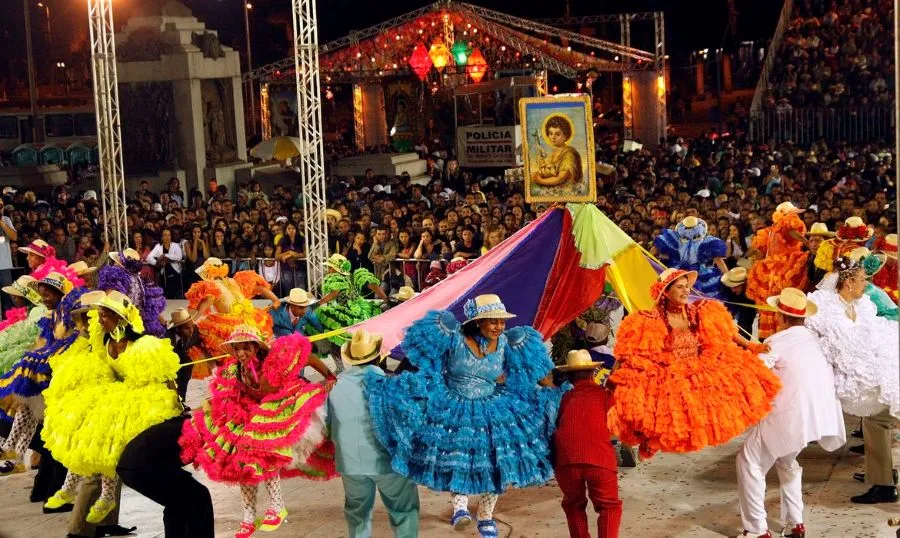
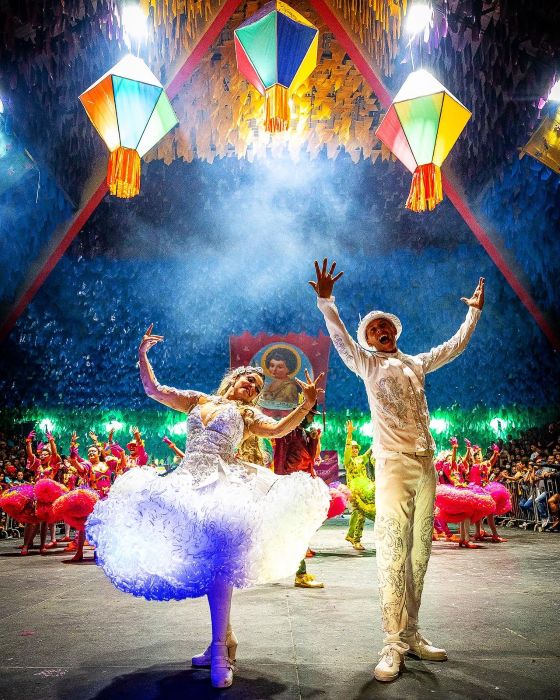
The accordion, zabumba and triangle set the rhythm. In squares, parks or on stages, the music naturally leads to dance. The quadrilhas, inspired by old European dances and later reinterpreted within Brazilian popular culture, remain one of the most anticipated moments. Rural costumes, straw hats, colourful dresses: the codes are well known, but today the performances can bring together hundreds of participants, especially during competitions organised in major cities.
Corn at the centre of the table
Food gives another dimension to the season. Churches, schools and neighbourhood associations set up gastronomic fairs where traditional recipes play an essential role. Corn is widely dominant, especially in the Northeast, where it accompanies the harvest period and appears in many preparations.
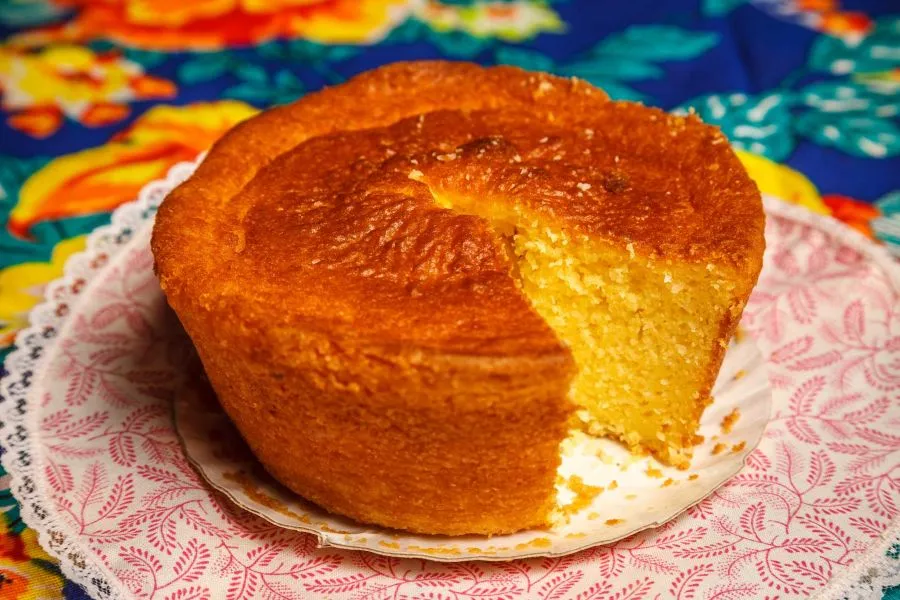
Pamonha, a corn dough wrapped and cooked in the plant’s husk, is one of the classics. Canjica, a warm dessert made with white corn, milk and cinnamon, accompanies the cooler evenings. Curau, a sweet cream prepared with fresh corn, milho cozido, boiled corn on the cob served with butter or salt, and bolos de milho, corn cakes, appear in almost every celebration.
Other ingredients also complete this June table. Peanuts are also used in very popular sweets such as pé de moleque and paçoca. Pinhão, the seed of the araucaria tree, is also present in Brazilian junino imagery, although it is mainly associated with the country’s colder regions.
These dishes are not only about indulgence. They recall the link between the celebration, the harvests and the rural life that long shaped part of inland Brazil.
Campina Grande and Caruaru, two major events in the Northeast
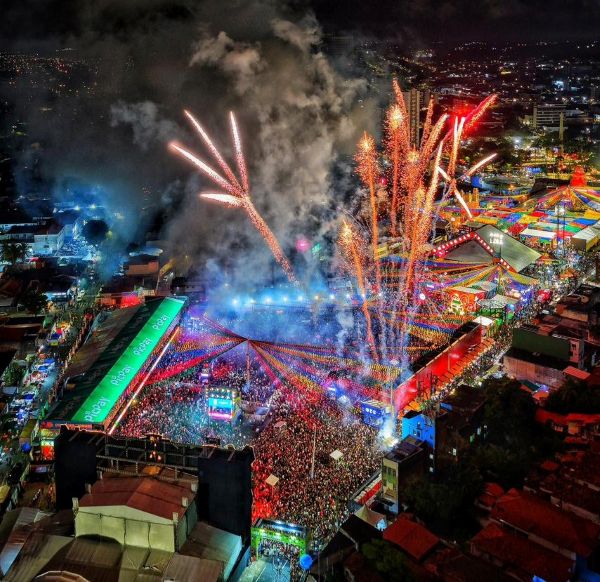
Although São João is celebrated across much of the country, it is in the Nordeste that it reaches its greatest scale. Campina Grande, in the state of Paraíba, and Caruaru, in Pernambuco, host two of the country’s best-known programmes every year, with concerts, dancing, gastronomic fairs and free-access cultural activities that attract visitors from across Brazil.
Campina Grande is officially known as “O Maior São João do Mundo” (the largest São João in the world). For more than a month, Parque do Povo functions as a temporary city dedicated to the celebration, with daily concerts, monumental stages, hundreds of food stalls and quadrilha competitions. Vila do Artesão completes the experience by highlighting local know-how, exhibitions, workshops and forró in a more intimate setting.
In Caruaru, the programme also stretches over several weeks, with major concerts, cultural spaces, markets and activities spread across different areas of the city. Its identity remains strongly linked to the region’s popular culture and regional craftsmanship, particularly in the district of Alto do Moura, considered the birthplace of Brazil’s figurative ceramics.
The Festas Juninas remind us that a major Brazilian celebration is not measured only by its international exposure. Their strength lies in their ability to bring people together, year after year, around practices that may seem simple, but are deeply rooted. It is this blend of popular scale and closeness that makes them one of Brazil’s major cultural events.
Photos: Visit Brasil | D.R | Prefeitura de Campina Grande