
After tracing its origins, this second part follows reggaeton at the moment when it became a global phenomenon.
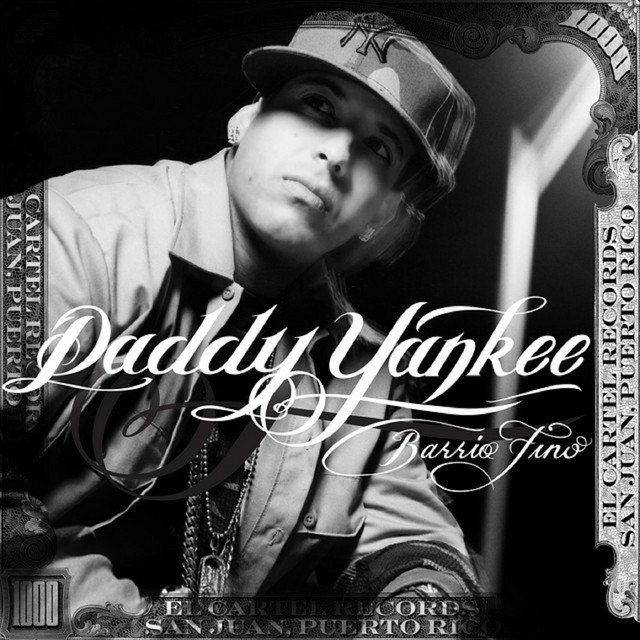
In 2004, reggaeton was already no longer a strictly Puerto Rican affair. The music was circulating in the Caribbean, Latin America, Latino communities in the United States and was beginning to be heard in Europe. But with Gasolina, Daddy Yankee gave it a track capable of crossing those borders much more widely.
The song became a gateway into a genre that millions of listeners discovered without necessarily knowing its history. In 2005, it became the first reggaeton track nominated for Record of the Year at the Latin Grammy Awards, while Barrio Fino won Best Urban Music Album and definitively established Daddy Yankee as the face of this first international wave.
The change, however, did not come down to a single song. During that decade, reggaeton gained visibility far beyond its first audiences: in the media, collaborations with American hip-hop, cinema, clubs and soon fitness studios.
When the sound moved beyond its usual circuits
Diasporas played an important role in this circulation. CDs, VHS tapes and then MP3 files passed from one country to another, between Latin America, the United States and Europe, at a time when streaming platforms did not yet exist.
In the United States, collaborations with hip-hop accelerated the movement. In 2005, Daddy Yankee, Don Omar and Tego Calderón appeared on the stage of the MTV Video Music Awards. Ten years after cassettes were seized in Puerto Rican record stores, the contrast was striking: reggaeton was now being performed during one of the major American music ceremonies.
Cinema also contributed to this familiarization. The track Bandoleros, by Don Omar and Tego Calderón, appeared in the Fast & Furious universe, before the two artists themselves joined the franchise. Reggaeton thus accompanied films seen far beyond Latin American markets.
But its spread also followed a much less expected path: fitness studios.
Zumba, another passport for reggaeton
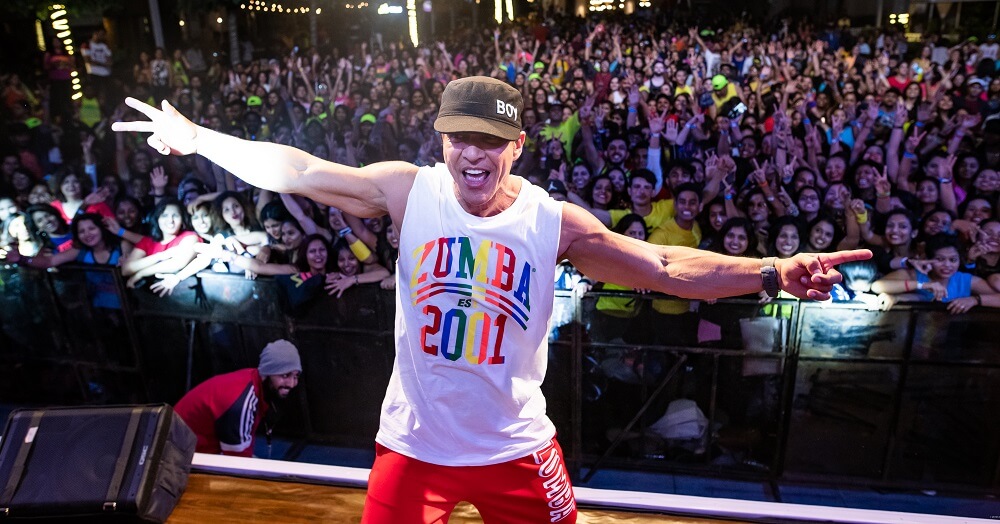
Created by Colombian Beto Pérez and then developed commercially in the United States in the early 2000s, Zumba became an international phenomenon within a few years. Reggaeton occupies an important place in it: along with salsa, merengue and cumbia, it is one of the basic rhythms taught to instructors.
It would be excessive to attribute the globalization of reggaeton to Zumba. But it did contribute to something more discreet and probably just as important: making this rhythm familiar to people who did not necessarily listen to Latin American music.
In a fitness studio in Paris, London, Tokyo or elsewhere, one could learn to dance to a reggaeton track without knowing any of the artists. The connection between the two worlds even became explicit with Daddy Yankee’s Limbo, created especially for Zumba Fitness, while Don Omar released a track titled Zumba.
Reggaeton was no longer only music one sought out in a club or on a specialized radio station. It also accompanied sport, holidays, cinema, nights out and, more broadly, a certain idea of celebration.
Medellín develops another reggaeton
In the 2010s, Medellín became one of the genre’s main laboratories. The city did not simply reproduce the Puerto Rican sound. Colombian artists and producers gradually developed a reggaeton that was often more melodic, closer to pop and less directly linked to rap than that of the pioneers.
Reykon opened the way, then J Balvin and Maluma gave this scene international visibility. The lyrics spoke more about seduction, romantic relationships and melodies that were easy to sing along to, while the productions became more suited to radio and, soon, platforms.
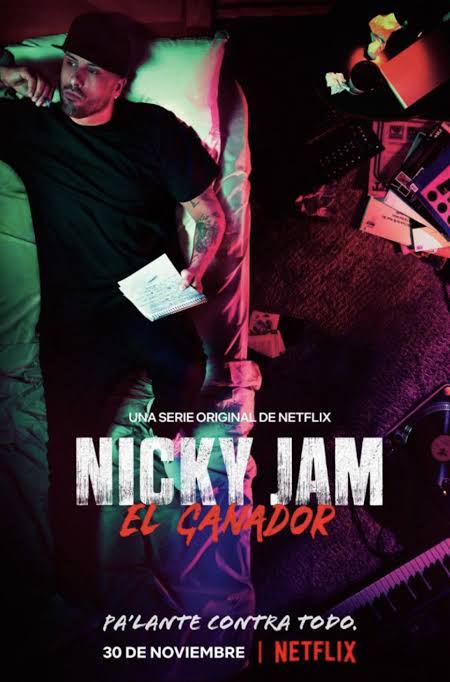
Nicky Jam, one of the genre’s pioneers, perfectly embodies the passage between these two eras. Originally from Puerto Rico and a member of the duo Los Cangris with Daddy Yankee, he moved to Medellín after a period marked by addiction and the decline of his career. The city allowed him to reconnect with an audience and adopt a more melodic register that would accompany his return to the forefront.
His journey would even become a biographical series, Nicky Jam: El Ganador, a significant part of which tells the story of his move to Medellín and his reconstruction there.
Nicky Jam thus became the link between the Puerto Rico of the 1990s and the Colombia that would carry the next generation.
2017: Spanish is no longer a barrier
A new step was taken in 2017 with Despacito, by Luis Fonsi and Daddy Yankee. The track spent sixteen weeks at the top of the Billboard Hot 100 in its version with Justin Bieber. At the same time, Mi Gente by J Balvin and French artist Willy William became one of the most listened-to songs in the world.
The importance of these tracks goes beyond their chart positions. They showed that a song performed largely or entirely in Spanish could now become a global phenomenon without needing to be turned into an English-language pop track.
Streaming accelerated this evolution. The old distribution circuits mattered less, borders between markets became more porous and collaborations multiplied.
From Bad Bunny to Karol G, a new stage
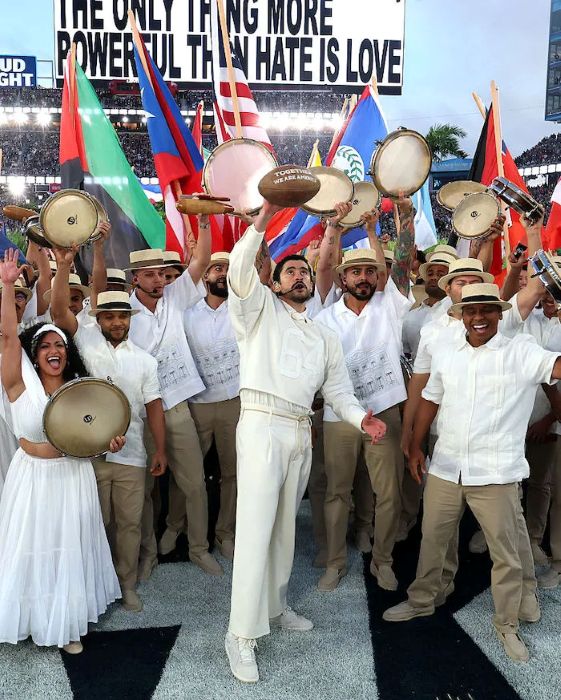
Originally from Puerto Rico, Bad Bunny has built a global career mainly in Spanish, while moving freely from reggaeton to salsa or other Caribbean sounds. In 2025, he became the most listened-to artist in the world on Spotify for the fourth time, with 19.8 billion streams over the year.
In February 2026, his album Debí tirar más fotos won the Grammy for Album of the Year, then a few days later the artist performed the Super Bowl LX halftime show, paying tribute to his native island, his musical roots, reggaeton and Latin America.
This path reflects a deeper evolution. For a long time, a Latin American star often had to pass through English to reach the center of the American industry. With Bad Bunny, that logic is partly reversed: it is now the global audience that comes to listen to music still deeply connected to Puerto Rico.
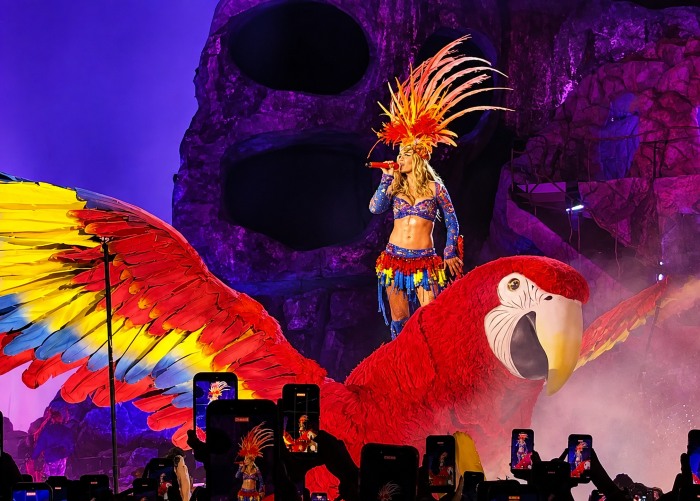
A few weeks later, Karol G became the first Latina singer to headline the Coachella festival. At the beginning of her concert, she chose to introduce herself simply: “I’m Carolina Giraldo, from Medellín, Colombia.”
The sentence almost sums up the city’s trajectory on its own. Nicky Jam had found a second start there, J Balvin had helped globalize its reggaeton, and Karol G now reaches the top of one of the most high-profile stages in the United States.
Today, the movement continues with Dominican dembow, the Chilean and Argentine scenes, trap, electro and the return of some artists to salsa, further blurring the boundaries. Several figures of the genre are also returning to traditional styles that accompanied them before reggaeton.
Reggaeton may have conquered the world precisely because it never stopped changing along the way.