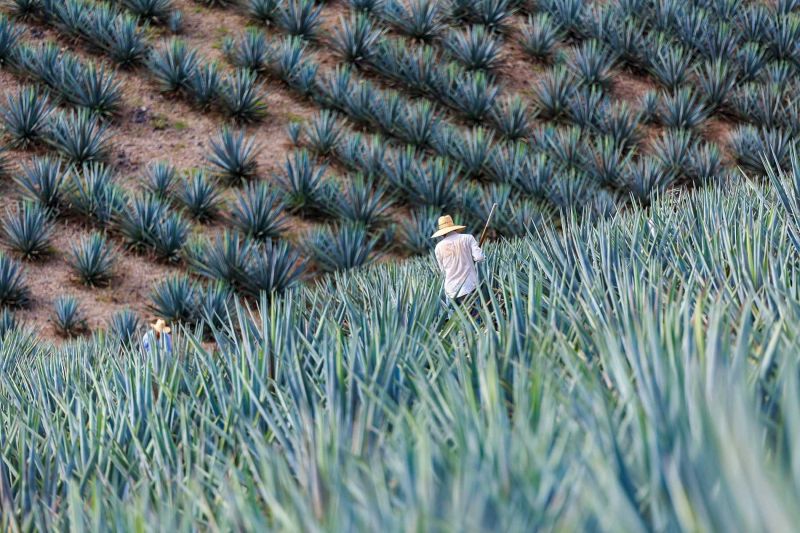

West of Guadalajara, the road eventually changes colour. The fields become more regular, the lines more defined, the hills lower. On both sides, blue agave imposes its pattern: rows of thick, sharp leaves, almost silvery under the light of Jalisco. Here, even before entering a production facility, one understands that tequila is not just a drink. It is first and foremost a landscape.
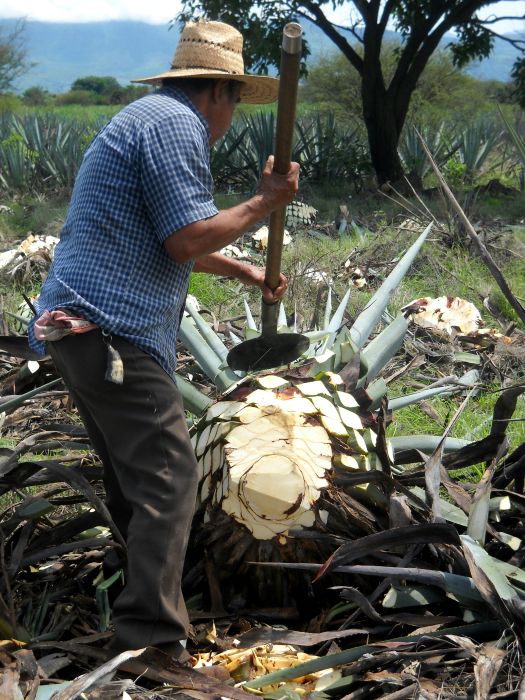
Around Tequila, Amatitán and El Arenal, this plant has accompanied agricultural life, the local economy and the very image of Mexico for centuries. In the fields, the jimadores cut the leaves with a coa, a sharp tool used to clear the piña, the heart of the agave. In the old facilities, ovens, mills, stills and cellars tell another story: that of a know-how that became a national symbol, then a global product.
A story born from a plant
Long before tequila existed, agave was already part of everyday life for the peoples of Mexico. Certain species were used to produce fibres, food, remedies or fermented drinks linked to the ritual practices of several Mesoamerican societies.
With the arrival of the Spanish and the spread of these processes, fermented juices began to be transformed into spirits. In western Mexico, this evolution gradually gave rise to “mezcal de tequila”, what is now known as tequila.
But the word cannot be used in just any way. Since 1974, tequila has benefited from an appellation of origin that regulates its production and must be made from a single species: Agave tequilana Weber, blue variety, better known as blue agave. The official territory covers the entire state of Jalisco, its historic and symbolic centre, as well as certain areas of Guanajuato, Michoacán, Nayarit and Tamaulipas.
A territory turned into heritage
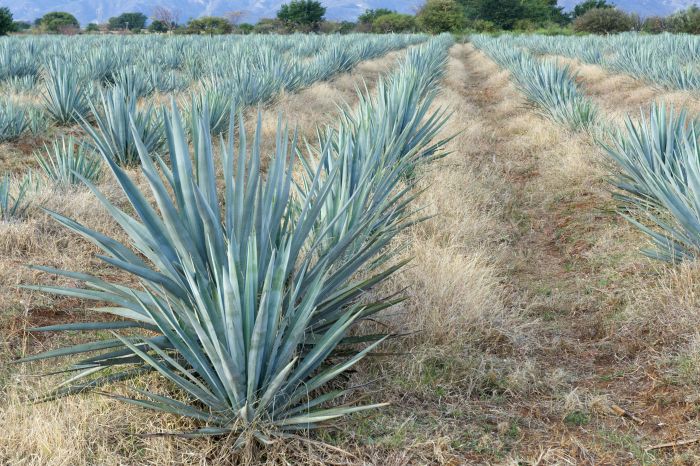
The town of Tequila is not only the name of a drink. It is also a place, a landscape, a way of travelling through western Mexico. In 2006, UNESCO listed the agave landscape and the ancient industrial facilities of Tequila as a World Heritage Site. This recognition does not concern the fields alone, but an entire cultural system: villages, plantations, distilleries, haciendas and production techniques.
From Guadalajara, the road to Tequila has become one of Jalisco’s most recognisable excursions. Visitors come to tour the production sites, but also to understand how a plant that takes a long time to mature has shaped an entire region. Its cycle requires time, patience and precise knowledge of the soil, the climate and its maturity.
In this region, tequila is therefore not discovered only at the moment of tasting. It is understood by walking between the bluish rows, observing the work of the jimadores, entering the old production buildings and seeing how the industry established itself without completely erasing the agricultural gesture.
From piña to glass
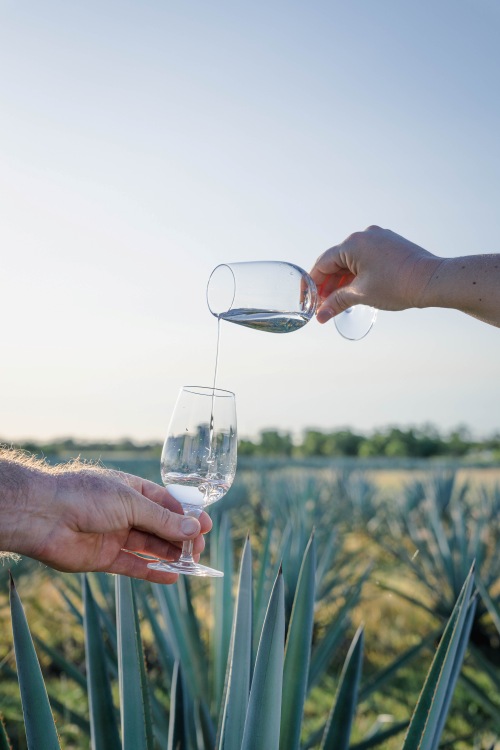
Production begins with the piña, which, once harvested, is cooked to transform its sugars, then crushed to extract the juices. These then ferment before being distilled. Depending on the desired style, tequila may then be bottled quickly or spend time in barrels.
The best-known categories offer a first key to understanding it. Blanco is generally the most direct, marked by the expression of the plant. Reposado spends at least two months in barrels. Añejo ages for at least one year, while extra añejo rests for at least three years. Wood then modifies the colour, texture and aromas, without completely erasing the vegetal signature.
Another mention matters: 100% agave. It indicates that the fermented sugars come exclusively from blue agave. To understand a tequila, this detail is often as important as its ageing time.
Tequila and mezcal: two agave stories
Confusion between tequila and mezcal is common. It is easy to understand why: both come from agave and belong to the broad universe of Mexican spirits. But their rules, territories and flavours do not overlap.
The first is based on blue agave and a defined production area. Mezcal, on the other hand, can be made from several species, in different states of Mexico, with Oaxaca as a particularly recognised territory. The methods vary too. For mezcal, the hearts of agave are often cooked in pits dug into the ground, which frequently gives smoky notes. Tequila, for its part, is generally associated with cooking in ovens or autoclaves, with profiles that may be herbaceous, fruity, mineral or woody depending on regions and styles.
The point is not to set the two drinks against each other. Rather, they tell two ways of working with this plant. Tequila has established itself as an international icon of Mexico. Mezcal long kept a more artisanal image before also gaining strong recognition abroad in recent years.
Raicilla, pulque and other paths
Mexican agave does not stop with this duo. In the west of the country, raicilla is experiencing renewed interest. Produced mainly in certain areas of Jalisco and Nayarit, it has its own denomination of origin. Its history is more discreet, sometimes long kept on the margins of major commercial circuits, but it belongs to the same world of regional know-how.
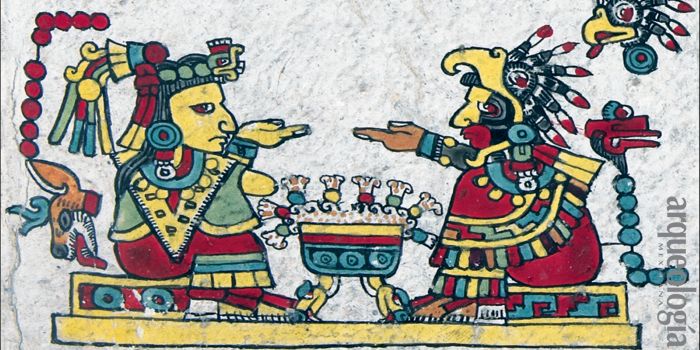
Pulque, for its part, recalls another sense of time. A thick fermented drink made from agave sap, it refers to practices older than tequila. It is found mainly in the centre of the country, particularly in pulquerías that have regained a certain visibility among younger generations and travellers curious to taste a drink with a more surprising flavour, but one deeply connected to Mexican history.
These drinks show that agave is not just a raw material. It is a family of landscapes, techniques, flavours and stories.
Tequila left the borders of Jalisco long ago. It is drunk in bars around the world, between cocktails, tasting workshops and sometimes very simplified images of Mexico. This success has been its strength, but it has also reduced its history to a few clichés: the shot, the lime, the salt, the party. Its cultural interest lies elsewhere. In the slow growth of the plant, in the precision of agricultural work, in the protection of an appellation, in landscapes listed as World Heritage, in the roads that connect Guadalajara to the valleys and villages where agave continues to organise daily life.
Tequila is therefore not only what is poured into a glass. It is a piece of Mexican geography turned into heritage, a know-how turned into an industry, a global drink that still keeps, when one takes the time to look at it closely, the taste of a territory.
Photos: Visit Guadalajara | Rudy Prather | British Museum | Stephan Hinni