
The way travelers choose their activities has evolved. Today, it is no longer enough to rely on a destination’s reputation or the quality of its attractions: the decision is largely influenced by the visibility and variety of experiences offered online. This is where gaps emerge. Some markets clearly dominate, others are progressing, while a significant part of the potential remains underexploited.
This is one of the main findings of the analysis conducted by Mabrian by Data Appeal. Using data collected between August and December 2025, the study examines the supply of tourist activities on two major platforms —Civitatis and GetYourGuide— as well as traveler preferences based on published reviews. Beyond volumes, it highlights dynamics that directly influence how offers are structured and destinations’ visibility.
Peru and Mexico: Two Dominant Markets Built Around Experience
Alone, Peru (25.7 %) and Mexico (25.4 %) account for more than half of all bookable experiences in Latin America.
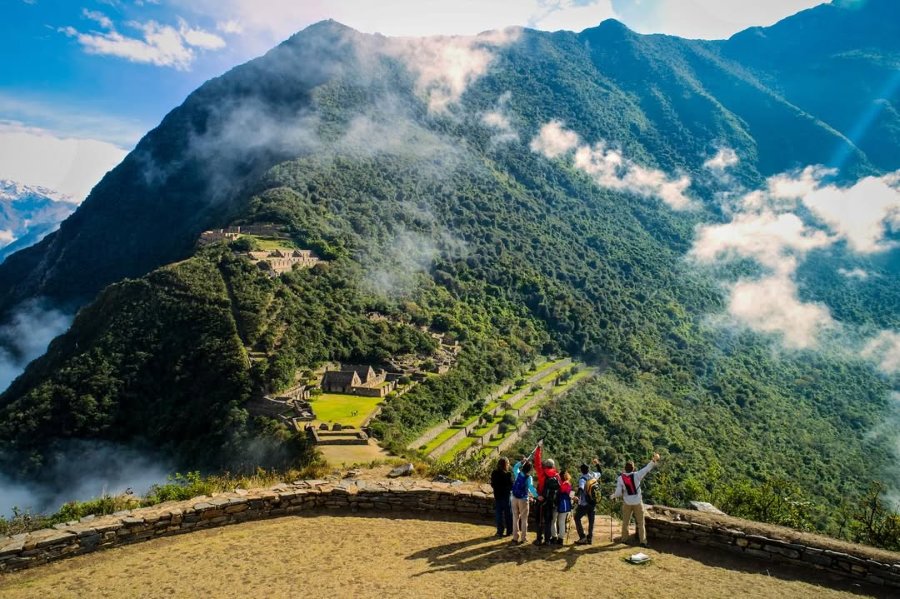
In Peru, the offer revolves around iconic sites such as Machu Picchu, the Sacred Valley, and Lima, with outdoor activities and experiences that involve local communities and Andean gastronomy.
Mexico combines archaeology —Chichén Itzá, Teotihuacán— adventure tourism in the Riviera Maya and northern canyons, and urban culinary experiences in Mexico City and Oaxaca, particularly sought after by European and North American visitors.
Beyond volume, these two markets share a common strength: the ability to offer experiences that can be easily combined. Heritage, activities, and gastronomy can be integrated into coherent itineraries, which facilitates marketing and strengthens visibility on booking platforms.
Attractive Yet Underrepresented Destinations
Conversely, countries such as Colombia (8.4 %), the Dominican Republic (7.7 %), Brazil (7.0 %), or Argentina (6.1 %) are less visible in online catalogs.
The issue is not attractiveness, but how these experiences are transformed into bookable products. The offer exists but is often scattered or insufficiently structured to integrate effectively on platforms.
The potential, however, is clear, particularly in segments like specialized gastronomy, itineraries in less-visited regions, or thematic urban experiences, which are still underdeveloped as clearly defined products.
Experience Categories That Shape the Market
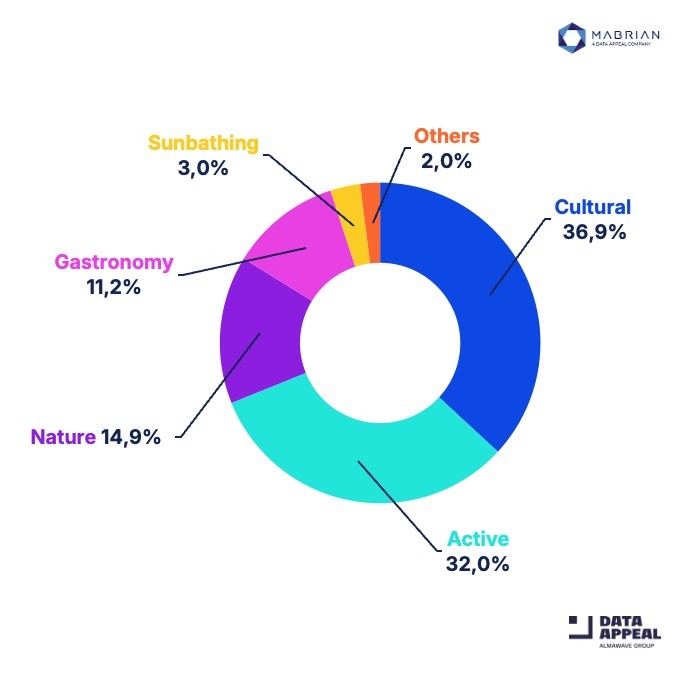
The analysis reveals a clear hierarchy in the types of experiences offered. Cultural activities (36.9 %) and outdoor activities (32 %) dominate, followed by nature (14.9 %) and gastronomy (11.2 %).
In contrast, beach segments (3 %) and urban, family, and wellness experiences (2 % combined) remain marginal in catalogs.
This imbalance does not necessarily reflect the true richness of destinations, but rather their ability to formalize experiences and make them marketable. Cultural and guided activities have clear formats —duration, content, itinerary— which facilitate marketing. Other segments, such as beach or wellness, are more tied to the overall trip context and are less frequently offered as standalone products.
A Key Challenge: Being Present from the Planning Phase
Mabrian’s data confirm a well-established trend: travelers are booking their activities increasingly in advance, particularly those that shape their itinerary.
Some choices are made even before arrival, directly on the platforms.
In this context, online visibility becomes critical. Destinations offering a clear, structured, and accessible offer are more likely to be integrated from the planning phase.
Concrete examples illustrate this trend: food tours around Bogotá markets, wine routes in Mendoza, or favela visits with local guides in Rio de Janeiro directly meet current traveler expectations.
Our Article: Exploring Latin America Through Its Iconic Markets
More than creating new experiences, the challenge now lies in structuring and marketing them. Clear, well-positioned products adapted to booking platforms become a key lever to capture demand that is decided increasingly early.
Photos: Peru Travel | Mabrian