Long associated with its cayes and turquoise waters, Belize is undergoing a strategic shift: that of a destination that is also being developed inland. Behind this dynamic, the challenge is no longer simply to showcase already well-known landscapes, but to offer experiences capable of meeting the current expectations of international travelers.
Presented during the Belize Digital AI Summit 2026, an analysis by Mabrian Travel Intelligence highlights this transition: the country’s potential now lies in its ability to transform its natural and cultural assets into structured tourism products.
An identified demand, a supply still adjusting
Data collected between August 2025 and March 2026 on platforms such as GetYourGuide, Civitatis and TripAdvisor reveal a gap between supply and expectations. While nature-based activities represent nearly 18% of the offer, demand is more focused on cultural, gastronomic and soft nature experiences.
The visitor profile confirms this trend: mainly couples, often on honeymoon or short stays; but also solo travelers and small groups. Expectations vary by market: Europeans prioritize nature, Canadians combine culture and activities, while Americans show a stronger interest in gastronomy, which is still not well structured as a tourism product.
In this context, Belize’s position also strengthens its appeal for combined itineraries with Mexico, Guatemala or Honduras.
Our article: Belize: where adventure meets the wild
The inland as a new experiential space
Beyond the barrier reef, listed as a UNESCO World Heritage Site, and the Great Blue Hole, Belize is gradually developing an inland-oriented offer. Tropical forests, wetlands and underground networks help expand the experience offered to visitors.
Soft nature experiences appear as a particularly relevant lever. Birdwatching at Crooked Tree Wildlife Sanctuary or accessible routes in natural environments without high physical demands meet a rapidly growing demand.
Within this approach, the Cockscomb Basin reserve, the world’s first jaguar reserve, offers forest trails, waterfalls and nature-based stays. Meanwhile, the Crystal Cave, in Blue Hole National Park, combines underground exploration, geological formations and Mayan remains.
A cultural heritage still to be structured
Belize brings together one of the most diverse cultural compositions in the Caribbean, where Mayan, Garifuna and Creole heritages coexist within a rich tangible and intangible heritage. This is expressed through archaeological sites such as Caracol, Xunantunich or Lamanai.
Our article: Voices of the Caribbean: the Garifuna people
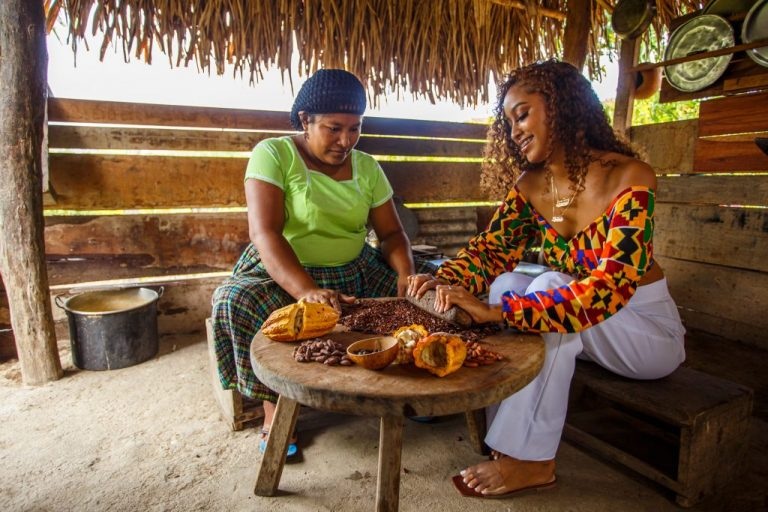
The challenge lies in transforming this heritage into coherent and readable experiences. Some initiatives are already aligned with this dynamic, such as visits to Garifuna communities in Hopkins, where music, dance and gastronomy are part of daily life, or cacao-based circuits in the Toledo district, which highlight practices rooted in Mayan traditions.
Encounters with Mennonite communities, particularly in Spanish Lookout, also offer another reading of the territory through their agricultural and artisanal activities.
Gastronomy as an extension of the territory
Belizean cuisine reflects this diversity, with dishes such as rice and beans with coconut milk, stew chicken or hudut, made with fish and plantain.
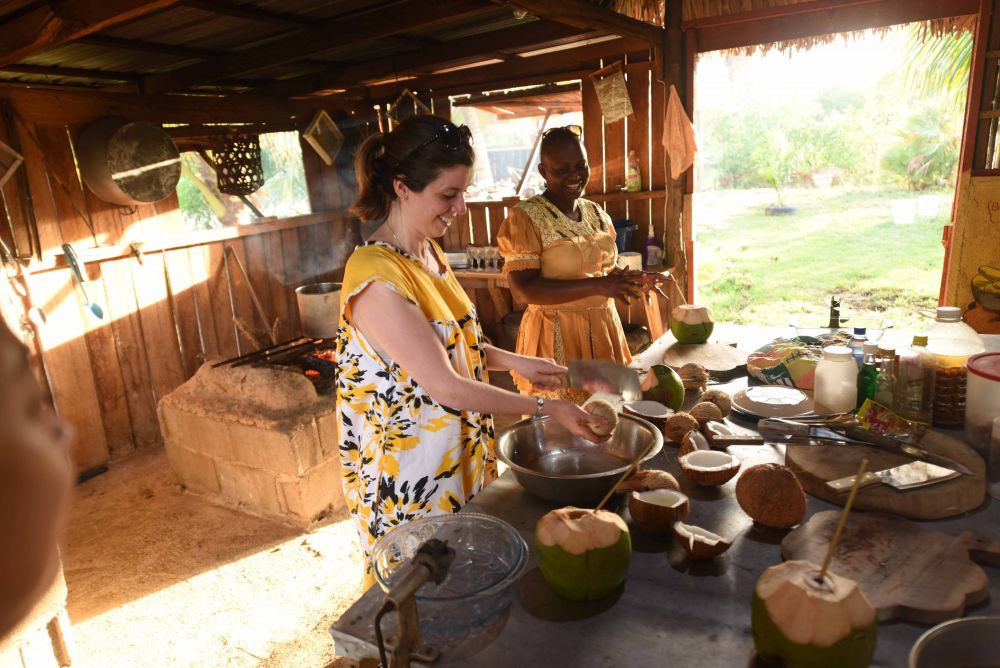
Gradually, this dimension is becoming a tourism experience in its own right. Chocolate-making workshops following a “bean-to-table” approach, cooking classes or food tours in markets and coastal areas allow for direct immersion in local practices.
Belize is now at a turning point, where value no longer lies solely in what is shown, but in how experiences are designed and lived. Here, the country’s potential goes beyond postcard images and fully reveals itself when moving away from the coastline to explore the territory in depth.
Photos: Travel Belice