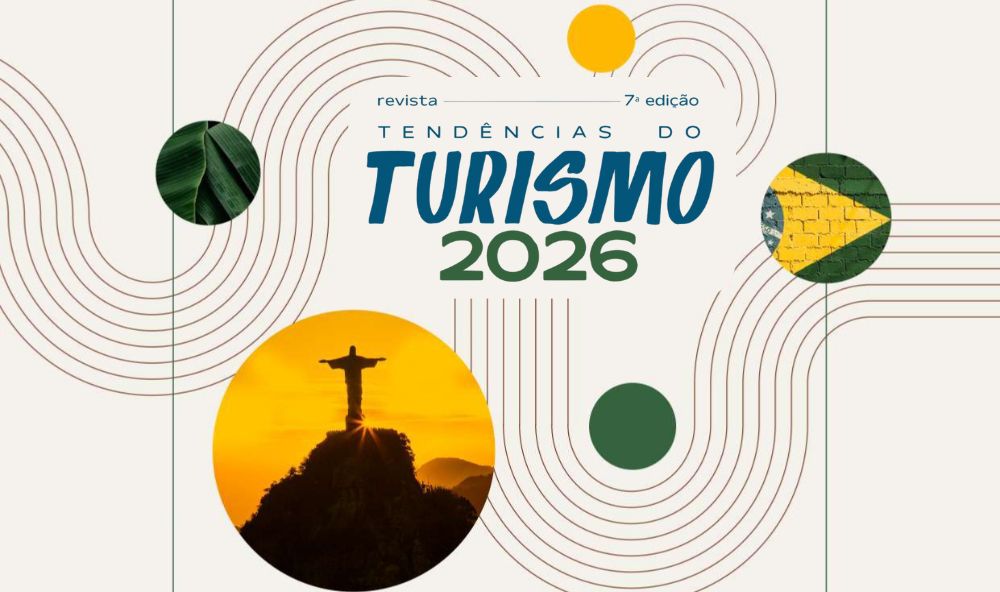

Trends are no longer enough to guide tourism. What matters now is their ability to be translated into concrete, bookable, and clearly structured products. This is precisely the objective of the 7th edition of the Tourism Trends report, led by Embratur, the Brazilian Ministry of Tourism, and the Brazilian Tour Operators Association (Braztoa), which draws on more than 30 international studies and direct feedback from operators.
The analysis goes beyond identifying trends. It focuses on understanding what actually sells: what types of experiences are in demand, when travelers book, how much they spend, and how these elements fit into the purchasing journey.
From trend to product: a still underestimated challenge
One of the report’s key contributions lies in the role given to operators. Through Braztoa, the study incorporates the perspective of those who design and market products—an aspect often missing from this type of analysis.
The conclusion is clear: a trend only has value if it is translated into a structured and sellable experience. This gap between inspiration and commercialization remains a point of friction for many destinations. Conversely, those that manage to organize their offer in a clear and coherent way gain competitiveness, particularly on distribution platforms.
More demanding, but also more organized travelers
The report highlights a clear shift in traveler behavior. Travelers plan more, compare offers, and optimize their spending, while also seeking more complete experiences.
In this context, wellness is no longer a complementary element—it becomes a central part of the stay. Brazil showcases this through destinations such as Chapada dos Veadeiros, Lençóis Maranhenses, or Ilha de Boipeba, where disconnection and a connection with nature shape the experience.
You might also like: The Nordeste along the Route of Emotions
Gastronomy and culture also play a key role, particularly in Salvador de Bahia or Minas Gerais, where travel is rooted in local specificities. Sports and events complement this more active demand in destinations like Rio de Janeiro or Florianópolis, while nature remains a strong common thread, from Manaus to Fernando de Noronha.
At the same time, artificial intelligence is making travel planning easier and enabling more precise choices, without replacing human decision-making. Faced with an abundance of options, selection becomes a central challenge. Events, social media, and audiovisual content continue to influence decisions, contributing to the emergence of a more selective traveler who spends more thoughtfully.
Related: “It’s a vibe”: Brazil lets its soul speak through tourism
A favorable dynamic, but one that needs structuring
The current context works in Brazil’s favor. In 2025, the country welcomed more than 9.3 million international tourists, a 46% increase compared to 2019. This growth confirms its position in the international market and aligns with the global recovery of the sector.
However, the strategy is not based solely on volume. It also aims to attract visitors with longer stays and higher spending, while diversifying destinations and limiting seasonality effects.
Better structuring the offer to capture growth
Globally, projections are clear: tourism could double by 2050, driven in particular by outbound markets such as India, China, and the United States.
In this context, competition is no longer based solely on visibility. It depends on the ability of destinations to offer a clear product tailored to increasingly diverse traveler profiles.
The report highlights a key issue: the gap between the country’s potential and what is actually available on the market. This is where competitiveness is now determined—not by multiplying experiences, but by selecting, structuring, and making them accessible. These choices, more than volume, define a destination’s ability to establish itself sustainably.
Photo: Tourism Trends