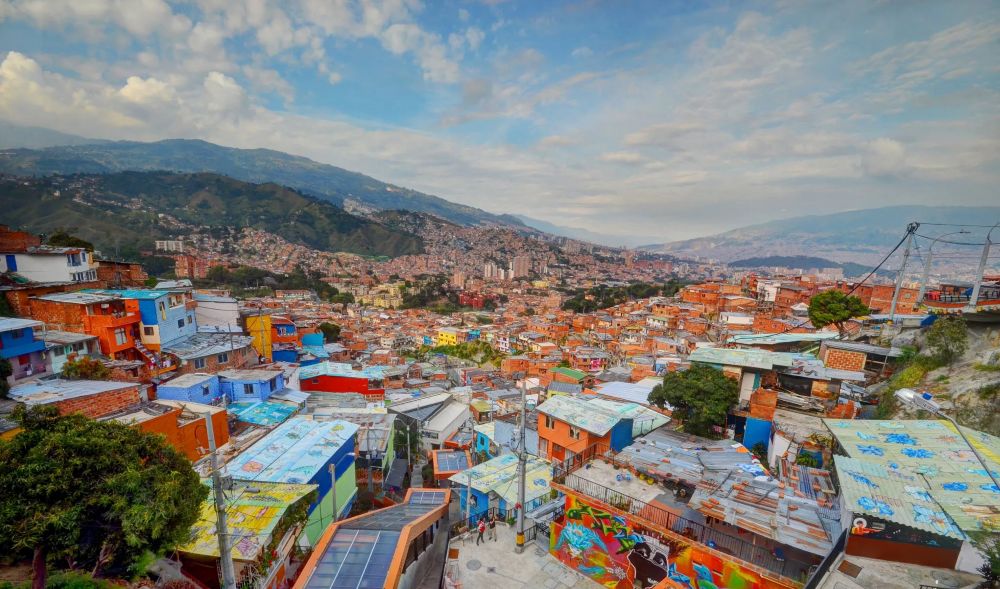


Urban tourism in Latin America is no longer limited to historic centers, grand plazas, and the most photographed monuments. Travelers are also turning their attention to neighborhoods that long remained outside traditional circuits in order to better understand what is being built there: street art, recent memory, daily life, cultural initiatives, and the stories told by those who live there.
This shift responds to an increasingly clear demand. Many visitors are now looking for experiences that are less standardized and more capable of revealing a city beyond its official facades. But this kind of tourism also requires caution: a working-class neighborhood cannot become a backdrop. Its value lies above all in the residents, guides, artists, shopkeepers, and community groups who give meaning to the visit.
Medellín: Telling Memory Through Walls
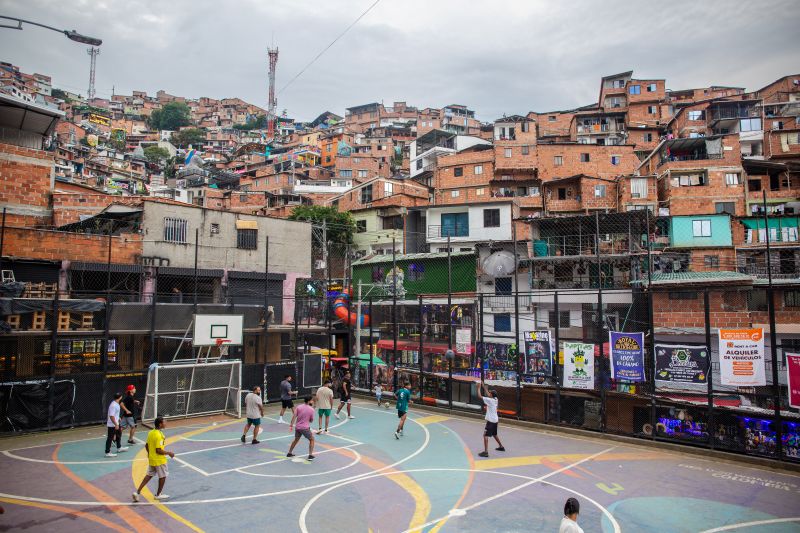
In Medellín, Comuna 13 remains one of the best-known examples of this transformation. The tour often begins near the outdoor escalators that connect the neighborhood’s steep hillsides, but the essence lies elsewhere: in the alleyways, murals, stories shared by local guides, and grassroots initiatives that have accompanied the area’s evolution.
Here, art does more than beautify walls. Graffiti is the most visible expression, but it is accompanied by sculptures and public interventions. Each mural, figure, and symbol refers to a story linked to the neighborhood, its violent past, its resistance, and the rebuilding processes that followed. Along the way, visitors pass through terraces that have become viewpoints, small shops, workshops, and spaces where residents present their work. Guides from the Comuna add depth to these images in ways visitors could not grasp on their own.
Rio de Janeiro: Rocinha Beyond the Viewpoint
Rocinha, Rio de Janeiro’s largest favela, illustrates one of the most sensitive aspects of urban tourism. Located between the upscale neighborhoods of São Conrado and Gávea, it occupies a spectacular setting with views that increasingly attract visitors, especially through social media. But reducing the experience to these panoramas would miss what truly defines the neighborhood.
Today, some initiatives are working to shift that perspective. Tours no longer revolve solely around terraces and photos from the heights. They may include visits to artists’ studios, meetings with residents, local restaurants, percussion or capoeira demonstrations, as well as walks through narrower alleys, shops, and everyday spaces.
Rocinha is a dense, inhabited, and active neighborhood where tourism offers insight into the life that unfolds there each day. It is neither a backdrop nor a simple “alternative” stop to add to a Rio itinerary. The most meaningful experiences are those that give voice to the people who live and work there and who tell the story of their own territory.
Mexico City: Tepito, Between Neighborhood Life and Tourism Still Taking Shape
The Tepito neighborhood is gradually appearing in some itineraries, but the experience cannot be presented as a fully structured tour. Here, tourism is being built piece by piece around well-known places, local stories, and popular practices that require context.

Tepito is also discovered through its markets, neighborhood stories, and forms of popular devotion. Altars dedicated to Santa Muerte and Angelito Negro draw the attention of visitors interested in religious practices rarely included in conventional tours. But this is precisely where nuance becomes essential: these places are not curiosities to be photographed casually. They belong to a world of beliefs, protection, and deep attachment that cannot be turned into attractions.
Among the best-known landmarks are Migas La Güera, a family-run establishment famous for its breakfasts, and Micheladas Lupillo, where ice-cold beers rimmed with salt and chili, enhanced with lime and sauces, are enjoyed in a lively, noisy, and unmistakably local atmosphere.
Lima: San Juan de Lurigancho, Archaeology in the Middle of the City
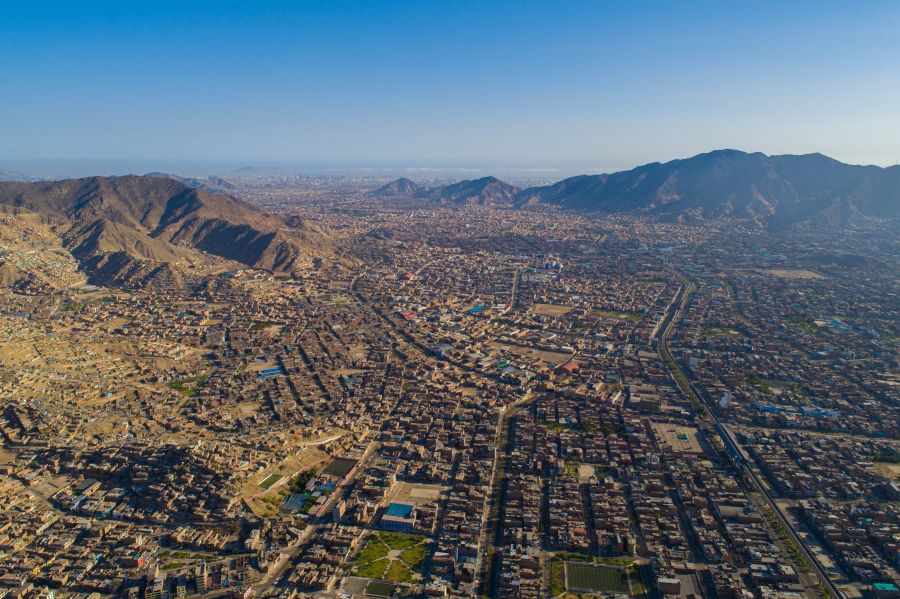
In Lima, San Juan de Lurigancho is not part of the usual tourist circuits. Yet Peru’s most populous district is beginning to attract attention for a unique reason: everyday neighborhood life coexists with an archaeological presence rarely associated with an urban area of this size.
Among the most significant sites are the Huacas of Mangomarca, whose adobe structures date back to the Ichma culture, which predates the Incas. Higher up, the Fortress of Campoy, with its walls, platforms, and traces of occupation, recalls its former administrative and defensive role linked to the control of the valley.
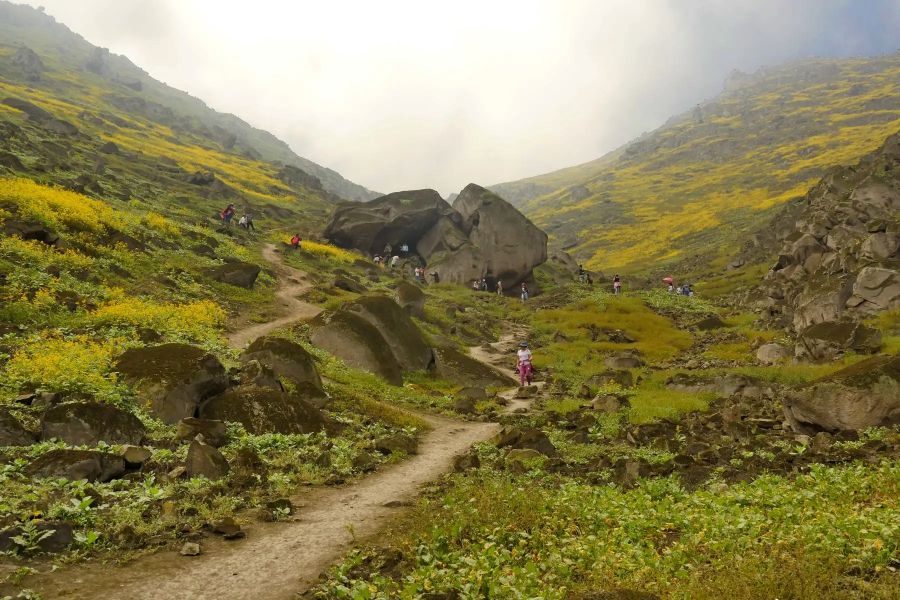
The experience goes beyond the ruins. The hills of Mangomarca and the Canto Grande ravine offer another perspective on the district. From these rocky landscapes, visitors can appreciate the scale of this part of Lima, its density, and the way the city has developed around sites far older than the capital itself.
San Juan de Lurigancho offers a different interpretation of urban tourism: one less centered on street art or already structured community tours, and more focused on the encounter between pre-Hispanic memory, working-class neighborhoods, and the contemporary expansion of the city.
You may also like: Muralism and Graffiti in Latin America: Walls That Tell Stories
These neighborhoods show that urban cultural tourism can offer new ways of understanding the city. It opens the door to spaces often absent from traditional tourism narratives, through art, memory, social practices, and local initiatives.
But its value depends on balance. A visit should not turn daily life into a spectacle or reduce a neighborhood to its past or its external image. When led by residents, artists, guides, and local collectives, it can instead bring forward more nuanced and accurate stories. That is when this kind of tourism becomes truly meaningful: not when it adds another stop to an itinerary, but when it helps explain why these neighborhoods matter in the recent history of their cities.
Photos: Visit Latin America | D.R | Andina