
In Latin America, the richness of its territories has never been limited to what is visible on the surface. Since the earliest explorations, the continent has established itself as a land of resources, where gold, silver, and precious stones have profoundly shaped its history, landscapes, and economic balances.
This relationship with the underground world, long associated with extraction and major phases of development, remains at the heart of many territories today. What is changing, however, is the way these spaces—once closed—are becoming accessible and offering a different reading of this heritage.
Colombia: Muzo, emerald as a guiding thread
In the Boyacá region, north of Bogotá and known as the world capital of emeralds, Muzo has shifted from a territory marked by exploitation and conflict to a destination that highlights its mining identity without disconnecting it from local reality. The experience begins as the landscape becomes steeper: here, there is no staging, only the reality of extraction.
Helmet and headlamp on, visitors do not simply enter the mine: they take part, digging into the earth and washing sediments like the guaqueros, hoping to find something.
Along the way, guides connect the territory’s history, from the years of the “green war” to the legend of Fura and Tena, according to which emeralds were born from the tears of an Indigenous woman, anchoring these stones in the local imagination.
Our article: Latin America, cradle of a handmade and inimitable luxury
Bolivia: Cerro Rico, an unfiltered immersion
Towering over the city of Potosí, Cerro Rico has been continuously mined since the 16th century for its silver and remains active today under a cooperative system that also extracts zinc, lead, and tin. The experience begins even before entering, at the miners’ market, where coca leaves, drinks, and everyday equipment are purchased.
More than a participatory experience, the visit becomes a direct immersion into today’s mining reality. Equipped with basic protection, visitors move through increasingly narrow tunnels, where the sound of tools sets the rhythm of each step.
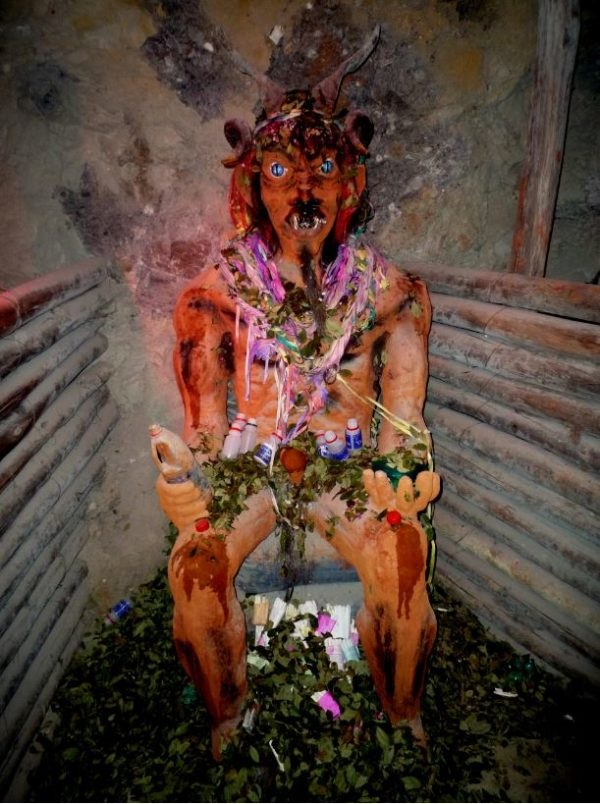
Along the way appears the figure of the “Tío”, inherited from colonial times, blending threat and protection. Miners leave offerings to him to seek protection and encourage the discovery of new veins.
Argentina: La Carolina, gold within reach
In La Carolina, in the province of San Luis, everything unfolds on a more intimate scale. The village stretches between the hills, with its stone streets and low houses that seem barely changed since the gold rush at its peak in the 19th century.
Before entering the mine, the route follows the stream crossing the village; its ochre-yellow tint is no coincidence. There, with a simple gold pan, visitors learn to swirl water and sand until fine particles of metal appear. Finding gold is never guaranteed, but the gesture itself is the heart of the experience.
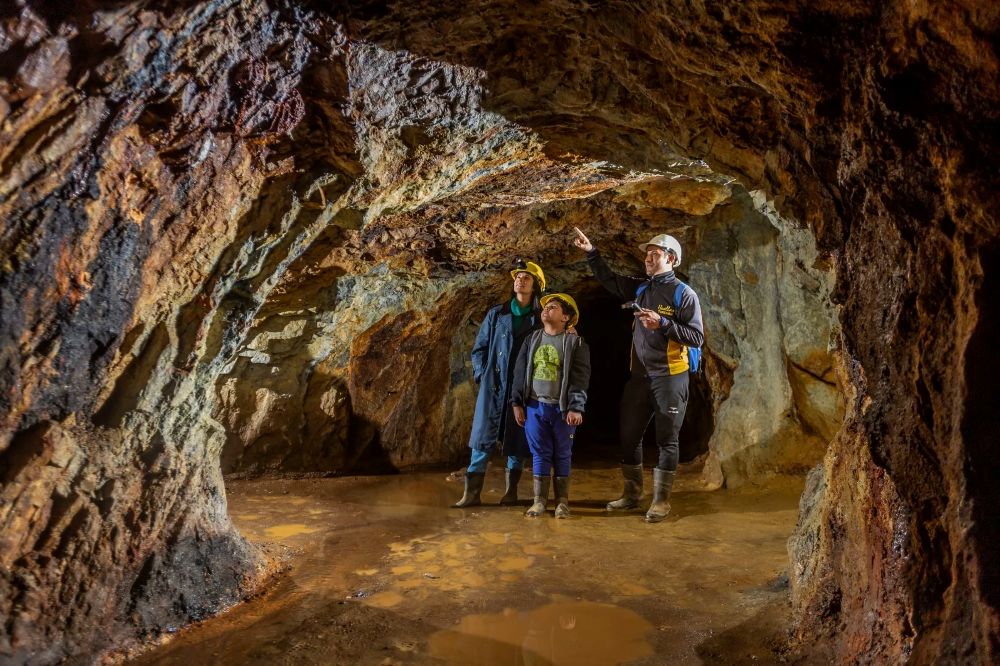
Then, helmet and headlamp on, the visit continues inside the Buena Esperanza mine, through the same entrance once used by miners. The tunnels descend to around 300 meters, with visible veins, mineral formations, and shifting ground, sometimes revealing small fragments to observe.
More than opening themselves to tourism, these places grant access on their own terms. There is no single narrative nor standardized way to experience them: in Muzo, one searches; in Potosí, one observes; in La Carolina, one experiences.
Each visit is different, but all share one thing: they force a reading of the territory based on what sustains it, not only on what it shows.
Photos: Gobierno de Argentina | Ander Izagirre.