

Majestic among the mountains of the Andes, the Andean condor soars above some of the most breathtaking landscapes in Latin America. Its presence, associated for centuries with the Andean world, has made it a national symbol, a sacred figure for several Indigenous cultures, and one of the great icons of nature tourism in countries such as Colombia, Peru, Chile, and Argentina.
Behind its flight lies a story shaped by myths, ancestral rituals, and conservation efforts aimed at preventing the disappearance of one of South America’s most emblematic birds.
A giant that glides more than it flies
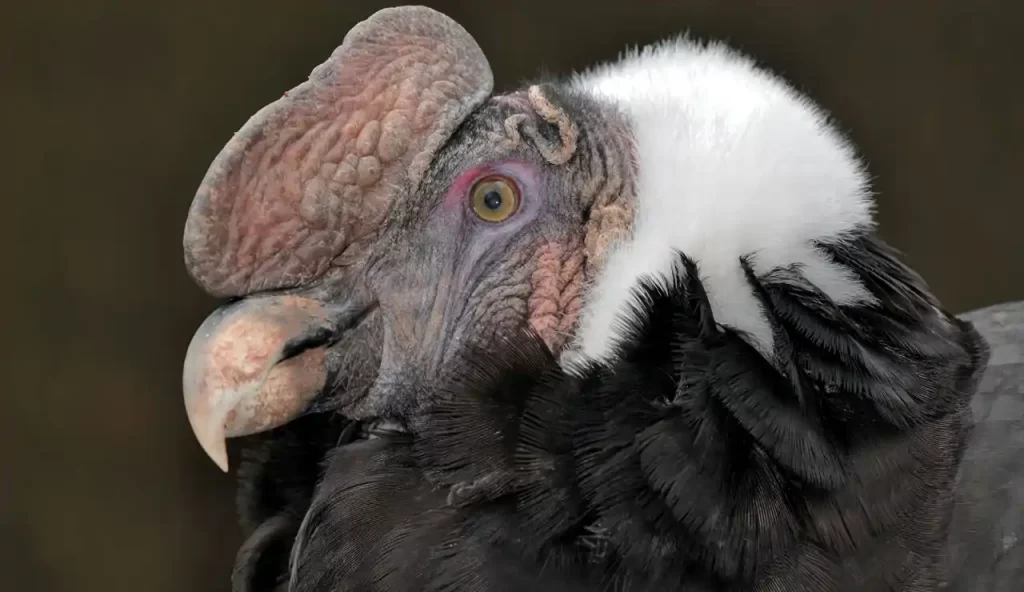
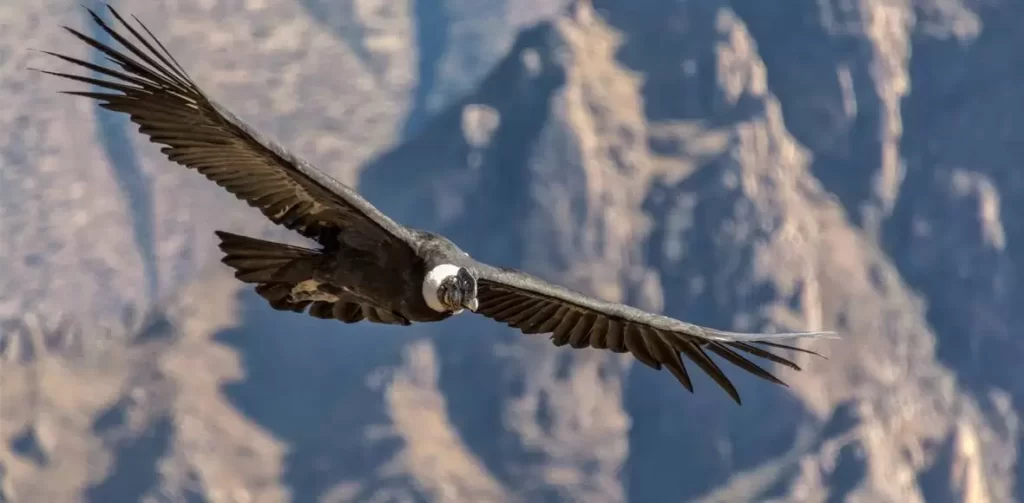
With a body measuring between 102 and 130 centimeters and a wingspan reaching up to 3.3 meters, the Andean condor ranks among the largest flying birds in the world. Its white collar, contrasting with its dark plumage, makes it recognizable even from afar. The male, usually larger than the female, can also be identified by the crest on top of its head.
But beyond its size, what truly impresses is the way it moves through the Andes: it can travel hundreds of kilometers using thermal mountain currents and glide for long periods without flapping its wings.
It is also one of the longest-living species in South America. In the wild, it can live for more than 50 years, while some captive individuals have reached 70 or even 80 years of age. However, its reproductive rate is extremely slow. Pairs remain together for life and generally raise only one chick every two or three years, one of the reasons why the species now faces major conservation challenges across much of the region.
Where to observe the condor in the Andes
Seeing a condor in flight is one of the unforgettable moments of traveling through an Andean country. Along the Andes mountain range, several places still allow visitors to observe the Andean condor in the wild. One of the best known is Cruz del Cóndor, in Peru’s Colca Canyon. In the mornings, condors often fly very close to visitors while taking advantage of the thermal currents rising from the canyon.
Further south, Torres del Paine offers sightings above the mountains, glaciers, and open Patagonian steppes. In Chile, areas such as Farellones and Cajón del Maipo are also known for frequent condor sightings, especially during mountain excursions.
In Colombia, although the population is much smaller than in other Andean countries, there are still places where the condor can be seen, particularly in areas such as Chicamocha Canyon and parts of Puracé National Natural Park, where conservation programs dedicated to the recovery of the species are also being developed.
A figure between sky and earth
In Inca cosmology, the condor is associated with the Hanan Pacha, the upper world linked to the sky, the intangible, and the spiritual realm. Its ability to rise to great heights turned it into an intermediary between the earthly world and this higher universe, an idea that appears across different cultures.
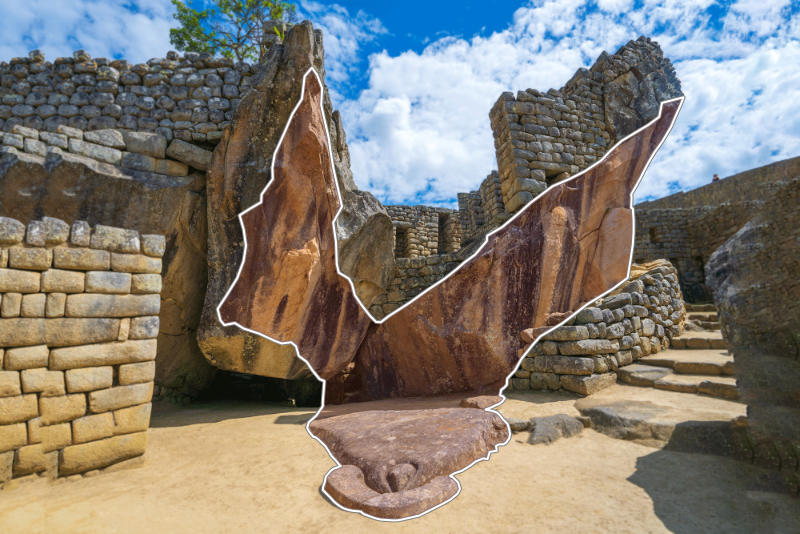
This symbolic relationship is also reflected in pre-Columbian architecture and art. At Machu Picchu, for example, a stone structure is known as the Temple of the Condor, where several rock formations recreate the silhouette of the bird. Its image also appears alongside the puma and the serpent in the Andean symbolic triad representing the sky, the earth, and the underworld, found in ceramics, textiles, and ritual representations throughout the Andes.
In rural areas of countries such as Bolivia and northern Argentina, the presence of the condor in the sky has also been associated with climatic signs and interpretations of natural balance, within local traditions that vary according to each territory.
Between festivals, symbols, and debates
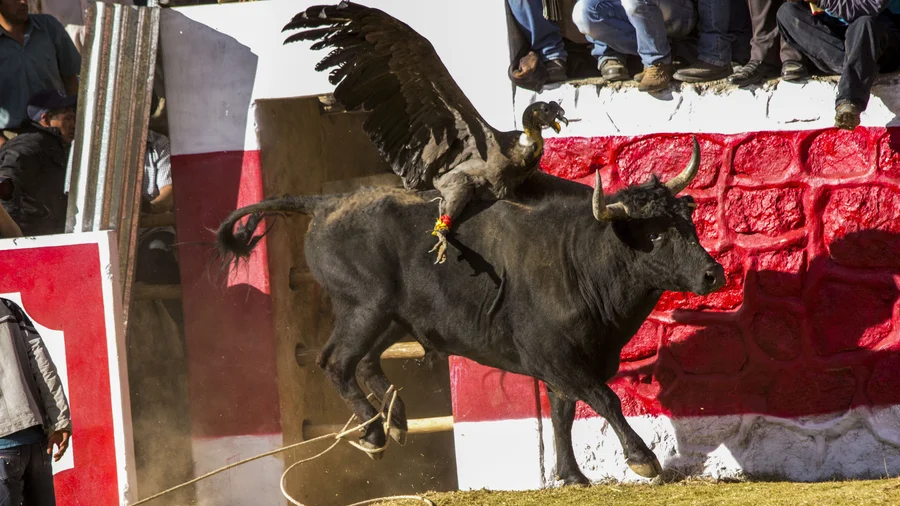
This imposing bird has also been present in celebrations such as the Yawar Fiesta, a festival in which the Andean condor was historically tied to a bull as a symbol of cultural resistance. Over time, this practice has been transformed or banned in many areas, giving way to modern versions based on dance, music, and performances without the use of animals. Today, the condor remains part of the region’s cultural calendar, and every July 7, Andean Condor Day is celebrated to highlight its symbolic and cultural importance.
In countries such as Colombia, Ecuador, Bolivia, and Chile, the condor also appears on national coats of arms as a symbol of freedom and connection to the Andes, reinforcing its presence both in nature and in the symbolic identity of the region.
A bird that became a popular icon
The condor also left the mountains through music. In 1913, Peruvian composer Daniel Alomía Robles composed El Cóndor Pasa for the zarzuela of the same name, drawing on Andean musical traditions. The melody later traveled far beyond Peru. In 1970, Simon & Garfunkel adapted it under the title El Cóndor Pasa (If I Could), helping make the tune famous worldwide.
The bird also appears in popular culture. In the animated series The Mysterious Cities of Gold, the “Great Condor” draws on this association between ancient civilizations, altitude, and adventure. More recently, it even appeared in an unexpected setting on the red carpet of the 2025 Cannes Film Festival, with a condor costume linked to the film I Love Peru.
Across the Andes, the Andean condor remains far more than a presence in the sky: it is part of the landscape, the cultural memory, and the identity of the region. Today, its survival depends on the balance between conservation efforts and the symbolic value that different communities have attributed to it for centuries. As long as it continues soaring above the mountains, it will remain a reminder of the deep connection between nature and history in the Andes.