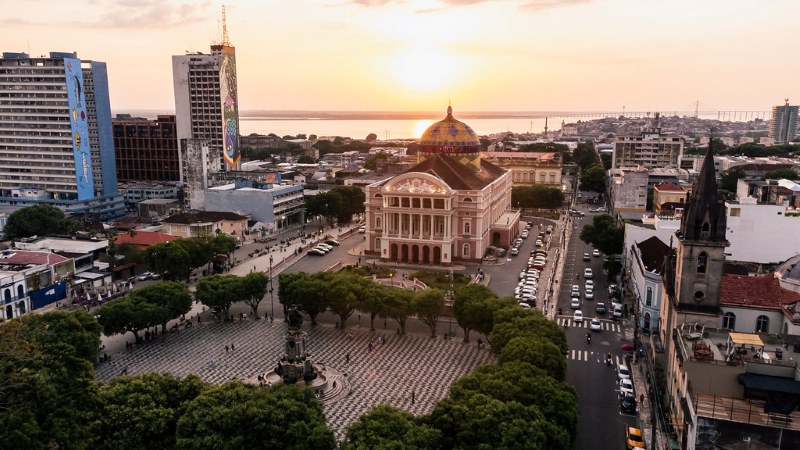

The Brazilian Amazon is often told through its rivers, forest and natural landscapes. Since July 27, 2026, it has also been told through two theatres. The Theatro Amazonas, in Manaus, and the Theatro da Paz, in Belém, have been inscribed on the UNESCO World Heritage List under a single designation: “Amazon Theatres”.
The inscription does not concern only the two buildings. It also includes their urban surroundings: Largo de São Sebastião, in Manaus, and Praça da República, in Belém. The squares, neighboring façades and immediate surroundings of the two theatres are also included by UNESCO.
Two theatres built during the rubber boom
At the end of the 19th century, the Brazilian Amazon experienced a period of strong prosperity linked to rubber extraction. Manaus and Belém grew wealthy quickly and became two major economic centers in northern Brazil. This wealth transformed the cities: ports, avenues, public buildings and cultural venues took on a new importance.
It was in this context that the two theatres were built, conceived as opera houses at a time when local elites were looking mainly toward Europe. The objective was clear: to give these Amazonian cities stages capable of competing with the major cultural capitals of the time.
Manaus, the opera house in the middle of the city
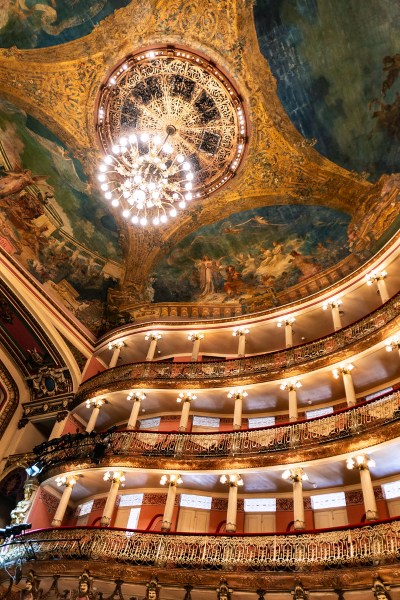
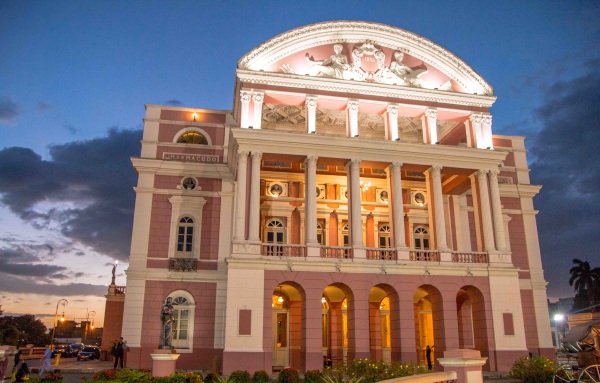
In Manaus, the Theatro Amazonas remains one of the city’s symbols. Inaugurated on December 31, 1896, it impresses with its façade, its volumes and above all its dome, covered with 36,000 ceramic tiles in the colors of the Brazilian flag, made in Alsace.
The building also reflects the scale of exchanges at the time. The metal structures came from Glasgow, the Carrara marble from Italy, as did part of the chandeliers and decorative elements. Inside, the hall can seat 684 spectators across the stalls and boxes. The theatre also houses a museum retracing its history.
Still active today, the venue offers concerts, operas, shows and festivals, notably the Festival Amazonas de Ópera, held between April and May. Largo de São Sebastião completes the experience. The theatre does not appear there as an isolated monument, but as the center of a public space that is still frequented. People pass through, stop, observe the dome and also encounter part of everyday life in Manaus.
Our article: Manaus: the metropolis in the heart of the Amazon
Belém, a theatre facing Praça da República
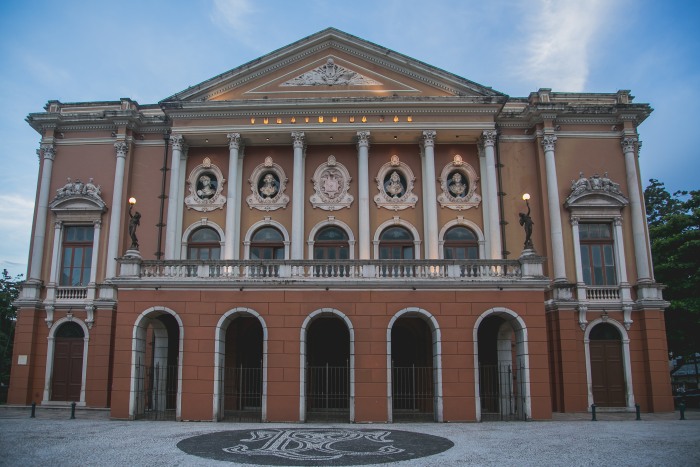
In Belém, the Theatro da Paz occupies an equally important place. Founded on February 15, 1878, it was the first major theatre built in the Amazon. At the time, Belém was one of the region’s main gateways on the Atlantic coast and concentrated a large share of the wealth linked to rubber.
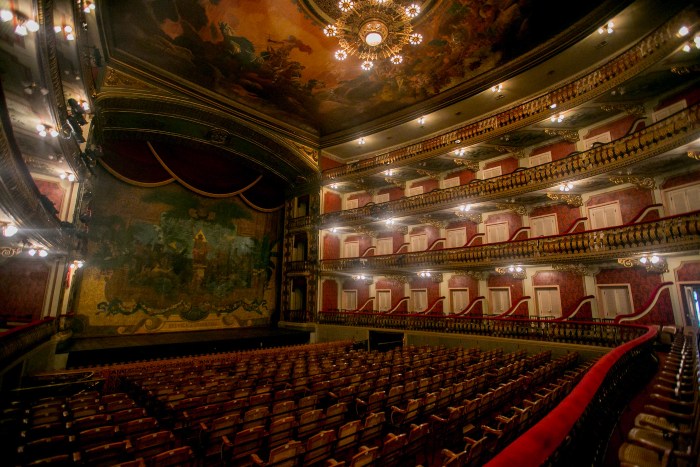
The project, designed by military engineer José Tibúrcio de Magalhães, was inspired by La Scala in Milan. Inside, crystal chandeliers, frescoes, elements covered with gold leaf and flooring in fine Amazonian woods recall the level of ambition behind the building. Its exceptional acoustics remain one of the attributes most often praised by artists who have performed there.
Located near Praça da República, the theatre remains one of the major landmarks of central Belém today. Its program includes an opera festival, but also theatre, dance, symphonic concerts and popular performances. This activity gives the UNESCO inscription a particular interest: the venue is not only preserved, it remains a living cultural space.
You may also like: When the Amazon becomes a leading destination for river cruises
Another gateway to the urban Amazon
Brazil now has 26 properties inscribed on the UNESCO World Heritage List. For the North region, this is the first cultural recognition at this level. Until now, the Brazilian Amazon appeared above all, in the international tourism imagination, through its natural areas, rivers and biodiversity.
The “Amazon Theatres” add another dimension to this narrative. In Manaus and Belém, they invite visitors to look more closely at the city centers: the squares, the buildings, but also the use of these places.
For travel, their interest is simple: they are not only visited as heritage buildings. When the program allows, attending a performance offers a singular experience. The decors are no longer only observed; they regain their original function, with a stage, an audience and a city around them.
Our article: Amazonia: Brazil unifies the Amazon to rethink its tourism positioning
Photos: Ana Claudia Jatahy / MTur | Bruna Brandao / MTur | Embratur | Sebrae