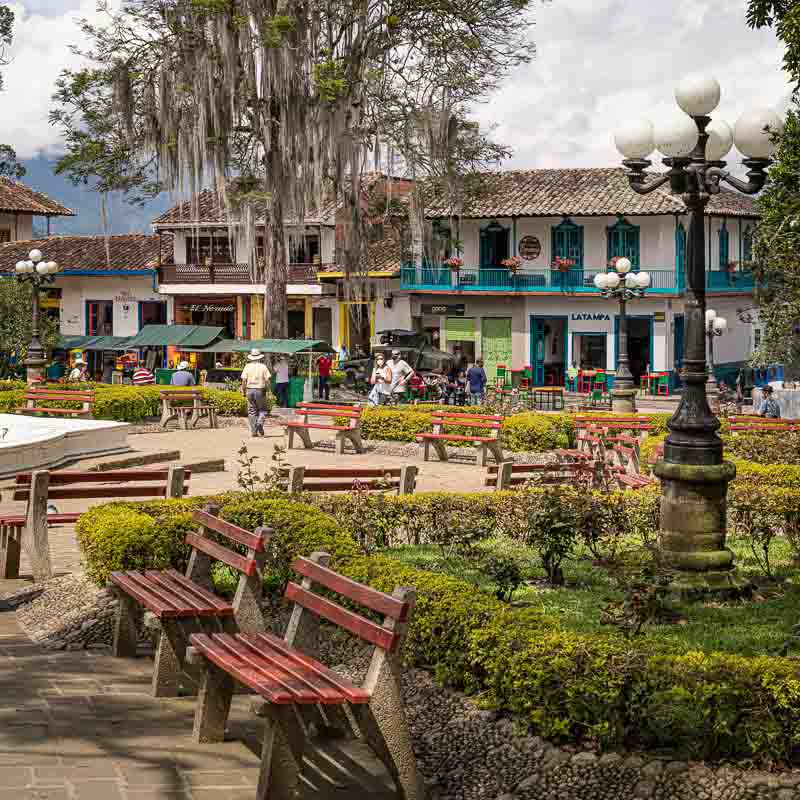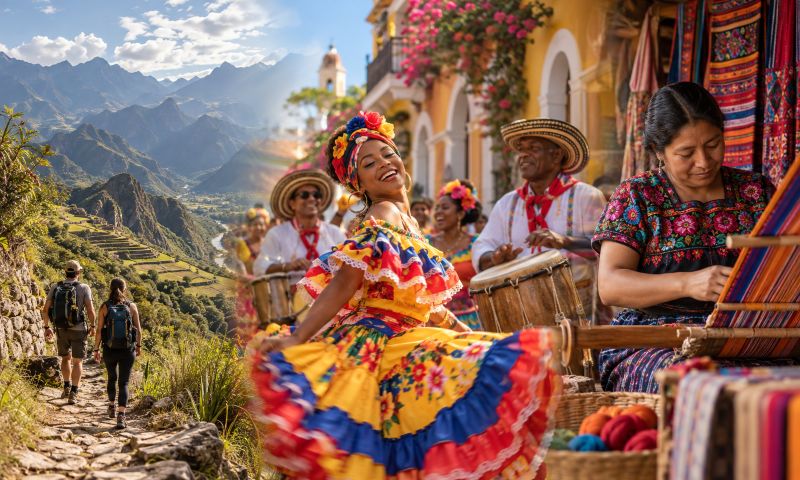

To follow Latin America, it is necessary to accept nuance. An arrivals figure tells part of the story, never the whole story. In 2026, the data published by Mastercard, Embratur and the Panama Tourism Authority mainly show one thing: the region can no longer be read only through its major names or its best-known images. The most useful signals are often more concrete: air routes that are being strengthened, source markets that are returning, spending that is shifting, an exchange rate that influences decisions, or a hub that becomes a real travel stop.
For those who build trips to our region, this reading is essential. Brazil does not tell the same story as Panama. Argentina is not sold using the same levers as Mexico. Some cities move forward through leisure, others through events, business or connectivity. Latin America therefore does not call for a single response, but for more precise approaches, destination by destination.
In its Latin America and Caribbean edition, the Travel Report 2026 by the Mastercard Economics Institute highlights three factors that are increasingly shaping travel decisions: exchange rates, spending behaviors and new air routes. In a context where costs, air routes and the relative price of destinations can change quickly, these data mainly help identify where opportunities become more concrete.
Reading travel differently
In the region, the differences between markets are sometimes very clear. Mexico illustrates this well. Mastercard notes that British and Canadian visitors allocate a high share of their spending to tour operators, respectively 6% and 5%. This is not only a consumer spending figure: it may also reflect a need for support, local expertise or better-structured services for certain markets.
These data help avoid speaking of the “international traveler” as a single profile. From Europe, North America or other source markets, planning Latin America means understanding these differences.
The same country can be approached in several ways depending on the clients’ origin, length of stay, budget, desired level of support or type of experience expected. This is also what makes the region interesting. It allows very different trips to be composed, between major cities, nature, culture, coastlines, encounters, events, short stays and longer circuits.
Brazil: the European return is confirmed
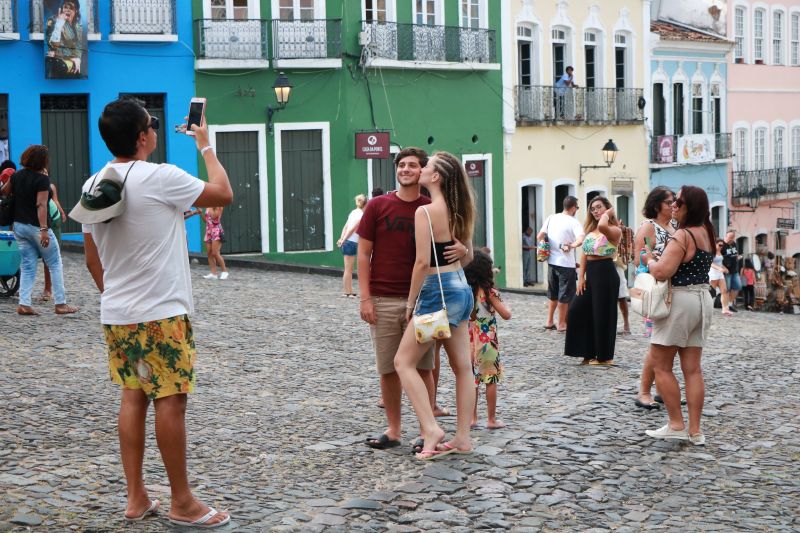
Brazil offers one of the strongest signals of the beginning of the year for long-haul markets. According to Embratur, 863,504 European visitors entered the country between January and May 2026, an increase of 17.21% compared with the same period in 2025. The French market follows the same trend, with 127,660 arrivals over the first five months of the year, up 7.27%, and the strongest month of May since 2006.
Mastercard adds a spending perspective to this momentum. In Brazil, tourists allocate nearly 29.5% of their budget to restaurants and bars, compared with 17.8% to accommodation. The issue is therefore not only the volume of arrivals, but also the role played by life on the ground in the economics of the stay: meals, outings, purchases, music, events, services and time spent in the cities or regions visited.
For long-haul offers, this combination is useful. It invites the industry to work on Brazil beyond a few expected images: major cities, the Northeast, the Amazon, coastlines, regional cultures, events, nature or combinations between several regions. The European recovery shows that demand exists. The challenge is to make it easier to turn into readable, segmented products adapted to different markets.
Panama: turning the connection into a stay
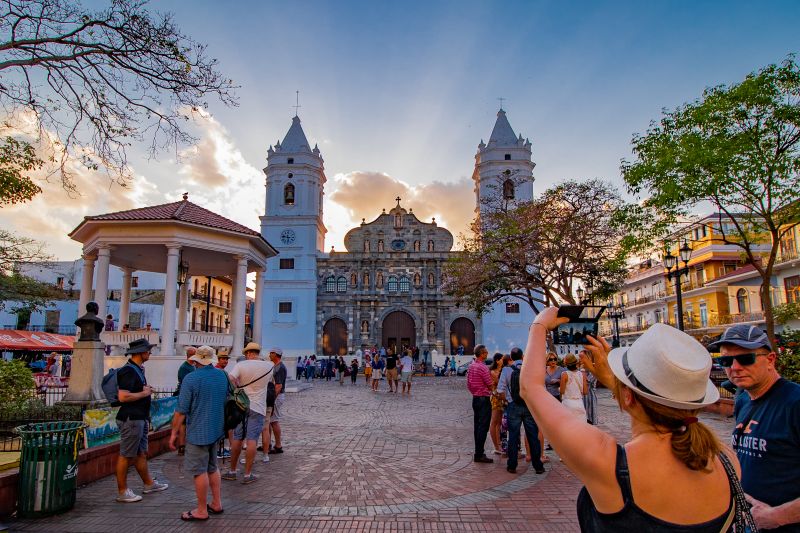
Panama stands out clearly in the Mastercard report for its air dynamics. Panama City ranks first in capacity growth for the northern hemisphere summer season among routes departing from Latin America. PROMTUR Panamá specifies that this refers to the speed of expansion of the offer, not the total volume of flights, but the signal remains important: the country is strengthening its position in flows between Latin America, Europe and other international markets. This dynamic also forms part of a broader movement observed by Mastercard, with flight programs being reinforced toward several cities in the region, including Panama City, Bogotá and Buenos Aires.
This connectivity is already reflected in arrivals. According to the Panama Tourism Authority, the country welcomed 999,934 international visitors in the first quarter of 2026, an increase of 17.3%. The challenge for Panama is now to make this hub position something more than a simple passage. The 86 confirmed and supported events in 2026, with more than 58,000 expected visitors, move in this direction.
Our article: MICE at the heart of Panama’s tourism strategy in 2026
Copa Airlines’ Panamá Stopover program illustrates this strategy well. Up 37% through April 2026, with more than 88,000 visitors, it shows that a connection can become a real travel proposal. For planning trips to Latin America, Panama can therefore serve as an entry point to Central America, a short extension before South America, or a stop in its own right around Panama City, the canal, coffee, beaches and nature.
Argentina: price as a trigger

Argentina emerges from the Mastercard report as one of the countries where tourism reacts most strongly to the exchange rate. A 10% depreciation of the Argentine peso is associated with a 9.5% increase in international arrivals, compared with a global average of 2.4%. The country therefore ranks second worldwide among destinations most sensitive to exchange rate variations, behind Turkey.
To sell Argentina from abroad, the exchange rate can matter. It weighs on the perception of budget, especially when travelers compare long-haul destinations, lengths of stay and on-site costs. But it must remain a trigger, not the core of the story.
Argentina is better approached through solid proposals: Buenos Aires, Patagonia, the Northwest, wine routes, wide-open spaces, urban culture, nature stays or regional combinations. Price can open a window of interest. The quality of the itinerary turns that attention into a booking.
Connecting signals to products
Mastercard also points to the progress of Brasília and Guadalajara in its Business vs. Leisure Momentum Index , ranked 16th and 20th respectively. The indicator does not measure only events, but more broadly the role of business travel in accommodation spending, restaurant spending and air bookings.
To plan Latin America in 2026, the data invite a closer look at each destination: the flights that facilitate access, the markets that are progressing, the spending made on site, the possible extensions and the arguments that turn interest into booking. It is through this more detailed reading, attentive to access, experiences and the expectations of each market, that the most useful opportunities are taking shape for building stays to our region in the months ahead.
Photos: Mastercard | Embratur | Buenos Aires Tourism Board