
In the town of Tlalpujahua, in the mountains of Michoacán in central Mexico, glass becomes a medium of expression and transmission. Here, Christmas ornaments take shape through a rigorous craft tradition, based on precise gestures and manual techniques passed down through several generations. Blown, silvered and hand-painted, these pieces are not merely seasonal decorations: they embody a local identity shaped by craftsmanship.
From a mining town to a recognized craft hub
Until the mid-20th century, Tlalpujahua depended mainly on mining. Several disasters, including a major landslide in 1937, led to the decline of this activity and plunged the town into a period of crisis. It was in this context that Joaquín Muñoz Orta, after returning from the United States where he had worked in the manufacture of Christmas trees, founded a workshop in 1965 dedicated to the production of festive decorations.
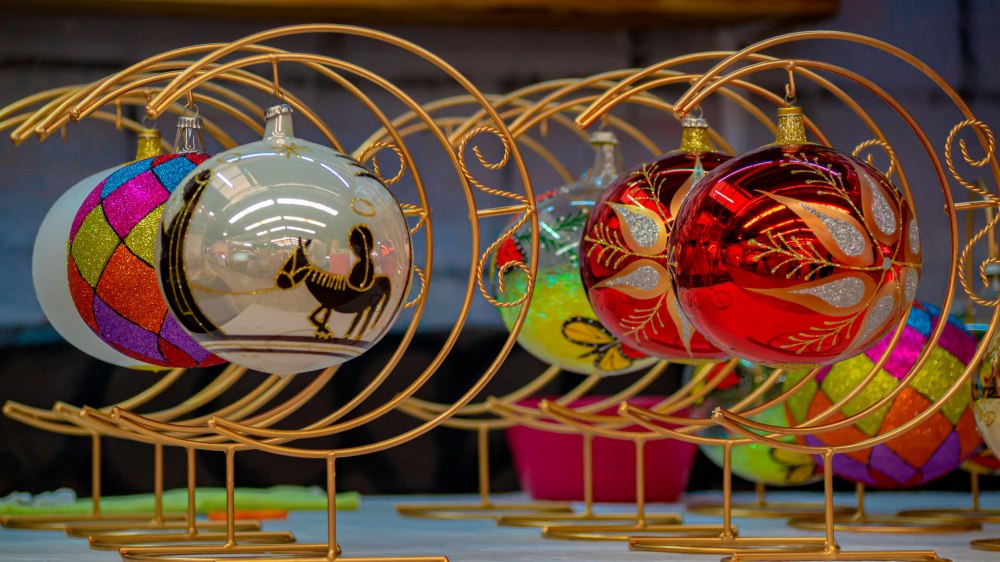
Blown-glass ornaments quickly gained popularity and overtook other forms of production. Around this initiative, a network of workshops developed: structured companies, family-run workshops and small artisan units. Today, this activity generates direct or indirect income for thousands of residents and represents one of the town’s main economic pillars.
In 2025, this craft reached a decisive milestone with the official recognition of Tlalpujahua’s blown-glass ornaments as a product benefiting from a Geographical Indication, guaranteeing their origin and protecting the techniques that distinguish them.
Blown glass: an entirely manual process
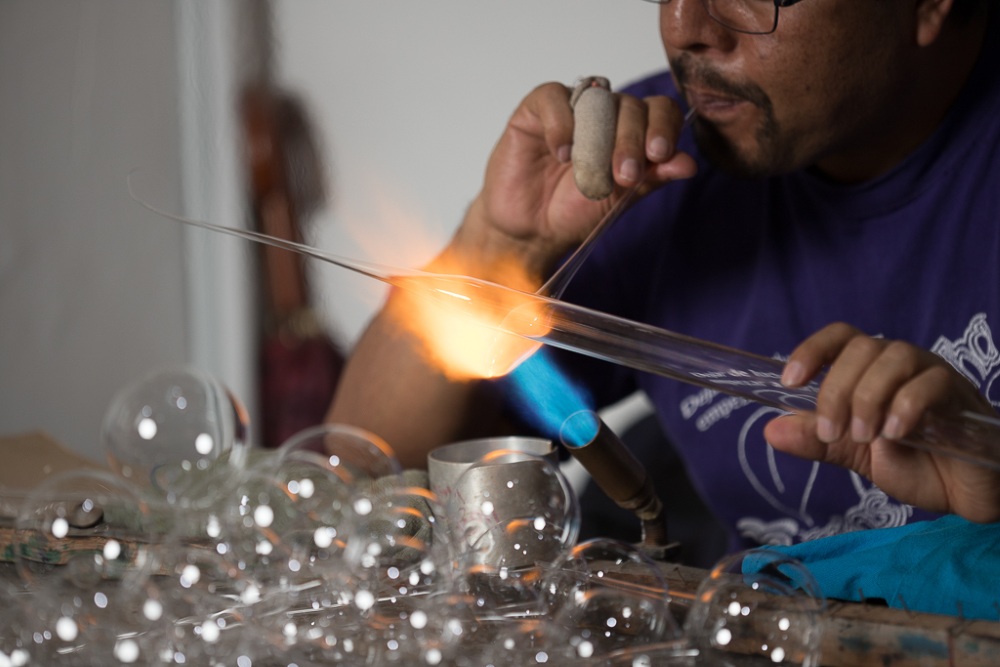
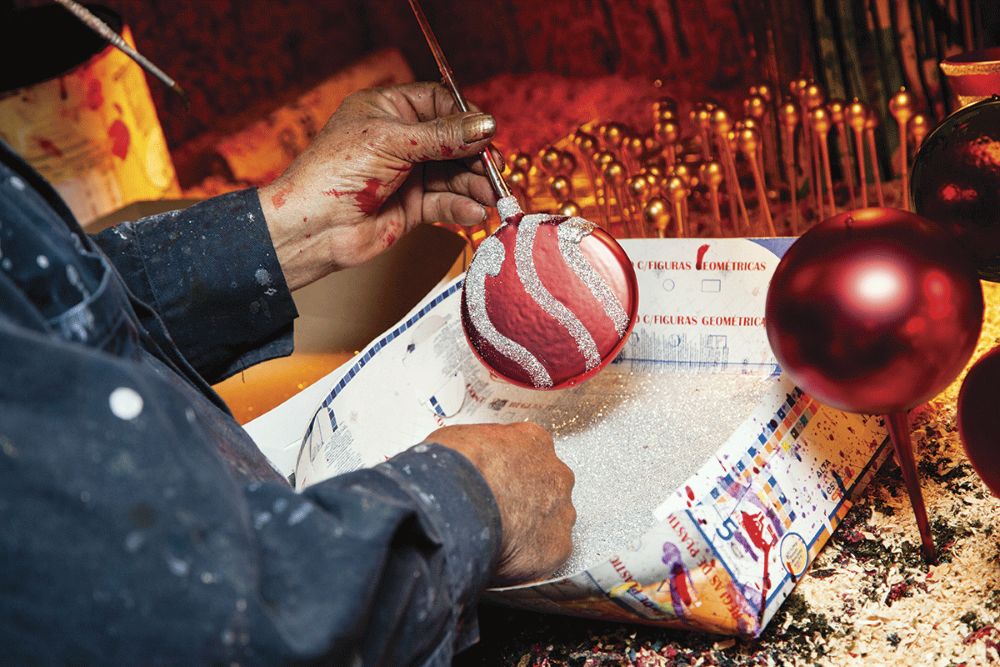
Each piece begins with a glass tube heated until it becomes incandescent. The artisan then blows the glass to give it its shape: a classic sphere or local models such as chimborro, chupirol, chilaca or torcido. Once cooled, the ornament is silvered by injecting silver nitrate, then washed, dried and coated with transparent or colored lacquers.
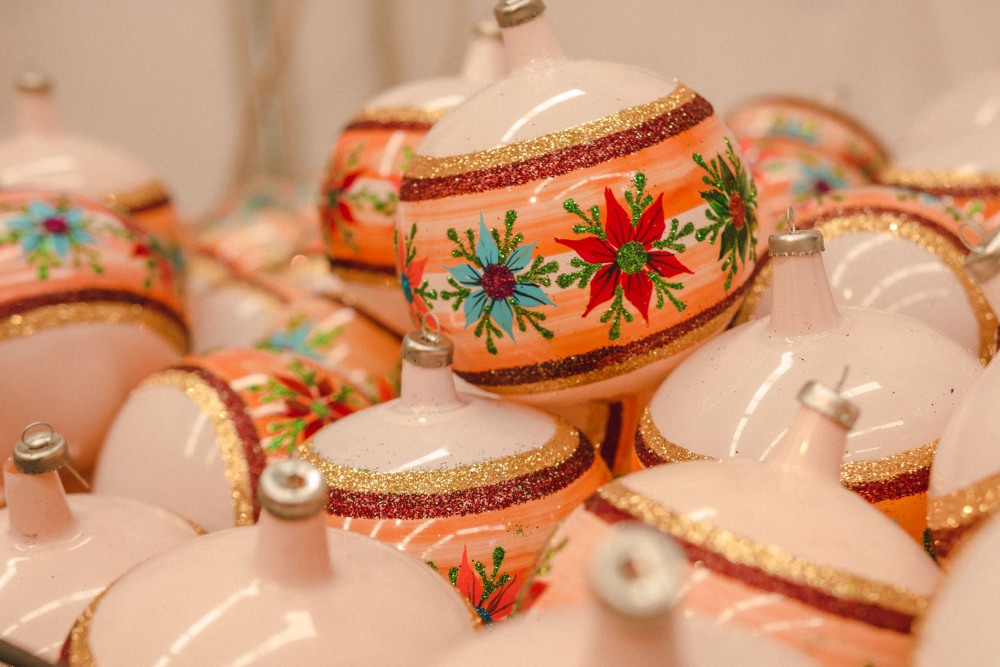
Decoration is then carried out by hand, using fine brushes, syringes filled with glue and glitter. The tip is sanded before the metal cap is attached. The pieces vary in size—from two to twenty-five centimeters—and in shape: fruits, animals, bells or festive motifs. The entire process remains manual, in contrast to industrial production.
A tradition looking outward
Aujourd’hui, Tlalpujahua concentre l’une des industries artisanales d’ornements de Noël les plus dynamiques du Mexique. Les ateliers fonctionnent tout au long de l’année, avec un pic d’activité entre octobre et décembre, période durant laquelle se tient la Feria de la Esfera. Ce rendez-vous annuel associe ventes, démonstrations et ateliers ouverts, attirant visiteurs et professionnels, et dynamisant l’économie locale.
Although this tradition is relatively recent compared to other Mexican crafts, it has established itself as a strong cultural marker. In Tlalpujahua, blown glass goes beyond seasonality: it shapes the town’s identity, supports its economy and projects its craftsmanship far beyond national borders, making this territory a distinctive reference within Mexico’s cultural landscape.
Photos: Pueblos Mágicos | Visit Mexico | Visit Michoacán