Travelling alone is not a default choice, but a deliberate way of discovering a destination. What might be seen as a constraint is not a limitation; on the contrary, this approach encourages more spontaneous exchanges and a more direct immersion in local life.
Latin America is particularly well suited to this type of travel. Relatively simple transport, cities that can be explored on foot, a strong culture of exchange: the conditions are in place to move around easily, even when arriving alone. What remains is identifying suitable entry points to structure an itinerary from the start.
The rise of solo travel
Far from being a recent phenomenon, solo travel is part of a steady upward trend. According to Solo Traveler Statistics, searches related to this type of trip have increased by more than 30% over the past decade, with a peak reached in 2025. In 2024, this market exceeded 482 billion dollars, with projections suggesting it could surpass the trillion mark before 2030.
Traveller profiles have also become more defined. On one hand, women often aged over 50 who prioritise safety and comfort and who, in 90% of cases, include organised excursions during their stay. On the other, younger generations opting for shorter formats with greater flexibility.
In both cases, a constant emerges: a search for autonomy, freedom and independence in the way of travelling, while relying on services that simplify on-the-ground logistics. Travelling alone is no longer seen as a limitation, but as a fully-fledged option in shaping a journey.
Starting points to build an itinerary
The destinations presented here are not only stops, but also starting points to organise a journey at one’s own pace. They often make it possible to move away from classic circuits and build a more flexible itinerary based on personal interests.
All of them offer relatively easy access, either through direct international flights or via major regional hubs, making it easy to continue the journey upon arrival.
Cusco, gateway to the Andes
In Cusco, the most recommended approach is to allow time for acclimatisation on the first day. At more than 3,400 metres above sea level, the body needs to adjust gradually.
Exploring the city can begin at the Plaza de Armas, a central landmark that makes it easy to navigate the historic centre. Within a few streets, Inca walls appear, particularly on Hatun Rumiyoc street and at Qoricancha, alongside traditional markets and the unique atmosphere that defines the city for travellers.
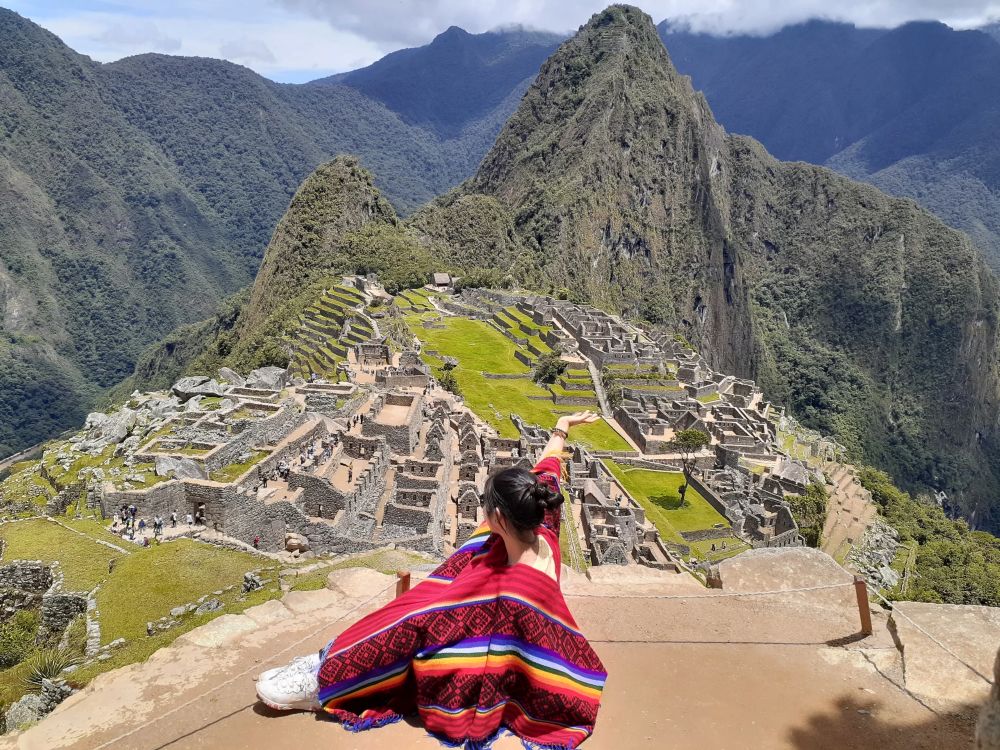
Cusco is also the starting point for visiting Machu Picchu. To reach the famous sanctuary, there are several options: trekking routes along ancient Inca trails, or more simply travelling to Aguas Calientes (by train or road).
From there, buses take visitors to the entrance of the site. It is also possible, for those who wish, to walk via a stone stairway path that requires good physical condition.
Many sites in the region deserve extended time in this unique environment, to the point where they can justify an entire trip: from Ollantaytambo to the Maras salt mines, via Vinicunca (the rainbow mountain) or the Salkantay glacier. The region fully lives up to its name: the Sacred Valley.
You might like: Pallay Punchu: a new destination in the Peruvian high Andes
Cuenca, between city and wide-open spaces
Accessible from Quito or Guayaquil, Cuenca is easy to explore on foot. Between the historic centre and the banks of the Tomebamba River, landmarks are immediately recognisable: Parque Calderón, the New Cathedral with its blue domes, or the streets around Calle Larga, where cafés, galleries and small restaurants are concentrated.
In recent years, the city has become known as a gastronomic destination, with an offer ranging from the popular market (notably the 10 de Agosto market) to more contemporary restaurants working with Andean products.
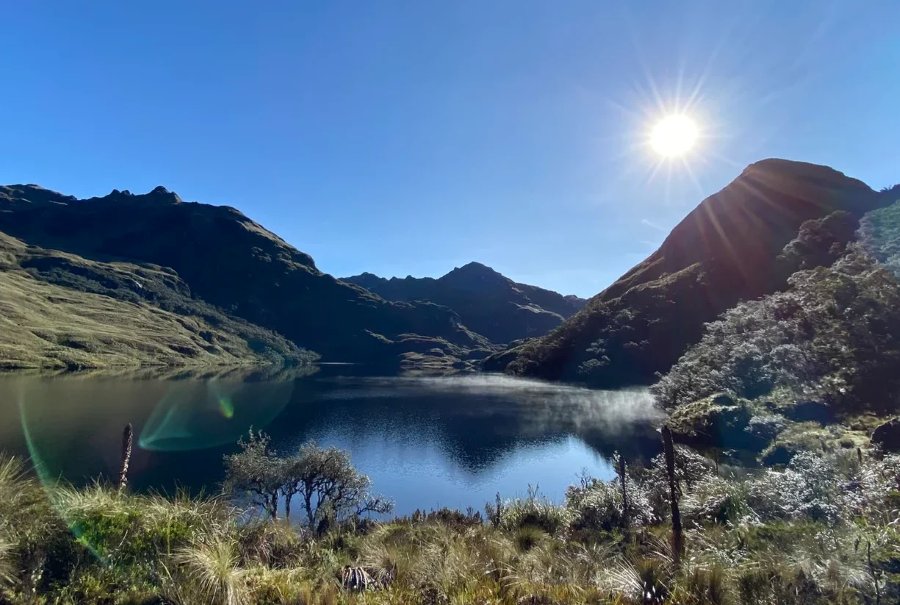
Cuenca also allows for quick escapes from the city. Less than an hour away, Cajas National Park offers a high-altitude landscape marked by dozens of lagoons and day-accessible hiking trails. Further north, the Ingapirca archaeological site offers a glimpse into the Inca heritage in Ecuador.
Florianópolis, an island easy to explore
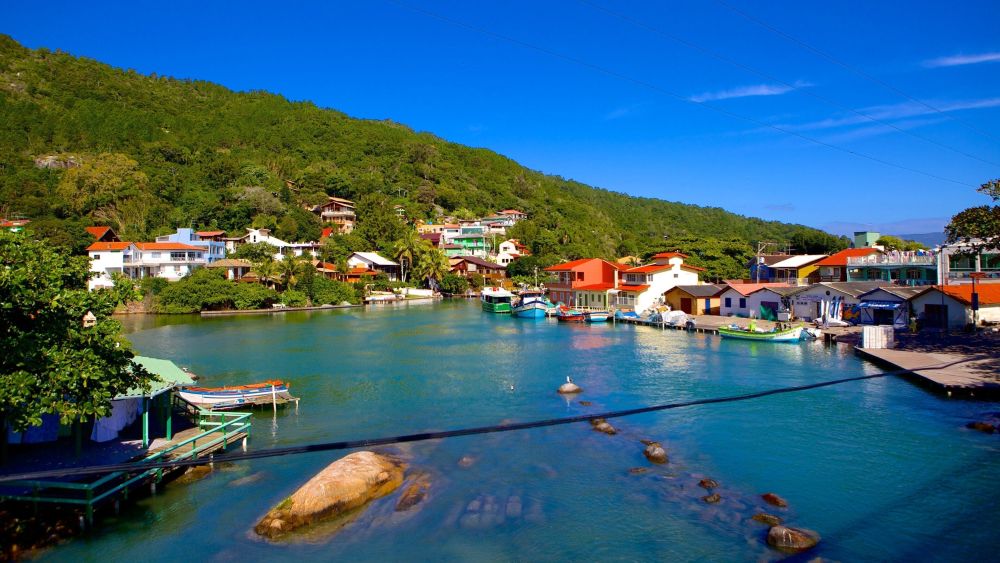
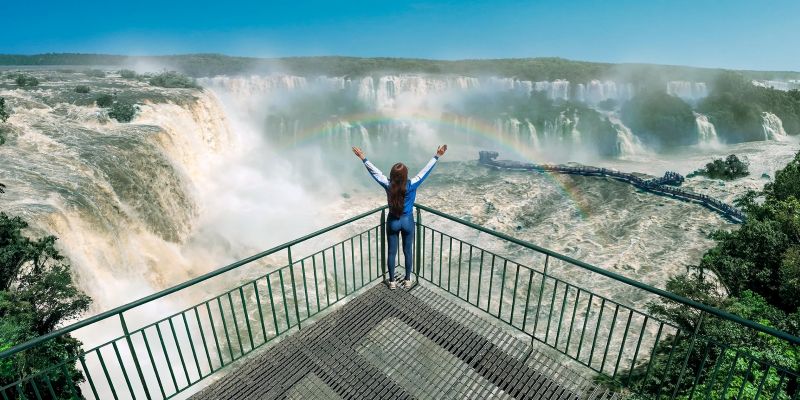
The capital of the state of Santa Catarina in southern Brazil is known for its coastline. From Florianópolis, it is possible to move from one beach to another (around forty in total) without complex planning, easily alternating between different areas of the island. Praia Mole and Joaquina have a more lively atmosphere, known for surfing spots, while Lagoinha do Leste or Naufragados are accessible via one- to two-hour hikes.
Transport is mainly by bus, connecting the main areas of the island, particularly between the more developed north and the more preserved south.
The Lagoa da Conceição neighbourhood often serves as a reference point. It offers accommodation, restaurants and a concentration of travellers, facilitating interaction without needing to rely on a group to organise the day.
Medellín, understanding the city by moving through it
In Medellín, transport is made easier by the metro and Metrocable, which connect the centre with the hillside neighbourhoods and quickly help visitors understand the city’s layout.
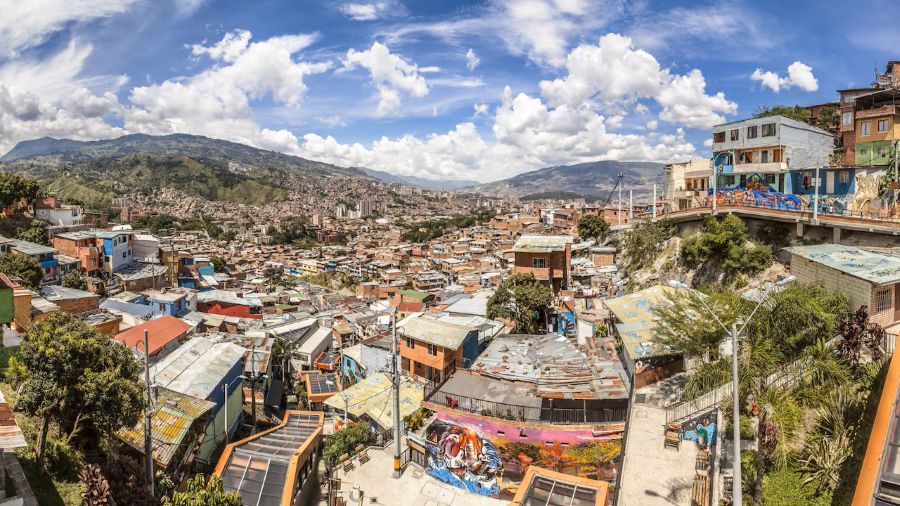
A first visit often includes the city centre, with Plaza Botero and the Antioquia Museum, before heading to Comuna 13, usually with a guide. The visit helps contextualise the neighbourhood’s evolution beyond its current image.
The city is also discovered through its cultural and nightlife scene, particularly in areas such as El Poblado or Laureles, where restaurants, bars and music venues are concentrated and frequented by both locals and travellers.
Visits to coffee farms (fincas cafeteras) are also offered, in the city or its surroundings, focusing on producers and their daily work.
About two hours away, Guatapé is an easy excursion. The village is known for its colourful façades and zócalos (bas-reliefs). Nearby, El Peñol rock, accessible after climbing more than 700 steps, offers panoramic views over the surrounding lakes.
Travelling alone does not mean organising a trip without support. The assistance of a travel agency and incoming operator helps build a tailored itinerary while maintaining a high degree of freedom throughout the journey.
You might like: Read our interview about an exceptional 42-day trip to Ecuador!
As the trip progresses, landmarks are quickly established, the rhythm adapts, choices evolve naturally, and solo travel becomes a simpler and more personal way of discovering a destination.
Photos: D.R | Visit Cuenca | Visit Brasil | Medellín Travel