A few weeks before the start of the 2026 World Cup, Mexico’s capital is preparing to host some of the matches in one of the most widely followed sporting events on the planet. But limiting the trip to football alone would mean missing a large part of what Mexico City has to offer. In this series of articles, we explore the places to discover between matches—destinations where the journey continues long after the final whistle.
Around the Azteca Stadium, officially renamed Mexico City Stadium during the tournament, the city continues to move at its own pace: traditional markets, historic neighborhoods, lively terraces open late into the night, canals, museums, and urban itineraries create an experience that goes far beyond the sport.
In this series of articles, we explore the places to discover between matches—destinations where the journey continues long after the final whistle.
From the Azteca to the Streets of Coyoacán
Many visitors will spend match days in the southern part of the city, making Coyoacán a natural stop after a visit to the stadium. The contrast is immediate: after the intensity of the stands, the neighborhood’s cobbled streets slow the pace completely, with leafy squares, old cafés, and musicians performing on street corners.
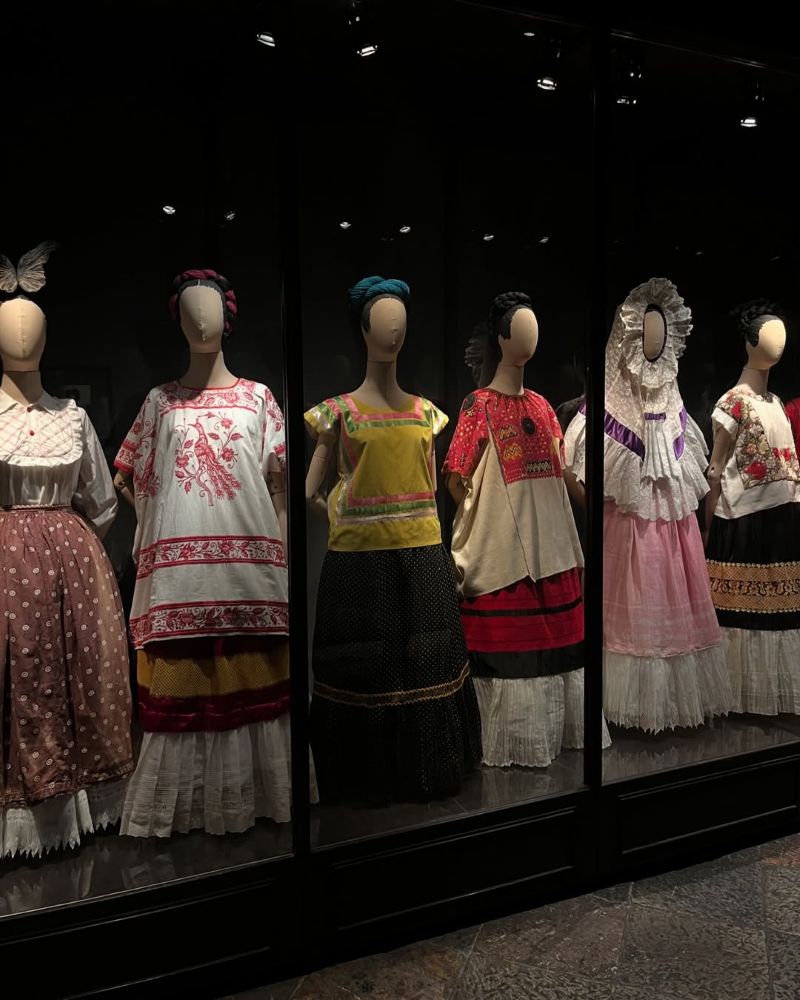
The Casa Azul, now the Frida Kahlo Museum, remains one of the most visited places in the capital. It was here that the artist was born, lived most of her life, and died in 1954. Inside, the colorful rooms and gardens reveal her personal belongings, hand-painted corsets, Tehuana dresses, and the easel she used from her wheelchair.
A few streets away, the Mercado de Coyoacán is one of the best places to have lunch after strolling through the neighborhood. Filled with tostadas topped with tinga, seafood, or mushrooms, as well as handicraft stalls and shared tables, the market retains a distinctly local atmosphere.
From the Zócalo to the Remains of Tenochtitlán
The historic center brings together some of Mexico City’s most emblematic landmarks within just a few blocks. The route usually begins at the Zócalo, surrounded by the Metropolitan Cathedral and colonial buildings, before continuing to the Templo Mayor, where the remains of Tenochtitlán, the former capital of the Mexica Empire, are still visible.
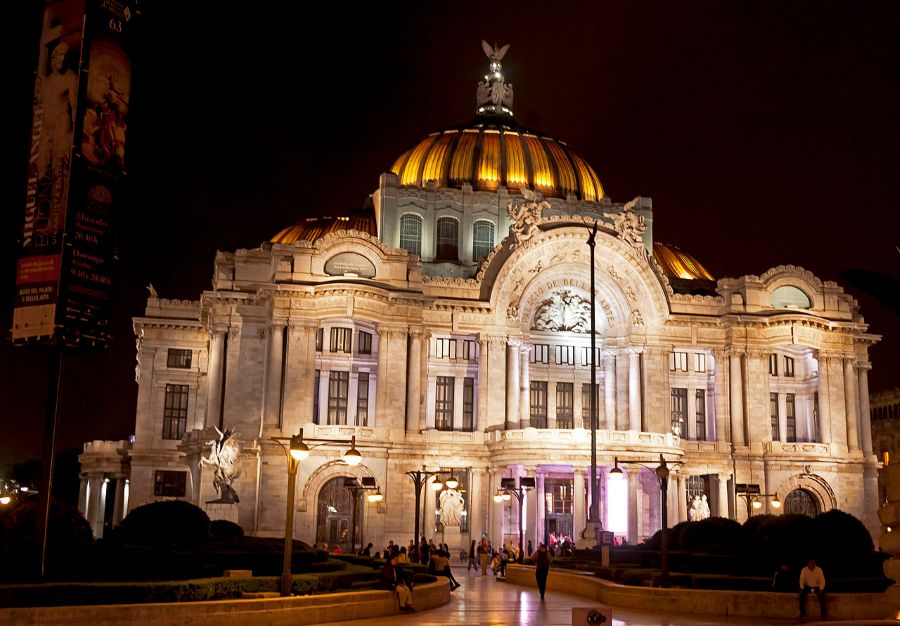
The walk then continues along Madero Street, where activity seems constant. Between volcanic stone buildings and façades inherited from the Porfiriato, visitors encounter cafés set in former mansions, vendors selling mazapán, musicians playing boleros, and historic bakeries.
The route often leads to the Palace of Fine Arts, whose ceramic-covered dome still dominates downtown, or to the Torre Latinoamericana, which offers sweeping views over the vast metropolis.
To extend the walk, it is possible to follow Paseo de la Reforma to the Angel of Independence, the city’s traditional gathering place for major sporting celebrations.
A Lucha Libre Night Between Matches
Attending a lucha libre show remains one of the most popular experiences after the matches. Arena México, known as the “cathedral of lucha libre,” is located in the Roma district, close to the historic center and several areas frequented by visitors.
Shows generally take place on Tuesday, Friday, and Sunday evenings, making them easy to include in a World Cup itinerary.
Even without knowing the rules, it is difficult to remain indifferent to the atmosphere: masked wrestlers, acrobatic moves, and the crowd’s reactions quickly turn the evening into a true popular spectacle. Tickets remain affordable and can be purchased online in advance, especially for Friday night events, which are often the busiest.
Xochimilco, Canals and Music
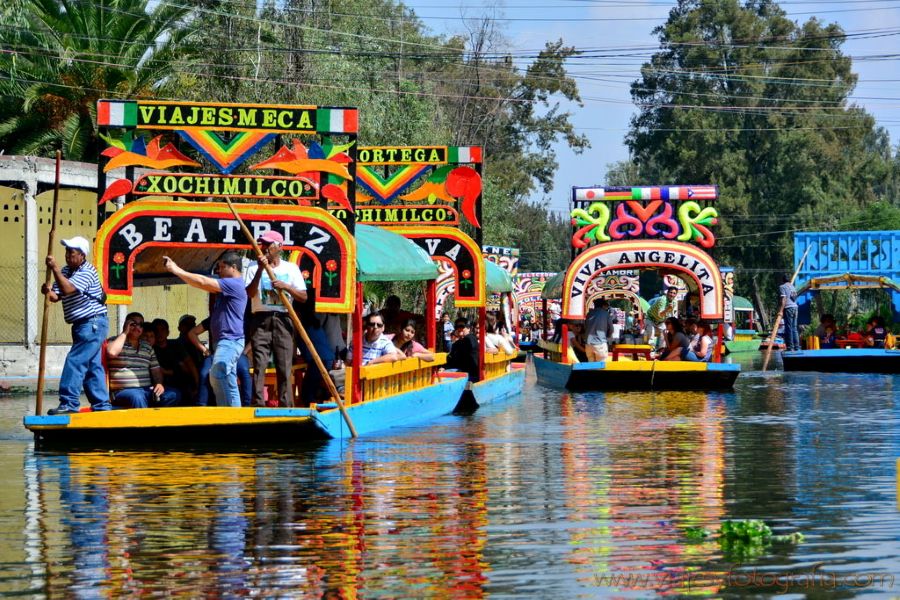
In the south of the capital, Xochimilco preserves part of the canal network built long before the arrival of the Spanish. To this day, colorful trajineras continue to navigate these waters, which have become one of Mexico City’s most recognizable symbols.
The atmosphere changes depending on the time of day and the departure point. In the morning, the canals are relatively peaceful, lined with trees, chinampas, and small floating kitchens serving quesadillas, coffee, and grilled corn.
As the day progresses, the atmosphere becomes much livelier, with mariachis moving from boat to boat, families celebrating birthdays, and groups sharing tequila while music echoes in every direction.
Teotihuacán, An Essential Excursion from the Capital
For travelers with several days between matches, Teotihuacán remains one of the most recommended excursions from Mexico City. This major pre-Hispanic city was for centuries an influential political, commercial, and religious center throughout the region.
Even today, the scale of the site is striking. The Avenue of the Dead crosses immense ceremonial complexes, while the Pyramids of the Sun and Moon continue to dominate the landscape of a city that once had more than 100,000 inhabitants at its height.
Beyond the pyramids, the site also preserves murals, ancient residential compounds, and ceremonial spaces that reveal the urban complexity of this civilization centuries before the arrival of the Spanish.
You May Also Like: World Cup 2026: What Latin America’s National Team Jerseys Reveal
During the World Cup, Mexico City will naturally be associated with the atmosphere around the stadium and the intensity of the matches. But the days between games will also provide an opportunity to discover the capital through its neighborhoods, markets, canals, and pre-Hispanic sites.
And this is only the first stop. In the next articles in this series, the journey will continue to Guadalajara and Monterrey, two other host cities where football will represent only part of the experience.
Photos: John Coletti | Eugene Kim | Visit Mexico | Gob MX