
“Here, you can’t pretend to be in a hurry.”
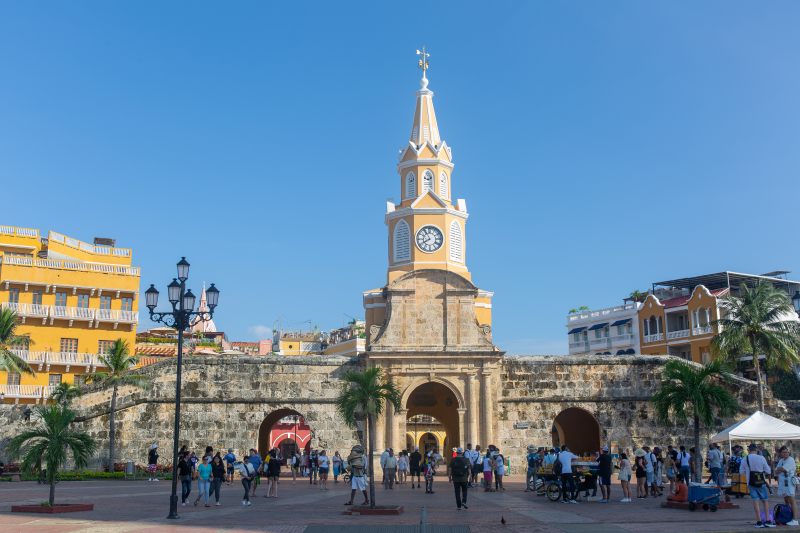
The phrase comes quickly, almost like a reminder, as you begin walking through the streets of Cartagena de Indias’ historic center. On Colombia’s Caribbean coast, the heat sets its own pace, and so does the light. You move forward in the shade of the façades, stop without really deciding to, and look.
Very quickly, the landmarks begin to settle in. Wooden balconies spill over with bougainvillea, walls shift between ochres, blues, yellows and pinks, while old doors still keep their metal knockers, sometimes still in use. Behind them, patios invisible from the street recall the layout of colonial homes and the role played there by interior life.
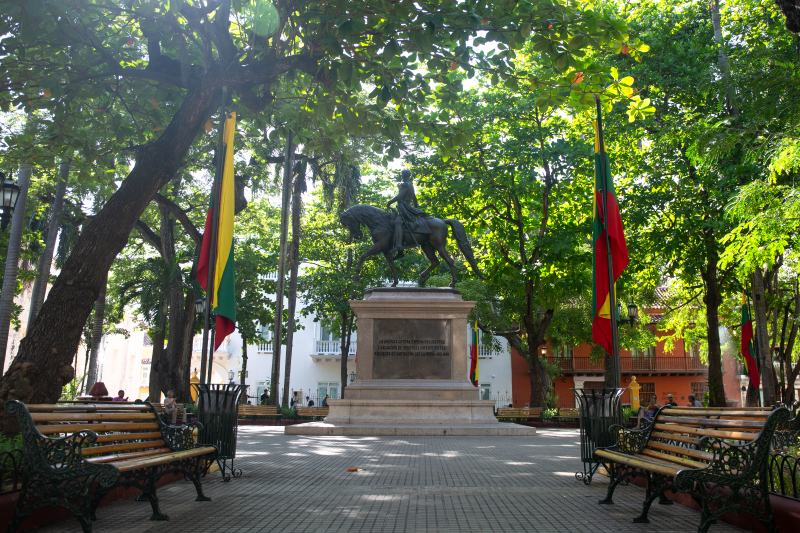
Around Plaza de Bolívar, the shade of the trees attracts almost as much attention as the buildings that surround it. The Palacio de la Inquisición, now a museum, recalls a darker part of the city’s history. A few steps away, the church of San Pedro Claver opens onto a wider square, occupied by terraces, guides, street vendors and the famous palenqueras with their baskets of fruit. The metal sculptures by Cartagena artist Edgardo Carmona, for their part, represent trades, gestures and characters from everyday life.
A few streets away, Plaza Santo Domingo offers another stop. Gertrudis, the sculpture by Fernando Botero donated to Cartagena, rests in front of the church that gives the square its name. Its relatively sober façade gives little indication of the richness inside, where visitors can see the Cristo de la Expiración, several finely worked chapels and a representation of the Virgin crowned with gold and emeralds.
The contrast is almost the opposite at San Pedro Claver: its monumental stone façade immediately imposes itself on the square, while the more restrained nave draws the eye toward the marble altar beneath which the saint’s relics rest.
A little further on, the Teatro Adolfo Mejía surprises with its interior, unexpected behind a relatively discreet façade. The historic center also concentrates much of the city’s hotel offer. Colonial houses, former convents and other historic buildings have been transformed into boutique hotels or high-end properties.
Each year, Cartagena hosts several major cultural events. In January, the Classical Music Festival stages its concerts in the theater, chapels and other buildings in the historic center. In april, the International Film Festival programs screenings, premieres and encounters in different venues across the city.
Taking height to understand the city
Once you climb onto the ramparts, the perspective changes immediately. The bastions follow one another, connected by passages that can be explored on foot, between the sea and the local coral stone, known as coralina. At certain times of day, the light cuts out the contours of the bay, while the Bocagrande peninsula, the modern part of Cartagena, appears in the background.
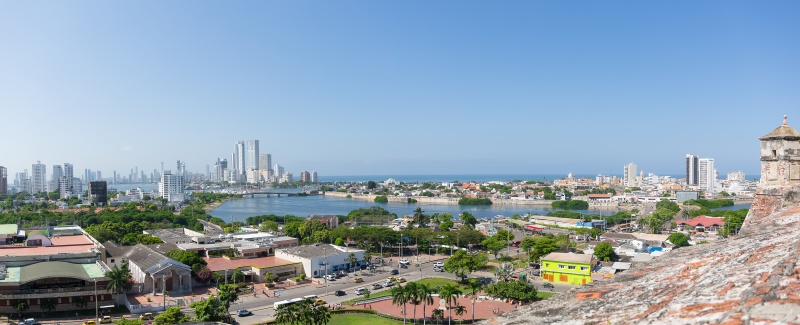
This defensive line recalls the strategic role of the city and its port. For several centuries, Cartagena occupied a central place on the Caribbean maritime routes, which also exposed it to attacks by corsairs, pirates and European powers. Its fortifications, developed between the 16th and 18th centuries, are among the most important military ensembles in South America.
Further back, the Castillo San Felipe de Barajas imposes itself through its sheer mass. Its ramps, galleries and underground passages give a precise idea of the means deployed to defend the land access points to the city. From its heights, you can distinguish the neighborhoods located between the historic center, the bay and the first urban extensions.
Higher still, La Popa convent offers an overall view. The historic center, the ramparts, Bocagrande, the port and the coastline appear within a single panorama. Cartagena then takes on another dimension, far beyond the few streets most often explored on foot.
A city inhabited, not frozen in time
Leaving the most frequented streets is enough to reveal another dynamic. In Getsemaní, walls serve as supports for murals, squares fill up at the end of the day and musicians set up without a defined stage. Champeta is never far away. Closely linked to Cartagena’s working-class neighborhoods and to the culture of picós, imposing sound systems, it accompanies the festivities and part of the city’s nightlife. The neighborhood remains inhabited, even though tourism development has transformed it deeply.
Around Plaza de la Trinidad, children still play football between terraces and street vendors. Restaurants, bars and small hotels stand alongside family homes, while neighborhood life continues throughout the day. Residents talk in front of their houses as the first groups arrive for the evening.
When night falls, the city does not slow down, it shifts. Terraces and rooftops fill up, conversations take over from the noise of traffic. The evening takes shape outside.
The same energy can be found in gastronomy. Cartagena today has several restaurants and bars regularly recognized in international rankings. Contemporary kitchens work with fish, fruits, tubers and other products from the Caribbean coast, while bars give growing space to Colombian ingredients in their cocktails. This recognition has placed the city among the most closely watched gastronomic scenes and bar destinations in Latin America.
An opening toward the sea
The sea is always present, but it is fully discovered when leaving the city.
About an hour away by boat, the Rosario Islands form a landscape of islets, reefs and clear waters. Barú, also accessible by road, brings together beaches, accommodation and clubs set along the coastline. The contrast with the dense streets of the historic center is immediate: fewer walls, more horizon, and a day organized around the water.
Closer by, Tierra Bomba island faces Cartagena, south of the urban area. A few minutes by boat from the main piers are enough to reach the island. Its beach clubs allow visitors to leave the city for a few hours while still keeping, from certain points, the silhouette of Bocagrande on the horizon.
In November, the festivities take over the city
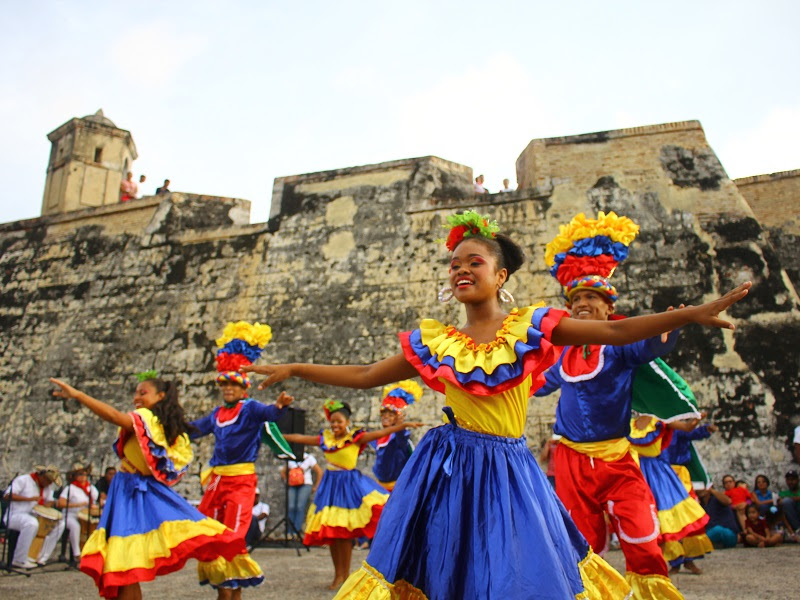
Throughout the year, certain events change Cartagena’s atmosphere. In November, the Independence Festivities occupy the streets and neighborhoods with parades, comparsas, concerts, cabildos and celebrations linked to the commemoration of November 11, 1811.
For several days, the celebration extends far beyond the limits of the historic center. Folkloric groups, artists, musicians and residents from different neighborhoods take part in one of the city’s main popular gatherings. November also hosts the Concurso Nacional de Belleza, at the end of which Miss Colombia is crowned.
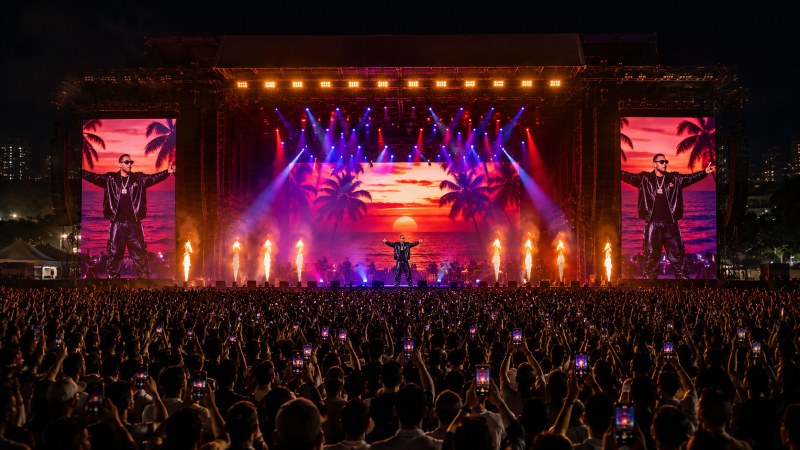
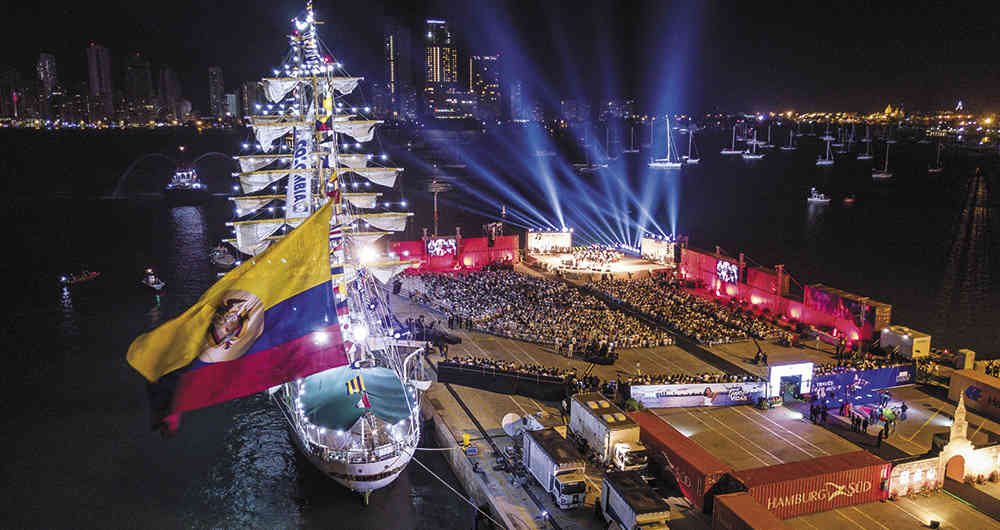
The Festival Náutico also attracts large crowds. Over two days, a stage set up in the bay welcomes Colombian and international artists. The particularity of the event lies in its audience: the concerts are followed from boats gathered in front of the stage, with the city in the background.
Cartagena is understood by moving forward, changing viewpoint and passing from one neighborhood to another. Its architecture and history are visible everywhere, yet what remains most strongly has to do with something else: the way Cartagena continues to be inhabited, crossed, celebrated and watched.
When it is time to leave, the opening phrase naturally returns: here, you can’t pretend to be in a hurry.
Photos: Visit Latin America | Mayor’s Office of Cartagena | Cartagena International Music Festival