
It only takes a few seconds to recognize it. The steady beat that today accompanies Bad Bunny, Karol G, Feid or Rauw Alejandro has a name: dembow. But before reaching stadiums and the top of streaming platforms, the rhythm circulated between Jamaica, Panama and Puerto Rico, crossing paths along the way with hip-hop from New York.
The story of reggaeton is made up of these journeys. Jamaican reggae and dancehall, Panamanian reggae en español and the Puerto Rican underground each contributed one piece to the genre that began taking shape in the early 1990s. Assigning it a single birthplace would mean erasing part of that history.
This first part goes back to the origins of the genre, before a second part devoted to its journey from the barrio to global pop.
From Jamaica to Panama
To trace the thread, one must begin with Jamaica. Reggae and then dancehall circulated widely across the Caribbean and found particularly fertile ground in Panama.
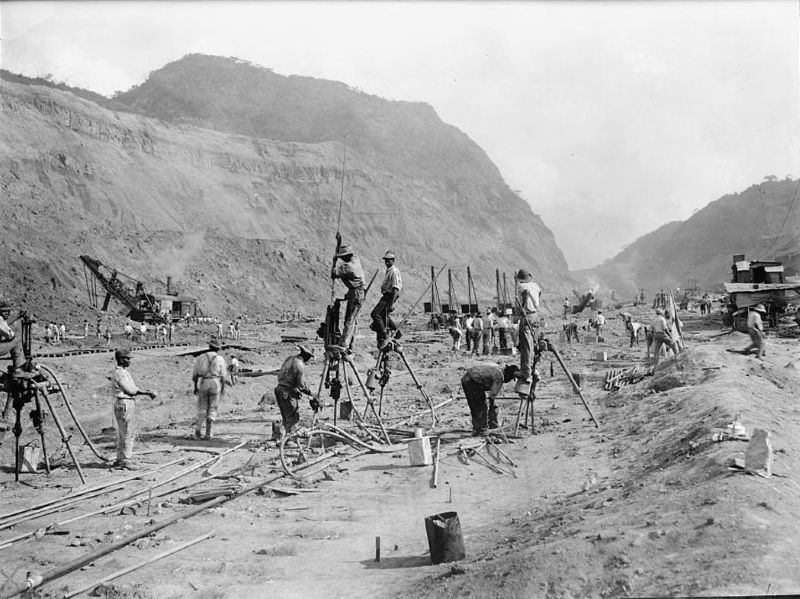
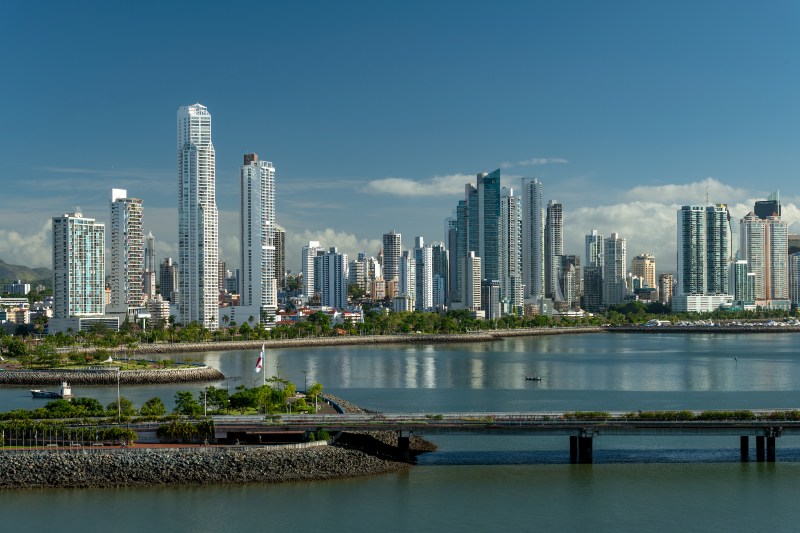
The country has long had a large Afro-Caribbean population. Part of this presence dates back to the major migrations triggered by the construction of the Panama Canal between the late 19th and early 20th centuries, when tens of thousands of workers from the Caribbean, especially Jamaica, settled in the country. Several generations later, these links with the English-speaking Caribbean facilitated the circulation of Jamaican music.
From the late 1970s, and especially during the 1980s, Panamanian artists began covering in Spanish the tracks they heard in reggae and dancehall. Renato, Nando Boom and El General were among the names associated with this first scene. Reggaeton did not yet exist: it was known as reggae en español.
At the turn of the 1990s, Dem Bow by Jamaican artist Shabba Ranks became one of the decisive references in this evolution. Panamanian artists took over this rhythmic pattern, sang it in Spanish and transformed it. The term “dembow” would eventually come to designate this recognizable rhythm, which became one of reggaeton’s signatures.
Meanwhile, in Puerto Rico, another story was already being written.
In Puerto Rico, the encounter with rap
In Puerto Rico, reggae en español arrived on ground already marked by another music: hip-hop. Exchanges with New York were constant, and Puerto Ricans as well as Nuyoricans had been part of that culture from the beginning, in rap as much as in DJing or dance.
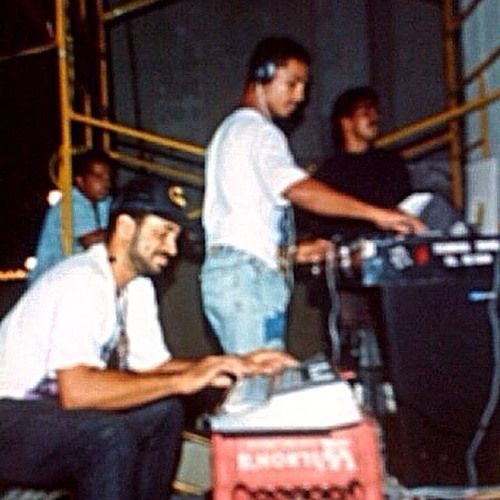
On the island, Vico C became one of the major references in Spanish-language rap from the late 1980s. Many of those who would later shape reggaeton first came from this world: they were rappers, MCs and DJs, even before the word “reggaetonero” existed.
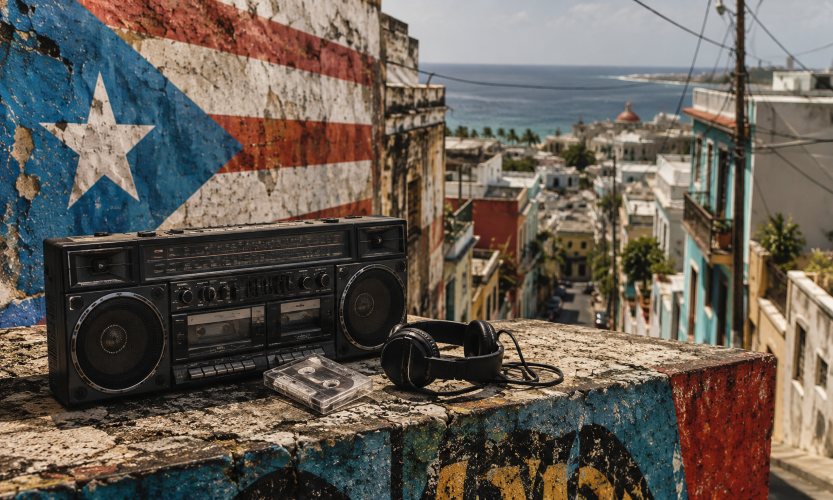
In the early 1990s, producers such as DJ Playero, DJ Negro and DJ Nelson began recording mixtapes where Spanish-language rap, American hip-hop and Jamaican rhythms crossed paths. Several MCs followed one another over the same instrumentals, sometimes drawn from reggae or dancehall. The cassettes circulated from hand to hand, outside the major distribution networks.
This scene became known as the underground and developed especially in the barrios and caseríos, the public housing complexes. Daddy Yankee, still a teenager, appeared on DJ Playero’s mixtapes. Other names that would matter in the history of the genre emerged in the same environment.
Gradually, the encounter between Puerto Rican rap and Jamaican and Panamanian riddims produced a new sound. The dembow became more present, the ways of rapping evolved, and DJs built their own productions. Reggaeton began to take shape, even if it did not yet carry that name.
When the word “reggaeton” appeared
It was precisely on one of these mixtapes released in the early 1990s that Daddy Yankee used the term “reggaeton” for the first time.
Years later, he would explain that he had built the word from reggae and the Spanish suffix -ón. The idea was simple: to designate something like a “big reggae”.
DJ Nelson then helped popularize “reggaeton”, and the word eventually took hold to describe this music, which now had its own vocabulary, producers, artists and audience.
A music under surveillance
As the underground gained popularity in Puerto Rico, the authorities began to pay close attention to it.
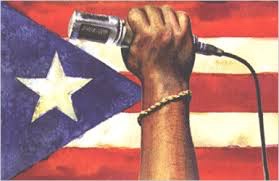
In 1995, the Puerto Rican police, supported by the National Guard, carried out operations in several record stores and seized thousands of cassettes. The authorities invoked local obscenity laws and accused this music of promoting drugs, crime and behavior considered indecent.
The repression, however, was not enough to stop its spread. Recordings continued to circulate, parties multiplied and the audience grew. What was still an underground scene gradually began to move beyond the neighborhoods where it had developed.
Perreo, a dance that unsettled people
This music also had its own dance: perreo, derived from perro, “dog”, in reference to a very close way of dancing centered on hip movements.
Perreo shocked people as much as the lyrics and quickly became one of the main arguments used by conservative groups denouncing reggaeton, accused of sexualizing bodies and particularly women.
But here again, the codes of the genre were less uniform than they appeared. In the 1990s, Ivy Queen established herself in a still largely male environment, with a discourse that stood apart from some of the lyrics of the time. In Quiero Bailar, released in 2003, she reminded listeners that agreeing to dance sensually with someone does not mean consenting to a sexual relationship.
The moment when everything changed
In the early 2000s, the genre was no longer quite the same as the clandestine mixtape scene. Artists began reaching a much wider audience.
Tego Calderón occupies a particular place in this transition. With El Abayarde, released in 2002, he mixed rap, reggaeton and Afro-Caribbean references while maintaining a committed style of writing. His success helped give new visibility to a music that had still been widely dismissed only a few years earlier.
The shift in status was rapid. In 2002, Puerto Rican senator Velda González was still taking part in hearings intended to regulate lyrics, music videos and perreo. The following year, however, she appeared on stage alongside Héctor & Tito and danced in front of the audience.
The image says a great deal about the distance traveled. In less than ten years, a music censored and repressed by the police had become popular enough for those who had fought against it to now seek to appear alongside it.
In 2004, reggaeton would take another step forward. Daddy Yankee released the album Barrio Fino, one of whose tracks began circulating far beyond Puerto Rico, then beyond Latin America. Its title: Gasolina.
The continuation of this story: how reggaeton went from the barrio to global pop.