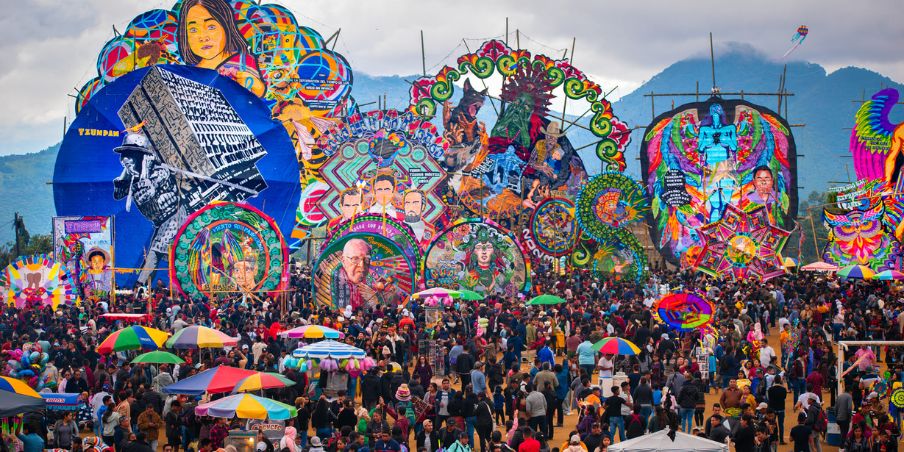
At dawn on November 1, a special atmosphere fills Sumpango and Santiago Sacatepéquez. From the early hours, families, visitors, and artisans gather near the cemeteries to watch the sky turn into a vast canvas of paper and bamboo. What unfolds is not merely a festival but an ancestral tradition that connects the living with their ancestors.
Origin and Meaning of a Unique Custom
The origins of this practice date back to the time of the Kaqchikel people, when kite flying was already associated with All Saints’ Day as early as the 17th century. According to oral tradition, these kites serve as bridges between the world of the living and the world of the dead, while also protecting cemeteries from wandering spirits.
But why November 1? Legend says that on this day, the souls of the departed return to visit their families, and the living must welcome them with altars, flowers, and offerings — a belief shared in many Latin American countries.
Over time, this custom has gained international recognition. In 1998, Guatemala declared it part of its intangible cultural heritage; and in 2024, the art of crafting the giant kites of Sumpango and Santiago Sacatepéquez was inscribed on UNESCO’s Representative List of the Intangible Cultural Heritage of Humanity.
Months of Work for a Single Day
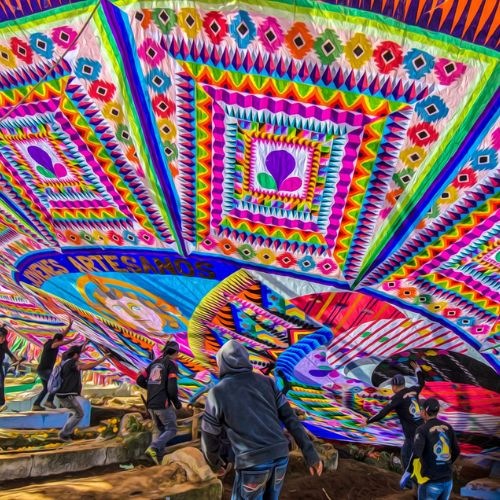
Nothing is left to chance in this celebration. It all begins months in advance, when groups of artisans — often entire families — gather to choose a theme. Some denounce corruption, others pay tribute to nature or to the victims of the civil war.
Once the message is defined, sketches are drawn, proportions are calculated, and colors are chosen. Tissue paper, glue, scissors, and bamboo sticks become the tools of a monumental art form: discs that can exceed twenty meters in diameter, the result of collective creativity and hundreds of hours of meticulous work.
From the Vigil to the Cemetery
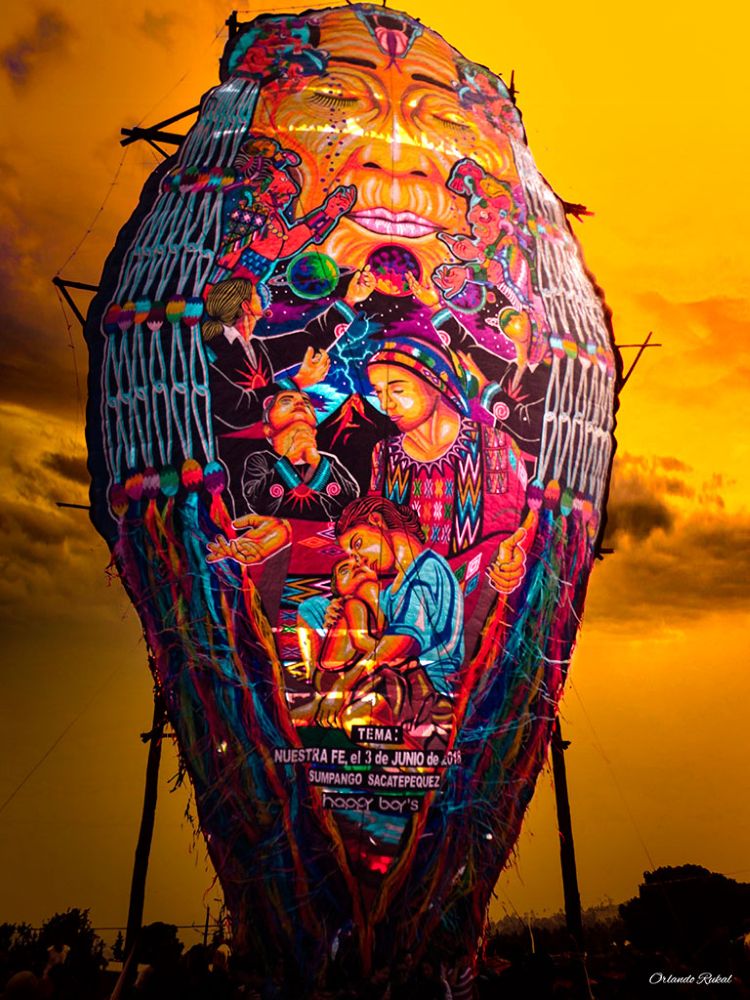
On the night of October 31, by the light of lanterns and campfires, the lunada — the great vigil — takes place. It is the time to assemble the final pieces, reinforce the seams, and attach the ropes. Amid laughter, coffee, and sleepless turns of watch, the community checks every detail.
At dawn, the first kites rise into the air: some dance with the wind, while others — those over ten meters — remain anchored to the ground like vast circular altars.
The festival, which draws more than 100,000 visitors, takes place in two towns in the department of Sacatepéquez: Sumpango and Santiago Sacatepéquez. In Sumpango, the event unfolds on the football field next to the general cemetery, while in Santiago it takes place directly within the cemetery.
By late afternoon, when the wind dies down, the kites are carefully taken down and stored. Some are burned, as tradition dictates; others are preserved until the following year.
In the sky, only the messages remain — messages that, in one way or another, always reach their intended recipients.
Whoever visits Sumpango or Santiago Sacatepéquez on this day witnesses far more than a colorful spectacle. They leave with the certainty that in Guatemala, every year, thousands of hands remind us that art, memory, and community can rise together.
Here, memory takes the shape of the wind: fragile, fleeting, yet eternal.
You may also like: The Day of the Dead in Mexico: Between Tradition and Celebration
Photos: Orlando Rukal | Eduardo Mendizábal