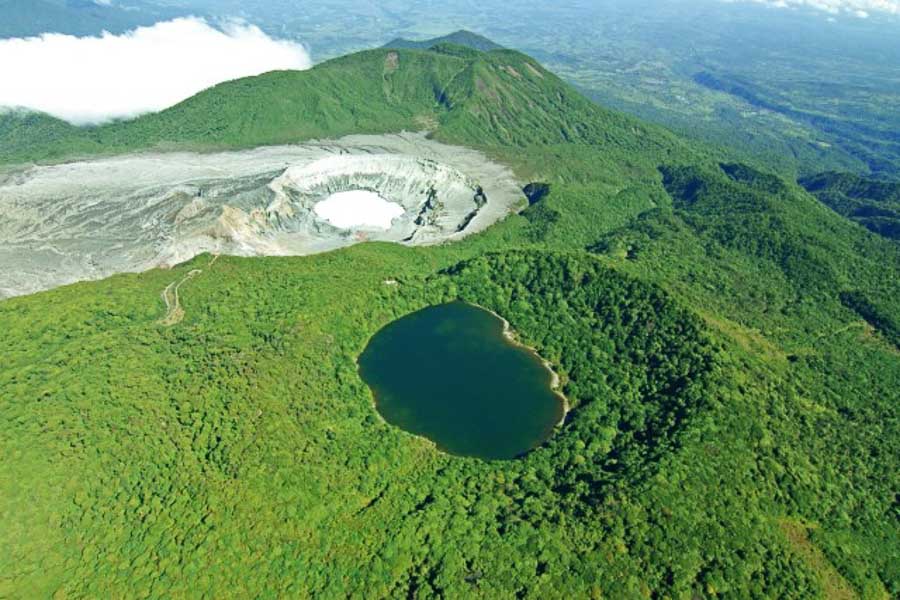
Poás Volcano National Parkv, located in the heart of Costa Rica, stands out not only for its natural wonders, but also as the country’s second most visited natural park. Established on January 25, 1971, it is a symbol of the geothermal forces that have shaped the Costa Rican landscape.
The Majestic Crater and Laguna Botos
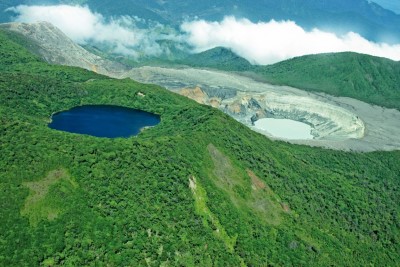
Rising 2,708 meters above sea level, Volcan Poás features one of the world’s largest active craters, measuring over 1.6 kilometers across. Visitors to the park are greeted by the impressive sight of a sulphurous, bubbling lake at the bottom of the crater, surrounded by steam and smoke rising from the fumaroles. What’s more, Laguna Botos, a crater lake of cold, green water, provides a sublime contrast to the main crater..
Flora and Fauna: a diverse ecosystem
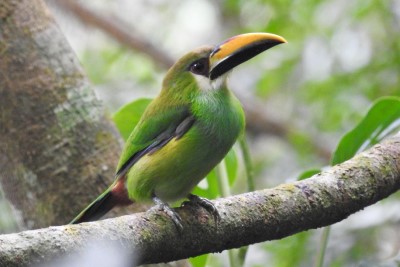
The park protects a variety of plant and animal species. Notably, it is home to bird species such as the clay-colored robin, the black guan, the resplendent quetzal, as well as varieties of hummingbirds, tanagers, flycatchers and toucans. Wildlife includes coyotes, rabbits and marmots.
Accessibility and infrastructure
The park, which covers an area of around 65 square kilometers, is accessible via several routes from San José. Although there is no universal route, access to the crater is relatively easy for visitors. The park’s infrastructure includes a modern visitor center and a small museum, which play a vital role in informing visitors about the park’s geothermal and ecological attractions.
Visitor experience
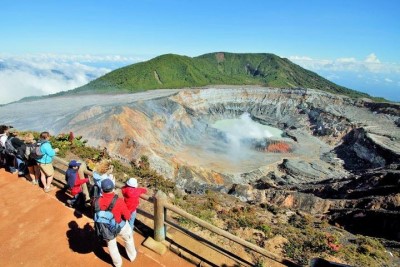
Poás Volcano National Park is open daily, including public holidays, from 7:00 am to 2:00 pm. Park trails lead visitors through cloud forests, offering a glimpse of the region”s unique ecosystem. However, visitors should be aware that the park’s status may change due to volcanic activity, and advance reservations are required.
Poás Volcano National Park is not only a center of interest for tourists, but also a crucial site for environmental research and conservation. Its diverse ecosystems, unique geological features and rich cultural history make it a must-see destination for anyone wishing to explore Costa Rica‘s natural beauty.