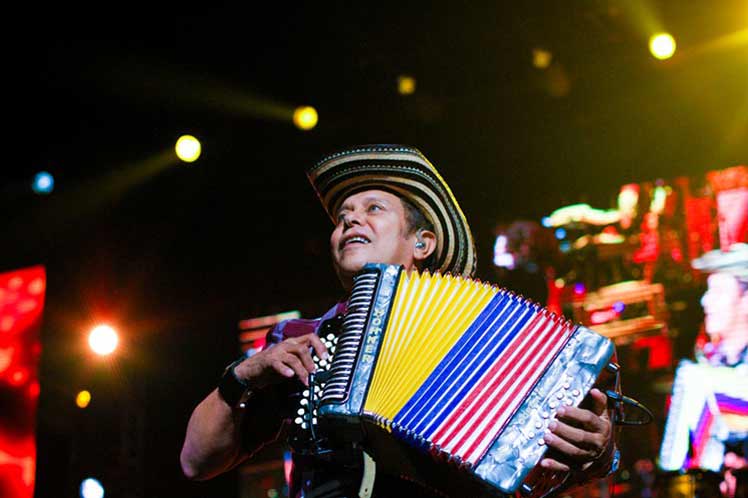

Vallenato, with its catchy melodies and poetic lyrics, is much more than just a musical genre in Colombia: it reflects the soul of a region and its people. Originating in the Valledupar region, this musical style has become one of the most emblematic symbols of Colombian culture.
Origins and history
Vallenato has its roots in the Magdalena Grande region, particularly in the town of Valledupar. Its name comes from the term “Valle de Upar”, referring to the valley where this music was born. The origins of the Vallenato go back to pre-Columbian times, when indigenous peoples were already using instruments such as the millo flute and the guacharaca to express their emotions and tell their stories.
The accordion was introduced to the region by the Spanish in the mid-19th century, adding a new dimension to local music and giving birth to the Vallenato style at the beginning of the last century. Over time, the Vallenato has been enriched by various influences, notably African and European, to give birth to what we know today.
Cultural significance
Vallenato is much more than just a melody: it is a story, a tradition, an expression of the daily lives of the people of the region. The lyrics of Vallenato songs tell stories of love, sadness, joy and everyday life, reflecting the emotions and experiences of the Colombian people.
In 2015, UNESCO recognised Vallenato as an intangible cultural heritage of humanity, underlining its importance not only for Colombia, but for the whole world.
Vallenato has produced many hits that have touched the hearts of Colombians and music lovers the world over. Songs such as “La Gota Fría” by Emiliano Zuleta, about a friendly rivalry between two musicians, or “Los Caminos de la Vida” by Los Diablitos, a melancholy melody about the challenges of life, have become emblematic. Rafael Escalona, considered one of Vallenato’s greatest composers, has left an indelible legacy with songs like “El Testamento”. These songs, among many others, illustrate the emotional and narrative richness of Vallenato, echoing the joys, sorrows and stories of the Colombian people.
Influence and influence

The Vallenato has gone beyond the borders of its region of origin to conquer the hearts of Colombians and music lovers the world over. Artists such as Carlos Vives have played a crucial role in popularising Vallenato, fusing its traditional rhythms with modern genres such as pop and rock.
Today, the Festival de la Leyenda Vallenata, held annually in Valledupar, attracts thousands of visitors from all over the world to celebrate and discover this unique music.
Vallenato is a reflection of the Colombian soul, a melody that tells the story of a people, its joys, its sorrows and its hopes. More than just a musical genre, it is a cultural heritage that continues to live on and be passed down from generation to generation, bearing witness to the richness and diversity of Colombia.