Every year, for one week between late April and early May, Valledupar in northeastern Colombia changes its rhythm. Stages appear in the streets, movement is reorganized, and the entire city lives to the beat of the Festival de la Leyenda Vallenata.
Here, vallenato is not limited to a series of concerts. It is part of a way of telling the territory’s story, connecting generations, and circulating narratives. During these few days, this repertoire—passed down orally and from accordion to accordion—is performed everywhere, challenged, and reaffirmed.
A project born long before the stage
Before it had a name or a fixed date on the calendar, the idea of bringing accordion players together already existed. Informal gatherings took place, notably in Aracataca, the hometown of Gabriel García Márquez, as early as the mid-1960s, when vallenato began to go beyond its regional borders.
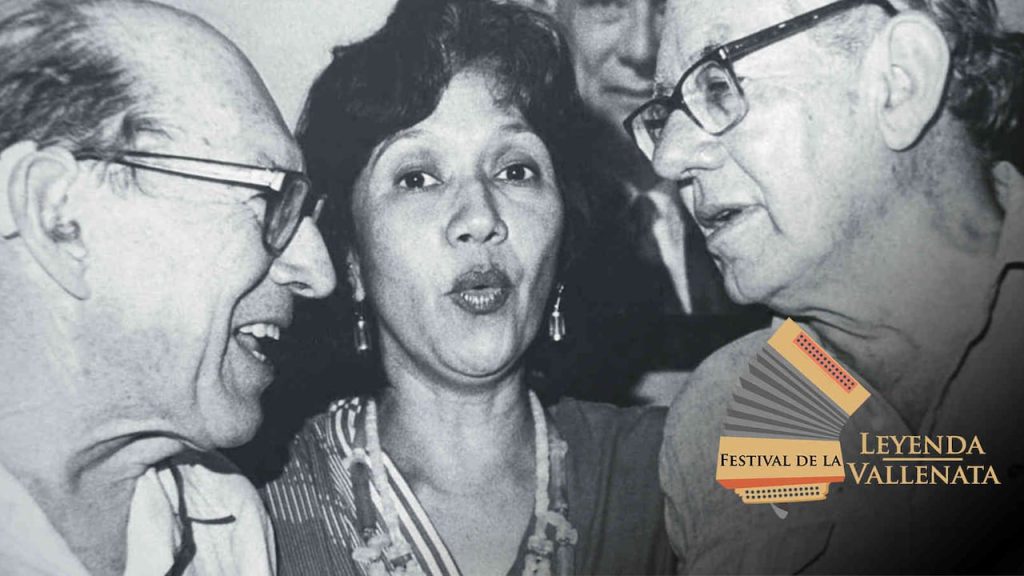
This movement emerged within a broader context. The department of Cesar was created in 1967 and sought to affirm its identity. The following year, in 1968, Valledupar hosted the first official edition of the festival in Alfonso López Square.
The project was led by Consuelo Araújo Noguera, Alfonso López Michelsen, and Rafael Escalona, whose songs were already widely known.
The festival date was not chosen at random; it is linked to the celebration of the Virgen del Rosario, the city’s patron saint. Since then, the religious and the musical have remained closely intertwined.
Competitions that structure the festival
The heart of the festival remains the accordion competition, especially in the professional category. Participants perform the four traditional vallenato rhythms: paseo, merengue, son, and puya.
Every ten years, the Rey de Reyes category brings together former winners, placing musicians face to face who have each, in their own way, shaped the history of the festival.
Alongside this central contest, other formats complete the program: the unreleased vallenato song highlights composition, while the piqueria is based on improvisation, in direct lyrical duels between singers.
Over time, children’s, youth, and amateur categories have been added, opening access to new performers in a world long marked by family lineages.
In the evenings, large concerts featuring national and international artists attract a broader audience and give the festival a different, more open dimension.
A city that extends beyond the festival framework
But the festival is not limited to official stages. Much of it happens elsewhere.
The piloneras parade moves through the streets with the pilón dance, which recreates gestures and scenes from Valledupar’s past daily life. Meanwhile, the Jeep Willys parrandero parade turns the city into a musical caravan heading to the Parque de la Leyenda Vallenata Consuelo Araújo Noguera.
To understand this musical movement, it is worth visiting Casa Beto Murgas and its Museo del Acordeón, which connects styles, eras, and major figures of vallenato.
Figures who have shaped the genre
Over the years, the festival has become a launching platform for artists.
Alejo Durán, the first winner, marked an important evolution in the way accordion was played and sung, introducing a more personal approach.
Alfredo Gutiérrez, a three-time winner, helped project vallenato beyond Colombia, notably with his victory at the World Folk Festival in Cologne in 1991.
Through these trajectories, the festival does not merely preserve a tradition—it also contributes to its evolution.
After a few days, one thing becomes clear: vallenato is not only understood on stage. It circulates through the streets, parades, parrandas, between places, and sometimes without any fixed program.
This continuous presence explains why Valledupar fills up every year again. Not only to attend a festival, but to experience a music that, here, never really stops.
Photos: Fundación Festival de la Leyenda Vallenata | Procolombia